Why can antidepressants make you sweat so much?
Why antidepressants can increase sweating, what else can cause it, and how to discuss relief without stopping medication on your own.
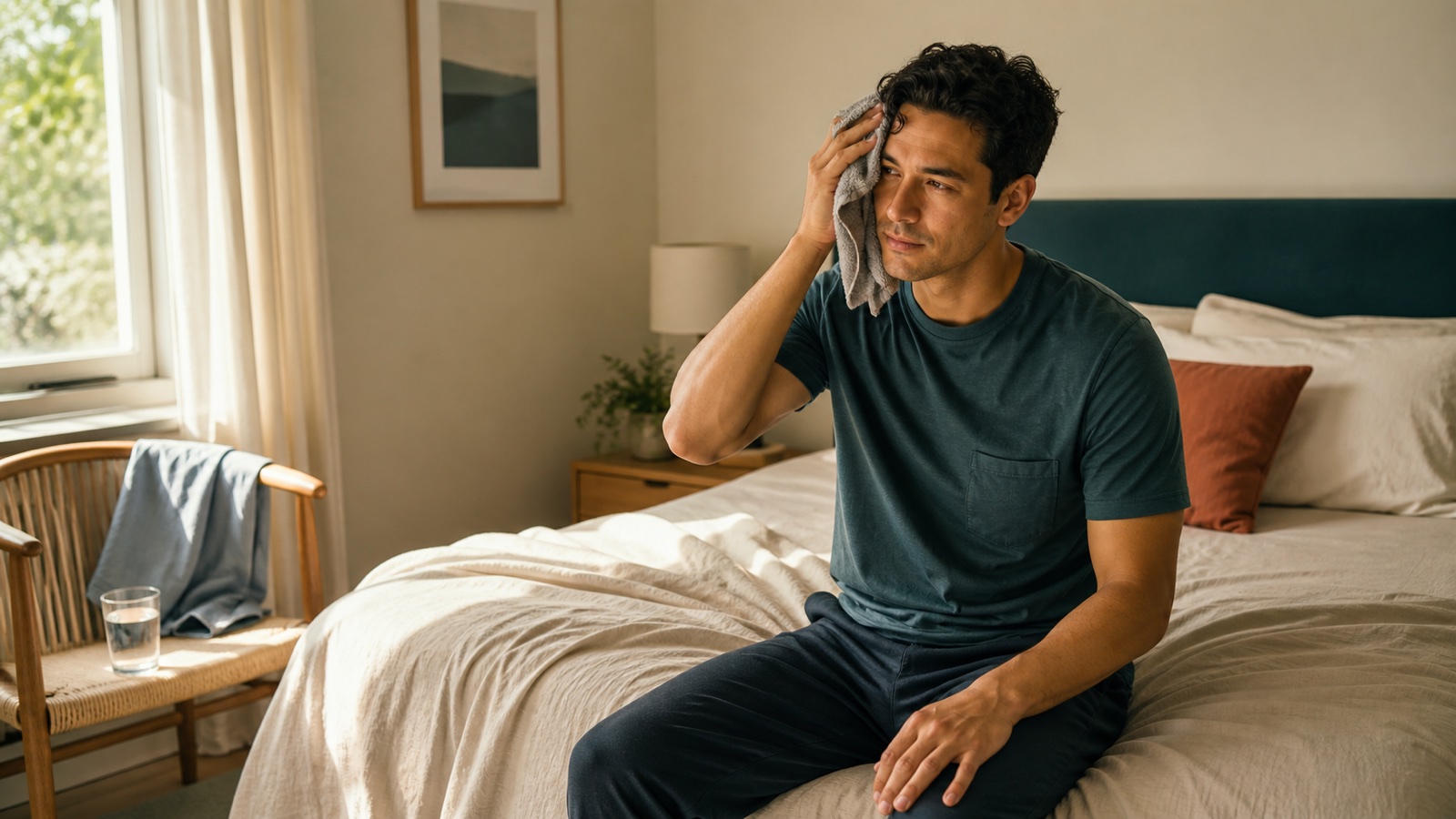
- Many antidepressants can increase sweating, but the risk and severity differ from one person and medication to another.
- Timing matters: record whether sweating began after starting treatment, raising a dose, or adding another medicine.
- Fever, confusion, severe agitation, muscle rigidity, or rapidly worsening symptoms need urgent medical assessment.
- Do not stop or change an antidepressant on your own; your prescriber can review causes and safer ways to reduce the problem.
You wake at 3:12 a.m. with the sheet stuck to your back and the pillowcase doing an excellent impression of a dish towel. The room isn’t hot. Your partner isn’t sweating. You’ve changed pajamas twice this week and started eyeing the laundry basket as a personal adversary.
Then you remember the antidepressant bottle on the dresser.
Yes, antidepressants can increase sweating for some people. That doesn’t mean every damp night comes from medication, and it doesn’t mean you should stop treatment tonight. It means the symptom deserves a timeline, a safety check, and a practical conversation with the person prescribing it.
Sweating is useful until it forgets the assignment
Your body uses sweat to release heat. The system is coordinated through the brain, autonomic nerves, and sweat glands, which is why medicines that affect chemical signaling can alter it. You may notice sweating during sleep, across your scalp and face, under your arms, on your chest, or in your palms. Sometimes it’s a mild nuisance. Sometimes you’re changing clothes, avoiding handshakes, or waking repeatedly.
Researchers call excessive sweating hyperhidrosis. A meta-analysis of 76 randomized, placebo-controlled trials involving 28,544 adults found that most second-generation antidepressants studied were associated with a higher reported risk of hyperhidrosis than placebo. The average risk didn’t separate neatly into “SSRIs bad, SNRIs worse,” and dose didn’t explain the difference across those trials.
That’s population evidence, not a weather forecast for your shirt. Some people won’t sweat more at all. Others will notice it only after a dose change or with one particular medicine. A side-effect list can tell you what’s possible. It can’t tell you what caused Tuesday night.
The timeline is more useful than the laundry total
Write down when the sweating began. Did it follow the first dose, a dose increase, a switch, or a new medication? Is it only at night? Does it happen with exercise, stress, meals, alcohol, caffeine, or hot flashes? Are you waking soaked, or are you simply warmer than usual?
Bring the complete list: prescriptions, over-the-counter products, supplements, nicotine, cannabis, alcohol, and other substances. Antidepressants aren’t the only medicines that can change sweating, and combinations can matter. Don’t quietly omit the sleep aid or borrowed stimulant because it seems unrelated. The useful clue is often hiding in the ensemble cast.
I’ll also ask what the medication is helping. If your panic attacks are down, you’re back at work, and the sweating is the problem, that’s a different decision from a medicine that hasn’t helped and has turned every pillow into waterfront property. Benefits and burdens belong on the same page.
Medication is not the only reason people sweat
Anxiety, menopause, pregnancy, thyroid problems, infection, low blood sugar, sleep apnea, alcohol or drug withdrawal, pain, and other medical conditions can cause or worsen sweating. So can a warm room, heavy bedding, exercise, spicy food, and ordinary summer. Your clinician may need to review symptoms, examine you, or order tests depending on the pattern.
Pay attention to accompanying changes: fever, unexplained weight loss, swollen lymph nodes, persistent cough, diarrhea, tremor, racing heart, new pain, or feeling generally ill. Night sweats that repeatedly soak clothes or bedding deserve medical discussion even if medication seems like an obvious suspect.
This isn’t an invitation to search every rare diagnosis at 3:14 a.m. It’s permission not to force a psychiatric explanation onto a whole-body symptom. Your sweat glands don’t read departmental boundaries.
A dangerous reaction looks different from an annoying side effect
Seek urgent medical help for heavy sweating with fever, confusion, severe agitation, marked muscle stiffness, jerking or overactive reflexes, vomiting or diarrhea, a very fast heartbeat, or rapidly worsening illness. Those features can occur in serious reactions such as serotonin syndrome, especially after a medication was started, increased, combined, or overdosed.
Call emergency services if someone collapses, has a seizure, can’t be awakened, has severe trouble breathing, or may have taken an overdose. Don’t wait for an online article to settle the diagnosis.
If you’re in a mental health crisis or might act on suicidal thoughts, call or text 988 in the United States. Sweating by itself isn’t a suicide warning sign, but the reason you’re taking treatment and how you’re feeling still matter.
Most antidepressant-related sweating isn’t an emergency. The distinction matters because “this is common” shouldn’t become “ignore anything sweaty,” and “this could be serious” shouldn’t turn every warm forehead into a siren.
Do not turn tonight into an abrupt stopping trial
It’s tempting to skip a dose just to see whether the sheets stay dry. Don’t run that experiment without your prescriber. Abrupt antidepressant changes can cause withdrawal symptoms, allow the treated condition to return, or create a confusing cycle in which sweating, anxiety, dizziness, sleep disruption, and missed doses chase one another around the week.
Ask your prescriber whether the timing fits the medication, whether another cause needs evaluation, and what options make sense. Depending on the person and medicine, a clinician might consider watching the symptom, adjusting timing or dose, switching treatment, or addressing sweating directly. Each option has tradeoffs. A treatment added for sweating can have its own side effects and interactions, so this isn’t a do-it-yourself supplement aisle.
I’d rather hear, “This is helping my mood and ruining my sleep because I’m drenched,” than discover you stopped silently. A side effect doesn’t have to be dangerous before it counts.
Small comforts help, but they are not the whole plan
While you’re arranging the review, make the environment less punishing. Use breathable sleepwear and lighter bedding, keep the room comfortably cool, change damp clothing, and replace fluids after substantial sweating. If heat, alcohol, caffeine, or spicy food reliably amplifies the problem, note that rather than declaring a lifetime ban after one miserable night.
Be cautious with heavy exercise or heat when you’re already losing a lot of fluid. If you feel faint, weak, confused, or unable to cool down, move to a cooler place and seek medical help. Sweating can be uncomfortable; impaired cooling or heat illness is a different problem.
A symptom log shouldn’t become a second job. For one week, record the medication time, sweating time, severity from zero to three, sleep interruption, temperature, and any obvious trigger. Add one line about benefit. That’s usually more useful than photographing every collar like it’s evidence in a textile trial.
Bring one clear sentence to the appointment
Try: “Since the dose increased two weeks ago, I’ve woken with soaked clothes five nights, and it’s disrupting sleep, but my anxiety is better.” That sentence gives timing, frequency, impact, and benefit. Your prescriber can work with it.
Ask what warning signs change the urgency, whether any other medicine could be contributing, what improvement would look like, and when to follow up. If the first plan doesn’t help, report that too. You’re not being difficult. You’re completing the feedback loop treatment requires.
Your antidepressant shouldn’t receive diplomatic immunity because it helps. It also shouldn’t be convicted by a damp Tuesday without a fair evaluation.
The bottom line: Antidepressants can increase sweating, but timing, other medicines, medical causes, severity, and the treatment’s benefits all matter. Track the pattern, contact your prescriber, and don’t stop medication on your own. Get urgent help when sweating arrives with fever, confusion, severe agitation, rigidity, collapse, or rapidly worsening illness. The goal isn’t dry sheets at any cost. It’s a treatment plan you can actually live with.
Sources: Beyer and colleagues, meta-analysis of second-generation antidepressants and hyperhidrosis, Depression and Anxiety (2017); Cheshire and Fealey, review of drug-induced sweating disorders, Drug Safety (2008); U.S. Food and Drug Administration, antidepressant Medication Guides and serotonin syndrome safety information; MedlinePlus, serotonin syndrome.

Why can psychiatric medication make hot weather harder?
How medicines can affect cooling, hydration, and heat safety.

Why do antidepressants sometimes make you feel emotionally numb?
How to separate a side effect from symptoms that remain.

What happens at a medication follow-up?
How to bring benefits, side effects, and questions into focus.
Would a clearer medication review help?
A free 15-minute intro call can help you decide whether psychiatric care fits what you’re noticing.