Why does a ringing phone make you anxious?
Why an unexpected call can feel harder than a text, how to make phone conversations more manageable, and when avoidance deserves support.
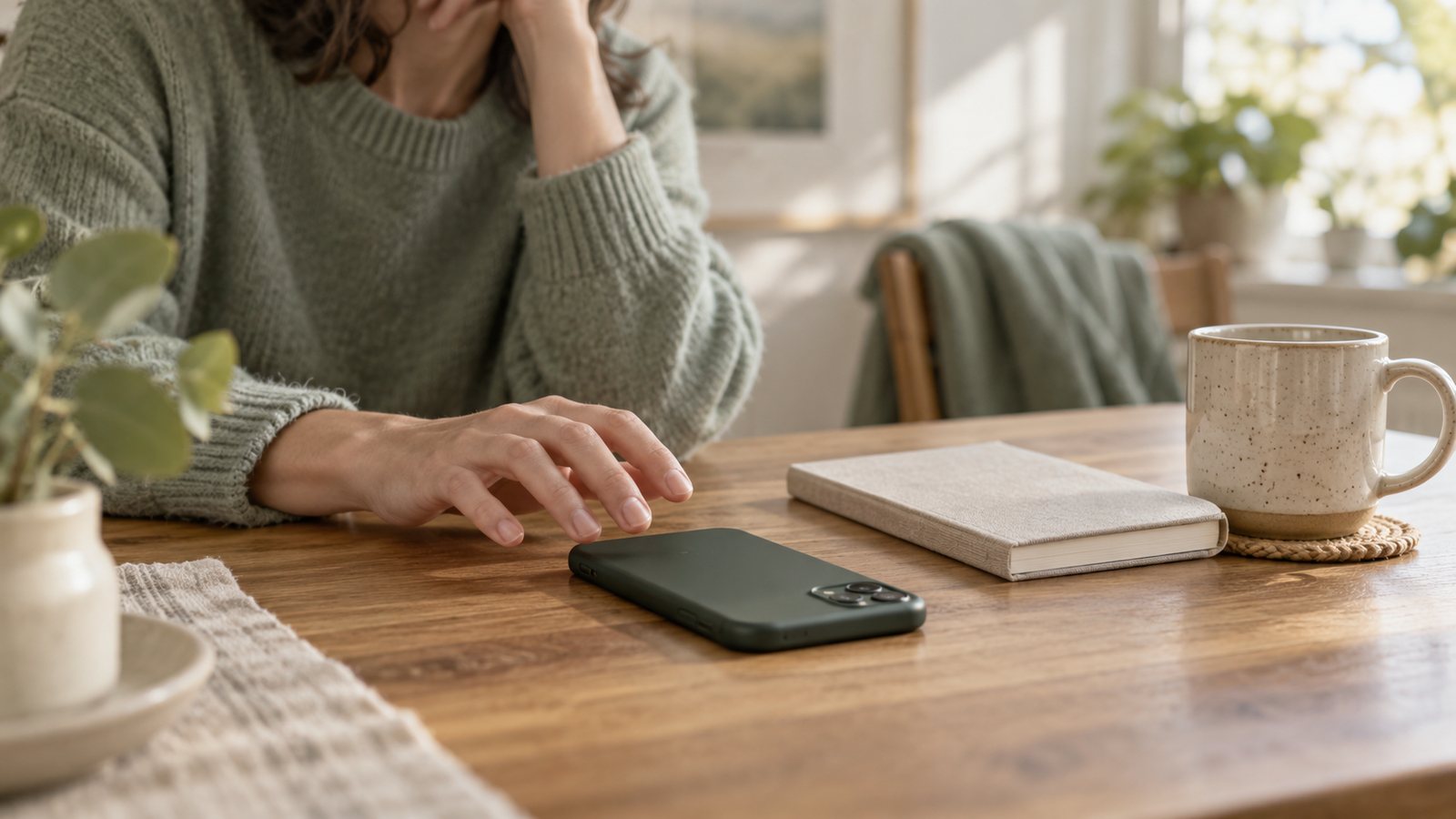
- An unexpected call can feel demanding because you have to respond in real time.
- Phone anxiety can have different causes; one habit alone is not a diagnosis.
- Preparation and small, chosen practice can make useful calls easier.
- If avoidance is shrinking your life, effective help is available.
You’re halfway through making lunch when your phone rings. The name is familiar. Your shoulders still climb toward your ears, and you watch the screen until it goes dark. Five minutes later, you send a perfectly friendly text: “Sorry, just saw this.” You did see it. The question is why answering felt like stepping onto a stage without knowing the play.
A call asks you to react now. You can’t reread a sentence, choose a calmer word, or wait until your brain has caught up. The other person might want a quick hello or a complicated favor. Your phone gives you very little warning which one it’s. If you prefer a text, that’s a preference. If the ringing regularly makes you dread ordinary contact, it’s worth getting curious about what the call seems to demand of you.
The hard part may be the surprise, not the person
Some people dislike phone calls because they interrupt concentration. Others worry about awkward pauses, bad news, being judged, or having to say no while someone is listening. A call from an unknown number can carry a different fear from a call from your mother. Those details matter. “Hating calls” is a description; it’s not yet an explanation.
The NHS lists speaking on the phone among situations that can be hard for someone with social anxiety. The National Institute of Mental Health describes fear of negative judgment and avoidance as possible features too. That doesn’t mean every ignored call signals a disorder. A busy day, sensory overload, past bad calls, work demands, or simply not wanting to be available at every moment can also shape your reaction. You don’t need a label before you can make the next call easier.
Notice the first thought that appears when the screen lights up. Is it “I’ll sound foolish,” “Something must be wrong,” or “I can’t afford to lose my afternoon”? Each thought points toward a different problem. If the problem is an unclear request, you may need a way to ask what the call is about. If it’s fear of judgment, practicing the conversation may help. If it’s a boundary problem, a scheduled callback may be the better answer.
Let a missed call become information, not a character test
The instant relief after letting the call pass can teach your brain that silence was the safe choice. NIMH notes that avoiding feared social situations can help briefly while leaving anxiety in place. Still, forcing yourself to answer every ring isn’t the treatment plan. You’re allowed to be unavailable. The more useful question is whether you’re choosing not to answer or feeling unable to answer calls you actually want or need to take.
You might start with a simple sort. Which calls matter today? A pharmacy, a school, a friend making plans? Which calls can wait for a message? You can let routine unknown numbers go to voicemail and still decide to return an important call. Your phone is a tool, not a tiny emergency dispatcher you have to obey.
For a call you want to make, write down the first sentence and two facts you need. “Hi, I’m calling to ask whether my appointment can move to Thursday” is enough of an opening. Keep a pen nearby if you need to note the answer. You don’t need a complete script for every possible branch. Over-preparing can quietly become another reason the call never happens.
Practice the part you can control
I often ask people to make the first practice call almost boring. Ask a store about its hours. Call a trusted person who knows you’re practicing. Leave a voicemail where a reply isn’t urgent. You’re learning that a call can be imperfect and still end safely. A little stumble isn’t a failed experiment; it’s what most conversations sound like.
If you feel tense, put both feet on the floor and let the other person finish one sentence before planning yours. You can say, “Could you repeat that?” or “Could you hold for a moment?” Those are ordinary conversation tools. You can also ask, “Could we reconnect in 10 minutes?” when you genuinely can. A promised time works better than an open-ended escape hatch because it gives both people a clear next step.
For friends and family, a small agreement may remove the mystery. You could ask, “If it’s urgent, please text ‘urgent’ first. Otherwise, a call after work works best.” That’s a communication preference, not a rejection. If you’re on call for a child, a patient, or a job, your plan must account for those responsibilities. A boundary that ignores real obligations won’t feel safe enough to use.
Notice when the pattern is costing you
Phone anxiety deserves more attention when it keeps you from arranging care, responding to school or work, maintaining relationships, or handling essential tasks. You might notice you’re building an elaborate text-only life around one feared moment. That’s not laziness. It’s a sign the cost of avoidance has grown. A clinician can ask about the fear, how long it has been there, and what else may be contributing.
For social anxiety disorder, NIMH describes cognitive behavioral therapy and exposure-based approaches among established treatments. Therapy can help you practice feared interactions gradually, at a pace that fits your situation. Medication may also be considered with a clinician. You don’t need to decide which treatment fits by reading a blog post, and you don’t have to wait until every call feels impossible.
Today, choose one call that matters but isn’t urgent. Write your opening sentence, set a time to dial, and decide what you’ll do after it ends. Maybe you’ll take a walk around the room or drink the tea you forgot you made. If you don’t make the call, ask what got in the way and make tomorrow’s step smaller. You’re practicing a skill, not proving a personality trait.
The phone may ring again before you feel ready. It’s okay to let it ring while you decide. It’s also possible to answer with a slightly shaky voice and still have an ordinary conversation. Most people on the other end are thinking about their own grocery list, not grading your performance. Your choice doesn’t have to be perfect to be yours.
A call can also be harder when you have no private place to speak. If you’re at work or on public transit, you may be protecting your attention or your privacy, not avoiding a person. Notice whether your worry changes when you can choose a quiet room and a planned time. That comparison gives you more useful information than counting missed calls. It might show that the setting needs changing, even if the phone itself isn’t the main problem.
If the first call goes badly, resist making it the official forecast for every future call. Perhaps the line cut out, you forgot a question, or the other person sounded rushed. You can call again, send a clarifying message, or write down what you learned. A single clumsy exchange doesn’t erase the useful step you took. Keep the experiment small enough that you’ll try it again.
If fear turns into a mental health crisis, call or text 988 in the United States.
The bottom line: A ringing phone can feel like a demand for an instant performance. Name what makes the call hard, choose which calls matter, and practice one manageable conversation. If avoidance is interfering with life, ask for help.
Sources: NIMH, Social Anxiety Disorder; NHS, Social Anxiety; NIMH, Find Help.

Why do I avoid opening emails when I am anxious?
Why an unopened email can grow into a threat, how avoidance trains more anxiety, and how to make the next message smaller.

What do you say when you call a therapist for the first time?
A simple first-call script, the information a therapist needs, and the practical questions that prevent an awkward search.

What does exposure therapy actually feel like?
What exposure therapy is, why avoidance keeps fear powerful, what a careful session looks like, and how to know if the pace is right.
Want help sorting through what you are noticing?
A free 15-minute intro call can help you decide whether psychiatric care fits the next step.