Should couples go to bed angry?
Why forcing a late-night resolution can make conflict worse, when a pause is healthy, and how to stop sleep from becoming another weapon.
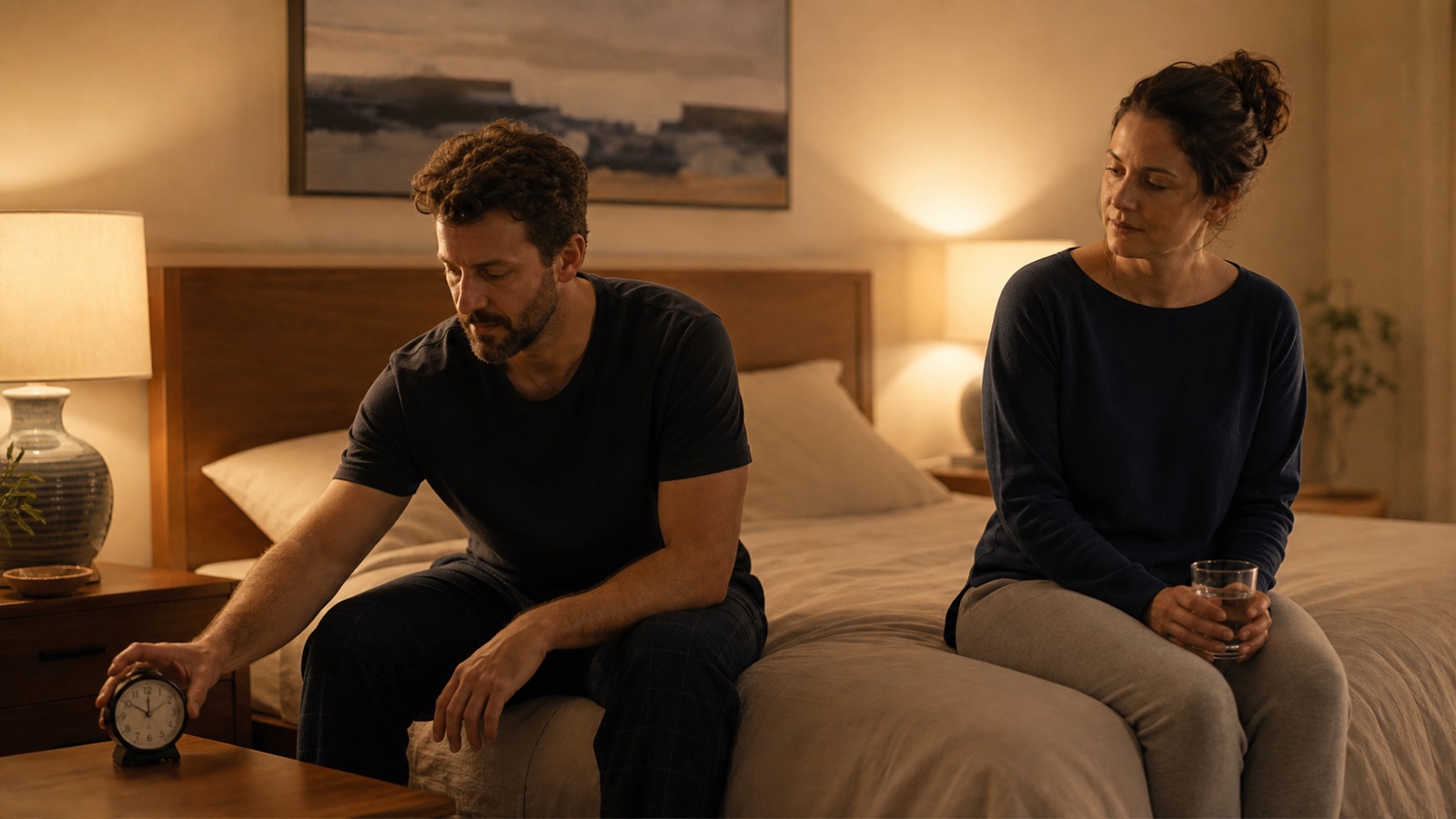
- There’s no relationship rule requiring every conflict to be solved before sleep. Exhaustion can make a hard conversation less flexible and more hostile.
- A healthy pause names the reason, offers reassurance, and includes a specific time to return. Silent withdrawal doesn’t.
- Some issues need a small overnight truce, not a complete resolution. Safety, respect, and the next step can be settled first.
- If one partner uses sleep deprivation, intimidation, or blocked exits to force engagement, the problem isn’t communication technique. It’s safety and control.
It’s 12:47 a.m. The dishwasher has finished, the dog has given up on both of you, and a discussion about weekend plans has somehow acquired witnesses from 2019. One of you says, “Can we sleep?” The other hears, “Your feelings don’t matter.”
Then the old advice arrives: never go to bed angry. It sounds wise because it favors repair. At midnight, though, it can turn the bedroom into an arbitration chamber where nobody’s rested enough to remember the original charge.
The clock isn’t a measure of commitment
A relationship doesn’t become healthy because every argument ends before the pillows are used. Some conflicts need information, perspective, or a calmer body. A forced resolution may produce an apology that means “please let this stop” rather than genuine understanding.
Research on couples and sleep points in both directions. Conflict is associated with worse sleep, and poor sleep can make the next conflict harder. In a small experiment, couples assigned to a sleepless night showed less positive emotion and higher stress responses during a conflict discussion than rested couples. That doesn’t prove one ordinary late night ruins a marriage. It does challenge the idea that exhaustion is ideal problem-solving equipment.
I’d ask whether you’re moving toward repair or merely refusing to stop. If the conversation is becoming repetitive, contemptuous, confused, or physically agitated, another hour may add words without adding clarity.
A pause and a shutdown are not the same
A pause protects the conversation. A shutdown controls or abandons it. The difference is what you say, what you do during the break, and whether you reliably return.
“This conversation is over” followed by three days of silence leaves the other person alone with the problem. “This conversation isn’t over. We’re both too tired to be kind. Let’s come back tomorrow at 9:00 a.m.” gives the pause a reason and an ending.
The partner requesting space shouldn’t have to prove they’re exhausted in court. The partner who fears disconnection also deserves a bridge. A brief reassurance can help: “We’re not breaking up. This isn’t dismissed. Tomorrow morning is reserved for it.” Don’t promise affection you can’t honestly offer, but don’t make uncertainty do extra damage.
First settle what the night actually requires
You may not need agreement before bed. You may need a minimum safe plan. Is anyone leaving the house? Who is caring for a child? Are keys, medication, money, or transportation involved? Is there an immediate safety issue? Resolve the practical overnight question without trying to settle the relationship’s entire constitution.
Then define the topic for tomorrow. “The decision about visiting family needs an answer” is workable. “Feeling invisible in this relationship needs a full explanation” may be emotionally true, but it’s too large for a first agenda item. Give the next conversation one job.
It’s also okay to choose separate sleep spaces for comfort, snoring, schedules, or emotional room. It isn’t okay to use the couch as public sentencing. The meaning comes from the agreement, not the furniture.
Your tired brain loves a dramatic verdict
When you’re depleted, nuance gets expensive. A delayed text becomes proof of indifference. A clumsy sentence becomes the relationship’s mission statement. You may repeat yourself because you don’t feel heard, while your partner hears repetition as escalation and retreats further.
Negative emotion can become reciprocal during conflict. Recent experimental work suggests even a short delay can reduce reactive aggression in a laboratory task, likely because immediate retaliation loses some momentum. Real relationships are more complicated than a lab, but the principle is useful: slowing an action can change what happens next.
Don’t use the break to prepare a closing argument. Scrolling old messages, recruiting friends as jurors, or composing a 14-paragraph text keeps the conflict awake even if the room is quiet. Do something that lowers activation: wash your face, stretch, read something neutral, or write the point you don’t want to forget.
Make the morning return boringly reliable
The credibility of a pause is built afterward. Return when you said you would. If the time no longer works, propose another specific time before the deadline passes. Repeatedly asking for space and never reopening the issue teaches your partner that a pause means disappearance.
Start with a clean summary: “Last night we got stuck on the visit. It sounded as though the plan felt decided without agreement, and the reaction felt surprising. Is that close?” Let your partner correct you before defending yourself.
Then separate impact from intent. You may not have meant to dismiss them, and they may still have felt dismissed. Both can be true. Repair usually needs acknowledgment, responsibility for a specific behavior, and a different plan. It doesn’t require either person to confess to a motive they didn’t have.
If morning is crowded, don’t squeeze the repair between finding shoes and joining a work call. Confirm that the issue still matters and choose a realistic window. Ten attentive minutes later can be more useful than 30 resentful minutes now. Reliability doesn’t require instant access. It requires that “later” becomes an actual time instead of a storage unit for conversations nobody wants to reopen.
Some nighttime patterns are about safety
A communication pause assumes both people can safely stop. Blocking a doorway, taking a phone, following someone from room to room, threatening consequences for sleeping, waking a partner repeatedly, or forcing hours of questioning isn’t passionate conflict. It’s coercive behavior.
If you’re afraid of your partner, prioritize safety over the perfect script. Contact a domestic-violence resource, trusted person, clinician, or emergency service from a safe device when possible. Couples therapy may be inappropriate when there’s ongoing intimidation or violence because speaking openly can create more risk.
If either person is talking about suicide, self-harm, or being unable to stay safe, don’t postpone that part until morning. In the United States, call or text 988. Call emergency services when there’s immediate danger.
Try a two-minute bedtime truce
Each person gets one sentence for what matters, one sentence for reassurance, and one specific return time. For example: “The decision felt made without agreement. This relationship matters, and the conversation deserves better. Let’s talk after breakfast at 9:00 a.m.”
You won’t solve the whole conflict in two minutes. That’s the point. You’re closing the night without pretending the issue vanished and without making sleep evidence that someone doesn’t care.
The bottom line: Yes, couples can go to bed angry. Sleep isn’t betrayal, and midnight isn’t a moral deadline. A healthy pause should be explicit, reassuring, and time-limited, with urgent practical and safety questions handled first. What protects a relationship isn’t forcing closure before bed. It’s returning when you said you would and doing the repair while both of you can think.
Sources: Kurinec and colleagues, “Quarreling After a Sleepless Night: Preliminary Evidence of the Impact of Sleep Deprivation on Interpersonal Conflict,” Affective Science (2022); Gordon and Chen, “The Role of Sleep in Interpersonal Conflict,” Social Psychological and Personality Science (2014); El-Sheikh, Kelly, and Rauer, “Quick to Berate, Slow to Sleep,” Health Psychology (2013); Voisey and colleagues, “Both Partners’ Negative Emotion Drives Aggression During Couples’ Conflict,” Communications Psychology (2024).

Why you keep having the same fight
Different words, same loop, and how couples can change what happens next.
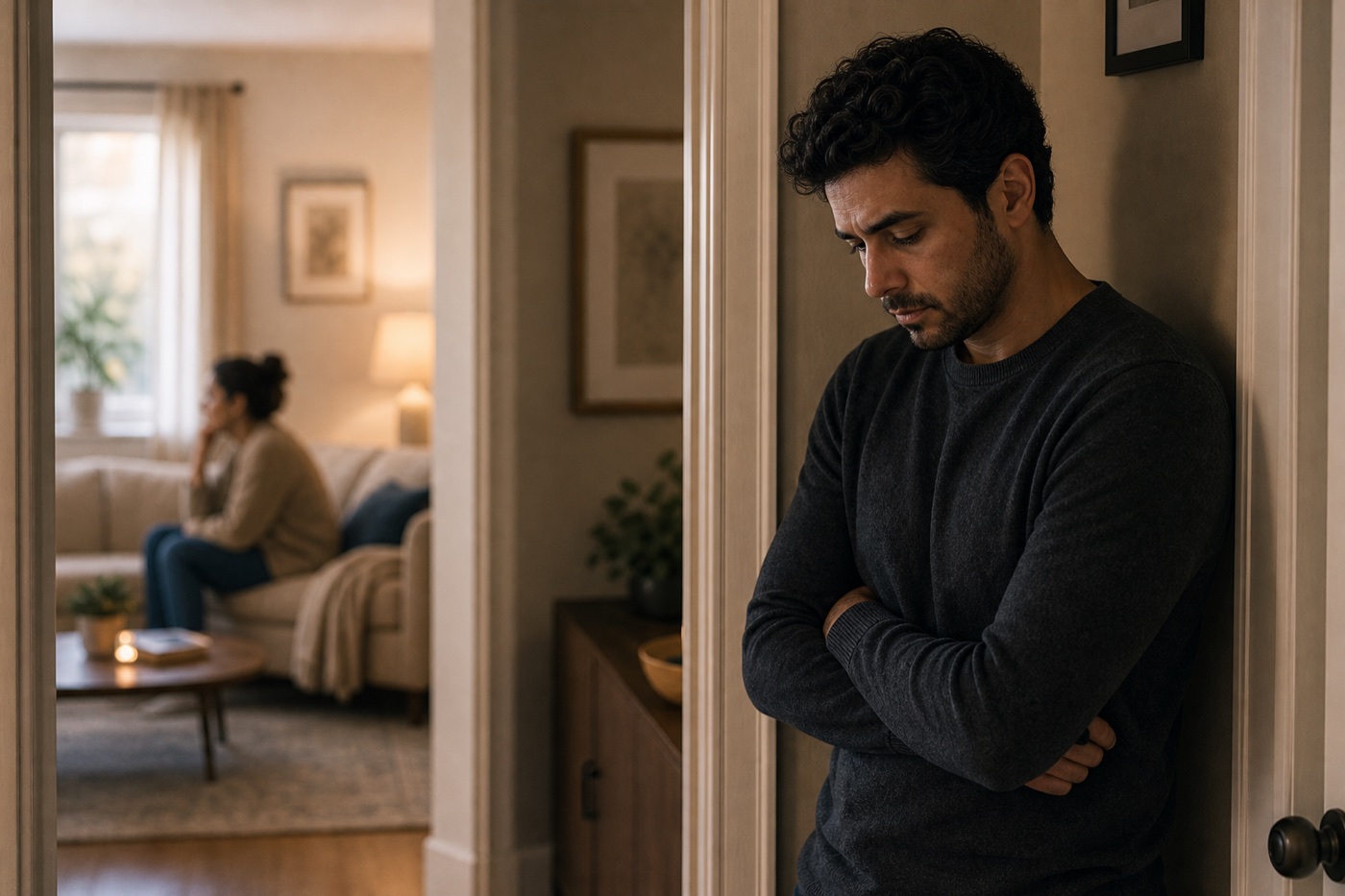
When your partner shuts down
Why withdrawal happens and how to pause without making the other person disappear.

Is our relationship bad enough for couples therapy?
What joint care can help with before a crisis and when it isn’t the first move.
Would a clearer view of this pattern help?
A free 15-minute intro call can help you decide whether a psychiatric evaluation makes sense.