MAT, explained without the stigma.
What medication-assisted treatment (MAT) for alcohol and opioid use really is, the medications involved, and why it isn't 'replacing one drug with another.' A quick, evidence-based read.
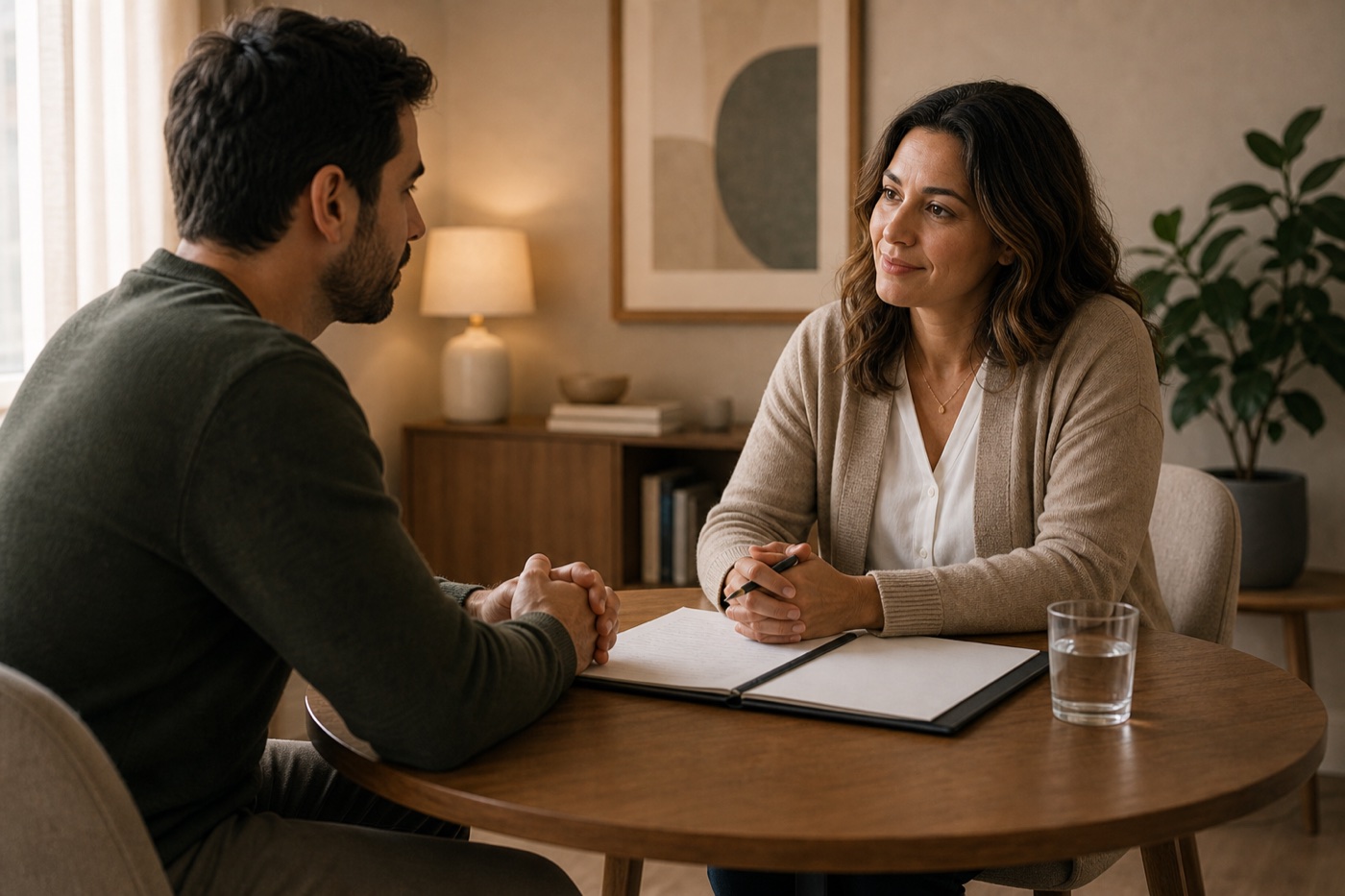
- MAT uses FDA-approved medications, alongside support and follow-up, to quiet cravings, ease withdrawal, and lower the risk of relapse and overdose.
- It isn't "replacing one drug with another." These medications stabilize the brain systems addiction hijacked, in a controlled way, not a euphoric one.
- For opioid use, buprenorphine and methadone have been shown to meaningfully reduce the risk of overdose and death.
- Addiction is a medical condition, not a failure of willpower. Asking for help is a sign of strength.
It's a Tuesday afternoon, and someone is sitting across from me on a video call, telling me they have tried to stop on their own four times this year. They aren't weak. They're exhausted. They have white-knuckled their way through withdrawal, promised themselves and the people they love that this was the last time, and watched the cravings win anyway. By the time they reach me, many of them are quietly convinced the problem is them.
It isn't. And there's a treatment that helps, one of the most effective tools in all of medicine for alcohol and opioid use. It's also one of the most misunderstood. The tired myth that it "just replaces one drug with another" has kept good people away from care that genuinely saves lives.
So let's take the stigma out of it and talk plainly about what medication-assisted treatment really is.
What MAT actually is
MAT uses FDA-approved medications, alongside support and follow-up, to quiet cravings, ease withdrawal, and lower the risk of relapse and overdose. The goal is steadiness. When the constant pull of craving finally quiets down, a person gets the room to rebuild a stable life.
The medications depend on what we're treating.
- For opioid use: buprenorphine and naltrexone are the options most used in an outpatient setting. Methadone is also highly effective, but it's dispensed through specialized clinics rather than a standard prescription.
- For alcohol use: naltrexone reduces cravings and heavy drinking. Acamprosate supports people who have already stopped and are working to stay that way. Disulfiram is an option for some.
None of these is a magic switch, and the right fit is different for every person. That's exactly why this is a medical decision made with a clinician, not something you should have to figure out alone.
Why it isn't "a crutch"
Here is the part the myth gets wrong. These medications work on the same brain systems the substance hijacked, but in a controlled, stabilizing way, not a euphoric one. They don't get a person high. They take the volume of craving and withdrawal down to something a human being can actually live with.
And the evidence isn't subtle. For opioids in particular, buprenorphine and methadone have been shown to meaningfully reduce the risk of death and overdose.
Think about that for a moment. We're talking about medications that keep people alive long enough to recover. Calling that a crutch is like calling insulin a crutch for diabetes. Treating addiction as the medical condition it is, rather than a failure of willpower, is simply what works.
Why the shame makes it worse
A lot of people carry the belief that needing medication to stop means they failed at stopping. I want to be direct about this, because it matters. Addiction changes the way the brain handles reward and stress. That isn't a metaphor. It's biology.
When you treat a biological condition with the medical tool built for it, you aren't cheating. You're doing the sensible thing. The shame is the part that keeps people stuck. The treatment is the part that gets them out.
The medication is one part, not the whole
I want to be honest about something. The word "medication" sits in the middle of "medication-assisted treatment," but the word "treatment" is doing real work too.
The medication does the heavy lifting on cravings and withdrawal. The support and follow-up around it are what help the rest of a life come back together.
- Follow-up visits let us adjust the dose, check how you're actually doing, and catch trouble early instead of after a relapse.
- Therapy and other support, when it fits, gives you somewhere to work on the patterns and stress that feed use in the first place.
- Steadiness over time is the real goal. Recovery is rarely a single dramatic moment. It's a lot of ordinary days that get easier.
So if the medication is what quiets the noise, the follow-up is what helps you build something in the quiet.
How it works with us
Care here is confidential and without judgment. You won't be lectured, and you won't have to perform rock bottom to be taken seriously.
- We talk through which medication option actually fits your situation and your goals.
- We explain the telehealth rules that apply in your state, so you know what is and isn't possible by video.
- We coordinate with any therapy or other support you already have, because medication works best as one part of a larger plan.
And if you ever need a higher level of care than telehealth can safely provide, we'll tell you honestly and help you find it. That promise matters as much as anything else we do.
The bottom line. MAT is evidence-based, medical, and effective. Seeking it is a sign of strength, not weakness, and the right medication can be the difference that finally makes recovery stick. If you have been trying to do this alone, you don't have to anymore.
Sources: SAMHSA, "Treatment Options for Substance Use Disorder" and medication pages on buprenorphine and naltrexone (samhsa.gov); evidence that buprenorphine and methadone reduce overdose and mortality risk (jcoinctc.org issue brief). Retrieved 2026-05-29.

The only personality model scientists actually trust
Those four-letter "type" quizzes are basically horoscopes with extra steps. The Big Five isn't.
Psychopath vs. sociopath: the real difference
Pop culture mixes them up, and neither is actually a diagnosis. Here's what is.
Panic attacks: what's happening and what helps
Why it feels like a heart attack, and the simple things that actually bring it down.
Recovery is medical, not moral.
Ask us anything, in confidence, on a free 15-minute intro call.