How do you keep a medication routine while traveling?
A trip can scramble familiar cues for psychiatric medication. Plan refills, carry medicines safely, and ask your prescriber about timing before you leave.
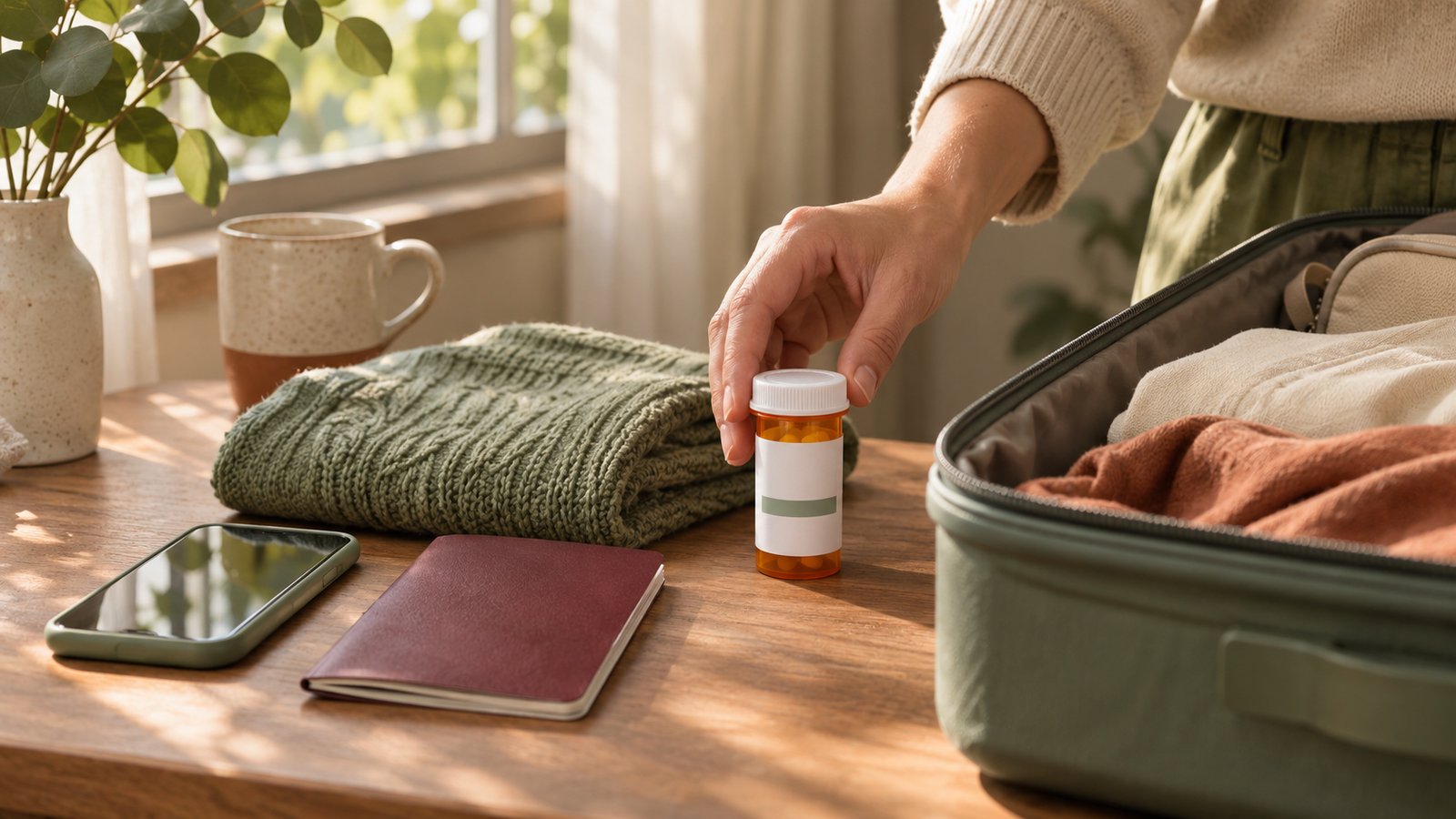
- Check your supply and refill window before departure.
- Carry medicine in its original labeled container.
- Ask your prescriber how to handle time-zone changes or missed doses.
- Use a travel cue you can actually follow.
Your suitcase is packed. Your routine isn’t.
You put the charger in your bag, zip the suitcase, and finally sit down. Then you see the prescription bottle on the bathroom shelf. Tomorrow’s flight leaves early. You usually take your medicine after breakfast, but breakfast tomorrow might be a granola bar in a moving car. It’s easy to think, “I’ll figure it out there.” The trouble is that travel is excellent at removing the little cues that make a daily routine feel automatic.
A trip doesn’t mean your treatment has to become a guessing game. It does mean giving the medication plan a place on the packing list. Your clothes can survive being left behind for a day. A missed prescription can be harder to sort out, especially if you’re far from your pharmacy. Start with the boring basics: what you take, how much you have, and when the next refill is due. Boring is useful here.
Make the plan before the departure day
Look at each bottle several days before leaving. Count enough for the trip and possible delays, then check what your pharmacy and insurance allow. If you’ll run short, contact the pharmacy or prescriber while you’re still home. Don’t wait until a holiday evening to discover the refill is too early or the pharmacy is closed. If a medicine needs special storage, ask the pharmacist what the trip requires. A car trunk in hot weather isn’t a medication cabinet.
I’d also ask a simple question before you leave: “What should I do if I miss a dose while away?” The answer depends on the medication, your schedule, and how long the gap is. It may differ greatly between medicines. Don’t double a dose on your own to make up for an omission. Keep the prescriber’s office number and your pharmacy’s number where you can find them without searching your email in an airport line.
If you cross time zones, the clock can make a familiar schedule look unfamiliar. Some medicines have flexible timing; others need a more careful plan. Tell your prescriber where you’re going and how long you’ll be away. Ask when to take each dose on travel days and after arrival. You don’t need to invent a conversion table while half asleep. The point is to get advice that fits the actual prescription, not a generic rule from a travel blog.
Give the medicine a safe place
For air travel, keep medication with you in your carry-on, in the original labeled container. The CDC recommends this for international travel because checked luggage can be delayed or lost and medicines may be restricted by a destination or transit country. Check those rules well before an international trip, particularly for controlled medicines. A prescription that is routine at home may face different rules abroad. Keep a copy of your prescription or a clinician letter when appropriate.
At a relative’s house, choose a place that children and visitors cannot reach. A kitchen counter might feel convenient but isn’t a secure storage spot. Check the label for storage instructions. If you use a pill organizer at home, remember that international travel may call for original containers for identification. You can still build a reminder around the bottle: the phone alarm, the toothbrush, or the same quiet minute after breakfast, if that timing matches your directions.
The cue should survive the trip. “Take it when things settle down” sounds lovely and fails as soon as the day fills up. A phone reminder can help, but set it for the local time you and your clinician agreed on. Put a backup reminder somewhere private if you tend to dismiss alarms. Your goal isn’t a perfect vacation routine. It’s a practical link between the prescription and a moment that will actually happen.
If the routine slips, get a specific answer
Suppose you find the bottle at noon and can’t remember whether you took the morning dose. Check any tracker you already use, then follow your prescription instructions or call your pharmacist or prescriber. Don’t take an extra dose just because you’re anxious about being late. The right next step can vary by drug, dose, and elapsed time. If you develop severe symptoms, seek urgent medical care. Travel doesn’t make a new symptom less important.
You might feel embarrassed to ask about a missed dose. Please ask anyway. I’d rather hear the exact timing and help make a plan than have you quietly change doses for the rest of the trip. If travel repeatedly disrupts your treatment, say that at a routine visit too. Your clinician may be able to help you build a more workable plan, while weighing the medical limits of the medicine you take.
Some trips also bring poor sleep, alcohol, heat, and intense schedules. Those can affect how you feel even when your medication is unchanged. Don’t assume every change is caused by the prescription, and don’t assume it’s “just travel” either. Note what changed, especially sleep and timing, and contact your clinician when symptoms are persistent, new, or concerning. If you take a medicine that requires monitoring, ask what travel means for that monitoring before departure.
Try one small experiment today: put the next trip on your calendar with a medication check a week before leaving. Count supply, check the refill, and write down the timing question you need answered. You don’t need a complicated travel spreadsheet. You need a plan that still works when the gate changes and someone has eaten the last airport sandwich.
If your plans change, don’t treat the original schedule as a personal failure. You can call the pharmacy from the road, and you can ask the prescriber’s office what to do next. You’re allowed to need a new plan. You shouldn’t change or stop a prescribed medicine simply because a trip got complicated. If you’re in a mental health crisis in the United States, call or text 988; for immediate danger, call 911.
The bottom line: Pack enough medicine, carry it safely, and agree on timing and missed-dose steps with your clinician before travel changes the clock.
Your routine can travel with you, even if it needs a different cue.
Sources: CDC Yellow Book, Traveling with Prohibited or Restricted Medications; CDC Yellow Book, Mental Health in Travelers.
What should you do if you miss a dose of psychiatric medication?
How to respond to a missed psychiatric medication dose, why the right step depends on the medicine and timing, and when to get urgent help.

What if your medication helps, but side effects are hard to live with?
A medicine can help and still be hard to live with. Bring the benefit, the side effect, and its daily cost to your prescriber.

Can psychiatric medication make it harder to sleep?
How to tell when a new sleep problem may be linked to psychiatric medication, what else to check, and how to discuss a safer plan.
Want help sorting through what you are noticing?
A free 15-minute intro call can help you decide whether psychiatric care fits the next step.