What if one partner loves hosting and the other needs quiet?
A crowded living room can feel joyful to one partner and exhausting to the other. Name the limits, divide the work, and make room for both kinds of evening.
- Different social needs are a planning problem, not a character flaw.
- Agree on guest count, timing, and work before sending invitations.
- Give each person a real way to step back without punishment.
- If the same fight repeats, look at respect and fairness beneath the calendar.
The invitation is sent before you have talked
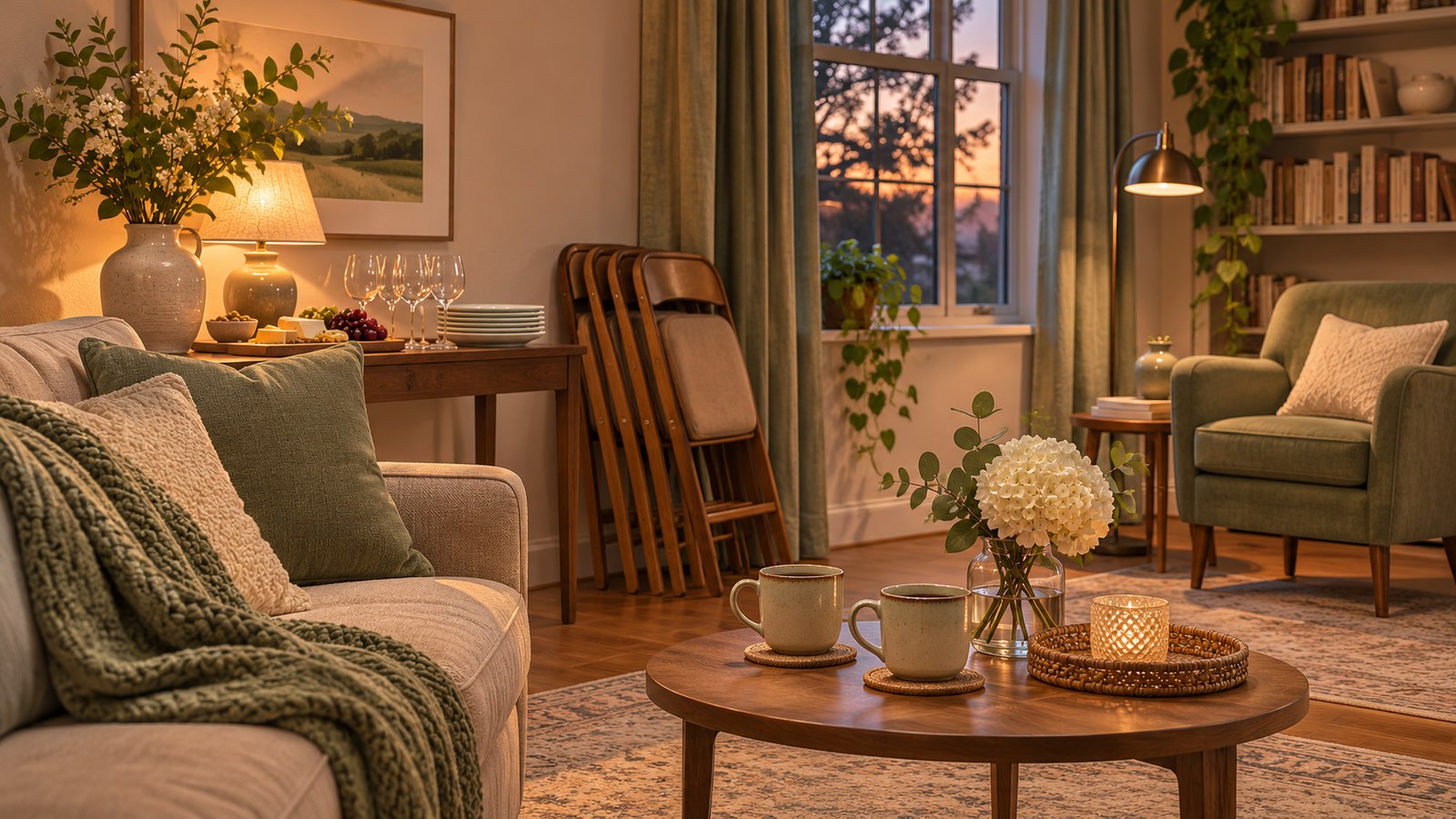
Your partner mentions that six friends are coming Saturday. The words arrive while you’re holding a grocery bag and wondering where the extra chairs live. Your partner is excited. You’re already calculating the dishes, the noise, and the quiet Sunday you hoped to have. If you say no, you may feel like the person who cancels joy. If you say yes, you may spend the evening quietly resenting the living room.
People vary in how much company they enjoy and how much recovery they need afterward. That difference doesn’t make one person warm and the other difficult. A lively dinner can help one partner feel connected while leaving the other drained. The question isn’t who has the correct social setting. It’s whether the plan respects both people who live in the home.
The CDC describes social connection partly in terms of the number and quality of relationships a person wants. More guests aren’t automatically better connection. A quiet one-on-one visit may feel better than a large gathering. And choosing quiet this weekend doesn’t mean you’re rejecting your partner’s friends. It may mean the house, your energy, or your calendar has a limit.
Talk about the cost before you talk about the guest list
Start with the part of hosting that actually weighs on you. Is it the cleanup, the last-minute notice, the pressure to entertain, or having nowhere to retreat? Your partner may hear “I don’t like your friends” when what you mean is “I can’t manage dinner for eight after a long week.” Say the second thing. Specifics make room for a practical answer.
Ask your partner what the gathering gives them. Maybe they miss their friends or want your home to feel open. Maybe hosting is easier than traveling across town. You don’t need to share the same preference to understand it. The APA’s guidance on healthy relationships emphasizes listening and handling conflict directly. Here, listening means finding the need under the invitation, then finding a plan that doesn’t quietly assign one person all the work.
I would be wary of describing the quieter partner as antisocial or the more social partner as needy. Those labels sound tidy and do very little. Look instead at the pattern: Who invites? Who buys food? Who stays after everyone leaves to clean? Who gets to say when the night ends? A disagreement about energy can become a disagreement about fairness when the invisible work has only one owner.
Make the invitation a shared decision
Set a simple rule before the next event: neither of you commits your shared home without checking with the other. That doesn’t require a committee meeting for every cup of coffee. It means a guest count, approximate end time, and any overnight stay deserve a quick yes from both people. If one of you already invited someone, address the change kindly and promptly rather than hoping the other person will adjust in silence.
You can create a few easy formats. Maybe a short afternoon visit works better than a dinner. Maybe your partner hosts friends while you make other plans, with a clear agreement about cleanup. Maybe larger gatherings happen once in a while and smaller ones more often. The goal is not a perfect mathematical split. It’s a set of choices that both partners can freely live with.
Divide ownership, not just chores assigned in the doorway. The person who wants to host can handle invitations, food planning, and the next morning’s dishes, or you can divide those pieces in another way you both accept. If money, space, childcare, or work schedules are tight, name those limits early. A plan that looks generous on a calendar may still cost too much in labor.
Agree on a graceful exit. One partner can go to bed at a set time or step into another room without a public explanation. The other can enjoy the remaining visit and close it as agreed. You don’t have to perform the same amount of sociability to be a team. But if your partner repeatedly promises an end time and then ignores it, the issue is no longer just different energy. It’s whether your agreement can be trusted.
Notice what the argument is really about
Try a short check-in the next day, after everyone has slept. What felt good? What felt costly? Did the arrangement actually protect quiet time? Did the host feel supported? Discuss what happened without turning the evening into an annual performance review. You are looking for one adjustment, not a winner.
Some couples find that the hosting argument carries an older hurt: one partner feels controlled, the other feels invisible. If every invitation becomes a test of loyalty, it may help to talk with a couples therapist. The APA notes that therapy can help partners improve communication and work through conflict. You don’t need to wait for a crisis to ask for help with a pattern that keeps repeating.
If you feel pressured, threatened, or unsafe when you set a reasonable limit, treat that as more than a scheduling disagreement. Seek support from someone you trust or a qualified professional. A compromise only counts when you can say no without fear. A social life that leaves one person afraid in their own home needs a different kind of attention.
You don’t have to solve every difference in one conversation. If the first plan doesn’t fit, you’ll know more after you try it. Perhaps you’re fine with a short visit but can’t manage dinner. Perhaps your partner isn’t asking for a party at all; they’re missing friends. A small adjustment won’t erase the difference, but it’ll show whether you can protect both people’s needs. You’re not required to enjoy every gathering, and they don’t have to enjoy every quiet night.
For the next invitation, try this sentence: “I’d like us to see them. Could we choose a time, a guest count, and who handles the work before we say yes?” It keeps the door open and gives both of you a place in the decision. The friends may never notice the planning. That’s fine. They won’t have to. The relationship will.
The bottom line: Different hosting needs can fit in one relationship when invitations, labor, and quiet time are agreed on before guests arrive. A good plan lets both partners feel at home.
If conflict leaves you feeling unsafe or in a mental health crisis, seek support now. In the United States, call or text 988; call 911 for immediate danger.
Sources: APA, Healthy Relationships; CDC, Improving Social Connectedness; CDC, Social Connection.

How do you share the household mental load without becoming the manager?
Why invisible planning can strain a relationship, how to divide ownership instead of errands, and what makes household work feel genuinely shared.

How do you choose which family to visit for the holidays?
Two families, one holiday. Decide your limits together, then send one kind, clear answer.

What if your partner dislikes your parents?
How to hear concerns about your parents, respond to specific moments, and set a workable plan for the next visit.
Want help sorting through what you are noticing?
A free 15-minute intro call can help you decide whether psychiatric care fits the next step.