Can sleep apnea look like depression or ADHD?
How disrupted breathing during sleep can affect mood, energy, and attention, which clues matter, and why a sleep study may change the treatment plan.
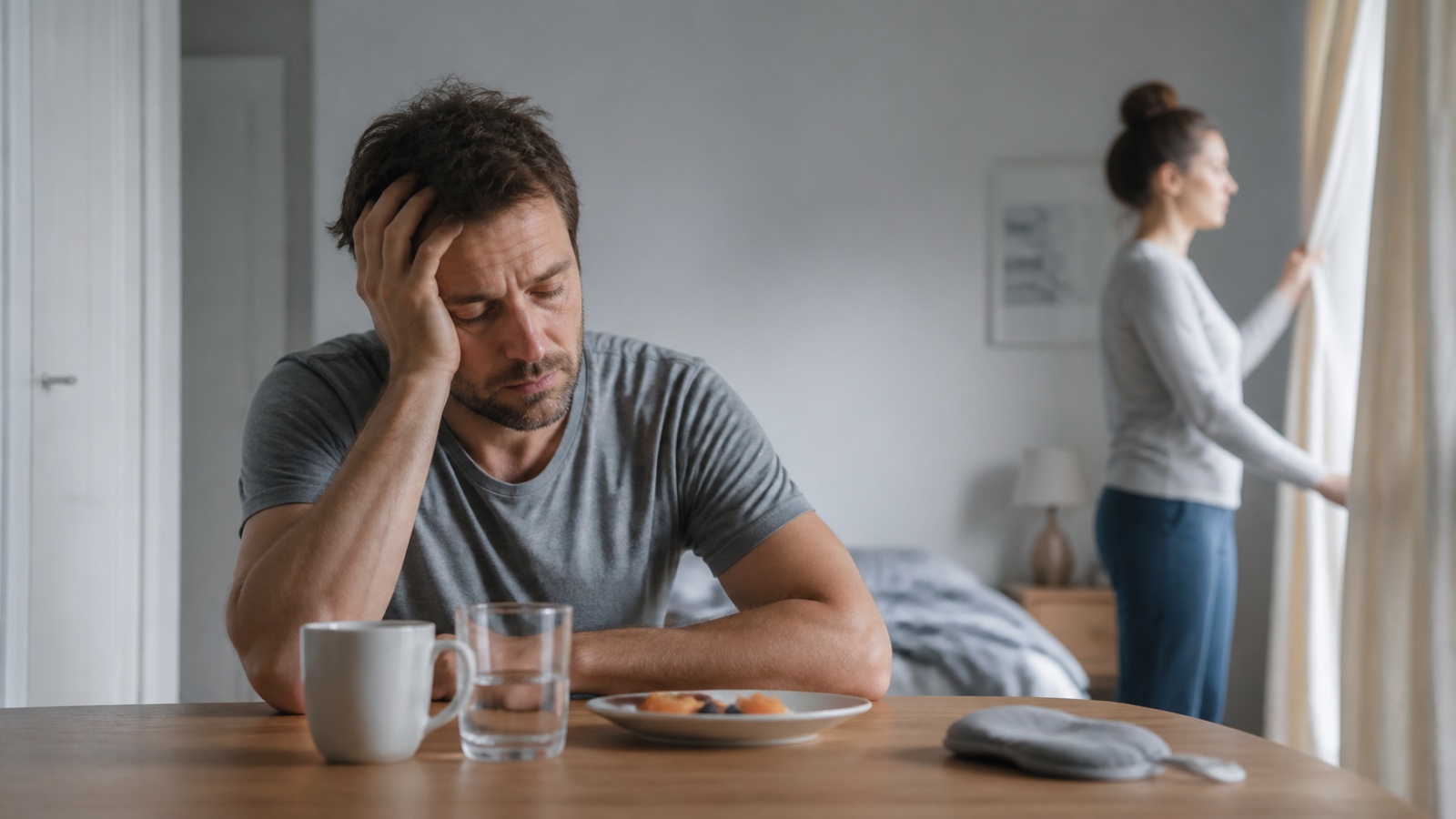
- Sleep apnea can contribute to fatigue, low mood, irritability, forgetfulness, and attention problems.
- Symptom overlap doesn’t prove that apnea caused depression or ADHD, and the conditions can coexist.
- Snoring, gasping, witnessed breathing pauses, morning headaches, and severe daytime sleepiness are useful clues.
- A sleep study, not a questionnaire or smartwatch alone, establishes the diagnosis and severity.
The alarm goes off at 6:45 a.m. You’ve been in bed for eight hours, yet your brain boots up like a laptop with 47 updates pending. By lunch, you’ve misplaced your keys, reread the same paragraph, and wondered whether depression is returning or ADHD has somehow become more ambitious.
Sometimes the missing question is what happened while you were asleep. Obstructive sleep apnea can fragment sleep through repeated narrowing or closing of the upper airway. You may spend enough time in bed and still wake unrefreshed. The resulting fatigue, mood change, and attention problems can overlap with psychiatric symptoms without being identical to a psychiatric disorder.
Hours in bed aren’t the same as restorative sleep
During obstructive sleep apnea, breathing repeatedly decreases or stops while you sleep. The brain briefly activates the body enough to reopen the airway. You usually won’t remember these arousals. Your bed can look like a place of uninterrupted rest while your nervous system has been running a tiny overnight customer-service desk.
Common clues include loud snoring, witnessed breathing pauses, gasping or choking, dry mouth, morning headache, frequent nighttime urination, unrefreshing sleep, and daytime sleepiness. Not everyone snores dramatically, and that doesn’t rule apnea out. The National Heart, Lung, and Blood Institute notes that women may report fatigue or insomnia more often, which can make the picture easier to misfile.
Children can look different too. Sleep apnea may show up with overactivity, behavior trouble, bedwetting, or difficulty paying attention at school. That doesn’t mean a restless child has apnea, but it’s one reason a careful ADHD evaluation asks about sleep and breathing.
Risk can rise with certain airway anatomy, higher body weight, age, family history, alcohol or sedative use, nasal obstruction, and some medical conditions. Thin people can have sleep apnea, and larger people deserve an assessment that doesn’t stop at blame. Airways are anatomy, not character references.
Sleep loss can borrow another condition’s wardrobe
Depression can involve low mood, loss of interest, low energy, sleep change, slowed thinking, and concentration difficulty. ADHD involves a persistent developmental pattern of inattention and sometimes hyperactivity or impulsivity across settings. Poor sleep can produce pieces of both pictures: fatigue, irritability, forgetfulness, slow processing, and trouble sustaining attention.
The timing helps. Did attention problems exist in childhood, before the sleep changed? Do low mood and loss of interest persist even after a better night? Does someone hear gasping? Are symptoms worst in the morning or after sleepy days? No single answer settles the diagnosis, but the history prevents one symptom list from doing three jobs.
Research finds substantial overlap between sleep apnea, depressive symptoms, and cognitive difficulties. Association isn’t proof of cause, and it can’t tell you which condition came first. Depression can worsen sleep, ADHD can interfere with sleep schedules, medications and substances can affect rest, and a person can genuinely have more than one condition.
I’ll be suspicious of any evaluation that treats sleep as the decorative garnish beside the “real” mental health history. I’ll be equally cautious about blaming every symptom on apnea. The useful question is what combination best explains the pattern and what can be tested safely.
A checklist can raise the question, not answer it
If you’re waking unrefreshed, ask a bed partner whether they notice snoring, pauses, gasping, or restless sleep. Notice morning headaches, dry mouth, nighttime urination, and unintended dozing. Keep a brief sleep diary with bedtime, wake time, awakenings, alcohol, medication timing, and daytime sleepiness.
Smartwatches and apps may estimate oxygen or sleep stages, but they don’t diagnose sleep apnea. Consumer readings can miss events, create false alarms, or produce charts that look medically confident while quietly guessing. That’s useful context, not a verdict. Bring useful data to a clinician without promoting the wrist device to chief of pulmonology.
A clinician may use screening questions and examine risk factors, but the American Academy of Sleep Medicine says diagnosis should be based on a comprehensive sleep evaluation and objective testing. Polysomnography in a sleep laboratory is the standard diagnostic test. A home sleep apnea test can be appropriate for selected uncomplicated adults at increased risk.
Try this today: ask one person who has heard you sleep a neutral question: “Do you notice pauses, gasping, or loud snoring?” Then record tomorrow’s wake-up feeling and afternoon sleepiness. You’re looking for a reason to seek evaluation, not trying to diagnose yourself before coffee.
Treating apnea may help mood, but it isn’t an antidepressant substitute
Treatment depends on severity, anatomy, symptoms, health risks, and preference. Options can include positive airway pressure, an oral appliance for selected people, weight-related care when relevant, positional strategies, addressing nasal obstruction, reducing alcohol or sedatives when safe, and sometimes surgery. Don’t stop prescribed medication without the prescriber.
Randomized-trial evidence suggests positive airway pressure can modestly reduce depressive symptoms in people with obstructive sleep apnea, with larger benefit in some groups who began with more depression symptoms. Evidence for anxiety and specific cognitive outcomes is less consistent. Treating the airway is important, but it doesn’t automatically settle every mood or attention problem.
If depression, ADHD, anxiety, or trauma is also present, it may still need direct care. A better sleep study result doesn’t erase a developmental history or guarantee that interest returns. Follow both tracks and review what actually changes: alertness, mood, focus, functioning, snoring, and treatment adherence.
If a mask or device is prescribed and you can’t tolerate it, say so rather than storing it in a closet where it will provide immaculate treatment to several shirts. It isn’t your only conversation with the sleep team. Fit, humidity, pressure, nasal symptoms, and mask style can often be adjusted. Effective treatment has to be used.
Sleepiness can become a safety problem
Don’t drive or operate dangerous equipment when you’re struggling to stay awake. Severe daytime sleepiness, near-miss crashes, or falling asleep unintentionally deserves prompt medical attention. Untreated sleep apnea is also associated with cardiovascular and metabolic risks, so evaluation matters beyond productivity.
Seek urgent care for chest pain, fainting, severe breathing trouble while awake, or another acute medical concern. If low mood includes thoughts of suicide, you can’t stay safe, or someone is in immediate danger, call or text 988 in the United States; call 911 for immediate danger.
You don’t have to choose between a sleep explanation and a mental health explanation before anyone evaluates either. You’ll get better information by following both. Ask what your nights are doing to your days, get objective testing when the pattern fits, and keep treating symptoms that remain. Restorative sleep won’t solve every problem, but it deserves a seat at the diagnostic table.
The bottom line: Sleep apnea can contribute to fatigue, low mood, and attention problems that resemble parts of depression or ADHD. Look for nighttime breathing clues, use a proper sleep evaluation to test the possibility, and don’t assume one diagnosis explains everything.
Sources: National Heart, Lung, and Blood Institute, sleep apnea symptoms and diagnosis guidance (updated 2025); American Academy of Sleep Medicine, diagnostic testing clinical practice guideline (2017); Zheng and colleagues, SAVE trial analysis and randomized-evidence meta-analysis, EClinicalMedicine (2019); Marrero-Gonzalez and colleagues, sleep apnea treatment and depressive symptoms systematic review and meta-analysis, Sleep and Breathing (2024).
Why depression can leave you exhausted after 10 hours of sleep
Why more time in bed doesn’t always feel restorative.
Why ADHD and sleep problems keep finding each other
How timing, stimulation, and treatment can complicate rest.

Why do clinicians ask about sleep, substances, and safety?
What those routine questions can change about care.
Would a clearer plan help?
A free 15-minute intro call can help you decide whether psychiatric care could support what you’re noticing.