How do you support the sibling who seems fine?
How to notice and support a sibling during another child's mental health crisis without oversharing, parentifying, or forgetting their ordinary life.
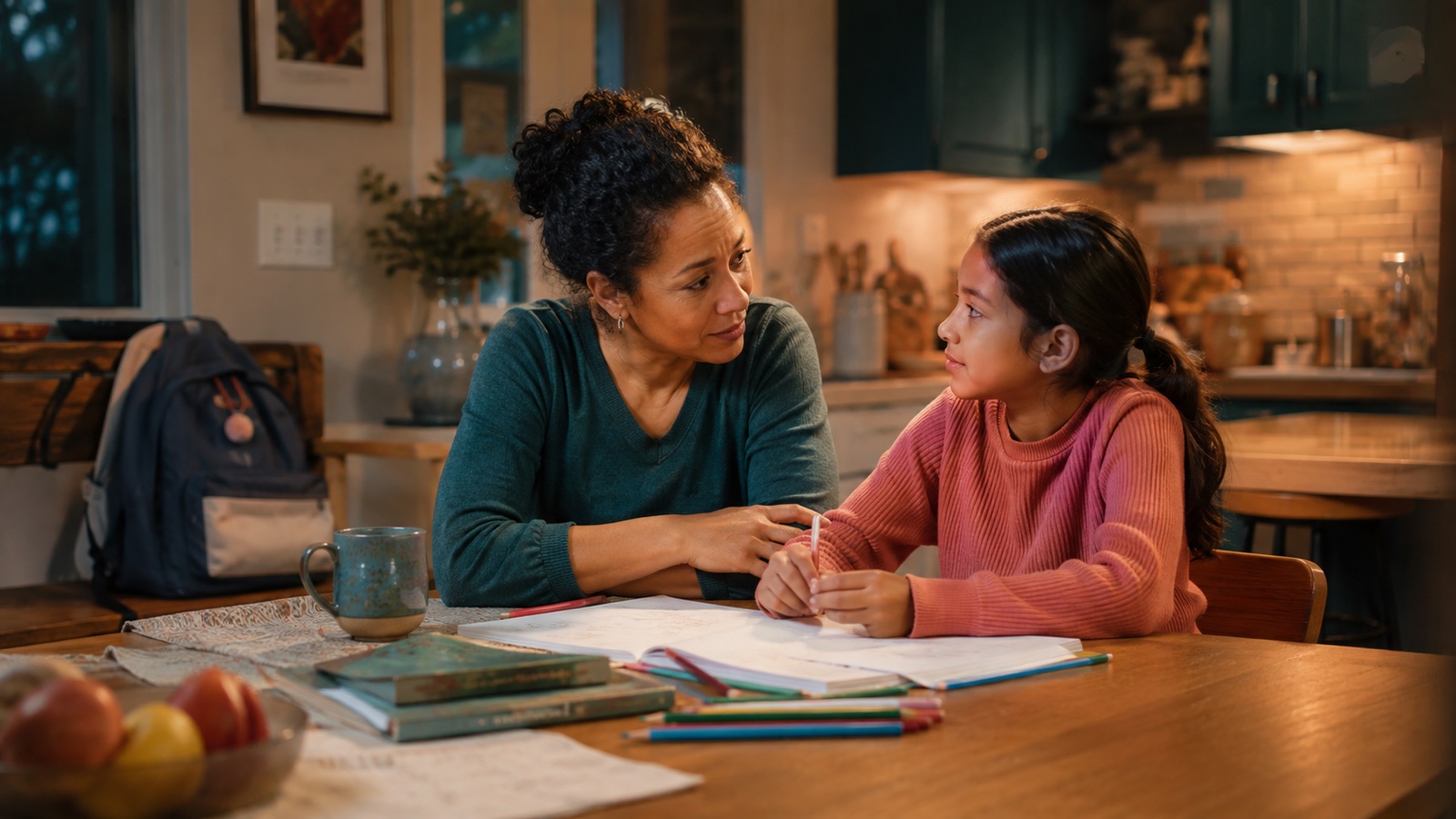
- A child who looks calm may still be confused, frightened, angry, guilty, relieved, or trying not to add work for the family.
- Give honest, age-appropriate information without sharing private details that are not theirs to carry.
- Protect ordinary routines and one-to-one attention, and do not make a sibling responsible for monitoring or treating the child in crisis.
- Ask directly about the sibling's sleep, school, body, mood, and safety, then bring in professional support when the pattern is persistent or concerning.
The overnight bag is still by the front door. One child is at the hospital with a parent. The other has finished breakfast, found both shoes, and asked whether anyone remembered the field-trip form. They look so impressively normal that every exhausted adult accepts the gift.
“At least this one is fine,” someone says.
Maybe they are coping well. Maybe they’re scared, furious, relieved, guilty about the relief, and determined not to create one more problem. Children can look calm because they feel safe. They can also look calm because the family already seems full.
The quiet child still lives inside the crisis
When one child is suicidal, severely depressed, manic, psychotic, hospitalized, or otherwise unsafe, attention has to move toward immediate risk. That’s appropriate. Appointments multiply, phones stay on, schedules collapse, and ordinary family life begins running on emergency power.
The sibling notices more than adults think. They hear a door slam, see an ambulance, lose a ride to practice, watch a parent cry, or discover that the house suddenly has new locks and rules. If nobody explains anything, the child will build an explanation from fragments. Children are excellent detectives and unreliable press secretaries.
Research on siblings of people with mental illness finds real strain for some siblings, but it doesn’t support one universal outcome. A systematic review found mixed results across studies, and the evidence overrepresented some diagnoses. A later meta-analysis found higher average anxiety and depression symptoms among siblings than comparison groups. Averages aren’t destiny. They are a reason to ask rather than assume.
Start with what they saw, not the speech you prepared
Choose a quiet moment and say, “A lot has happened. What have you noticed?” Then listen. They may ask whether their sibling will die, whether the police are coming back, whether mental illness is contagious, whether they caused it, or whether soccer is still happening Saturday.
Answer the question they actually asked. A younger child might need: “Your brother’s brain and feelings aren’t working safely right now, so adults and doctors are helping him. You didn’t cause it, and it isn’t your job to fix it.” An older child may need more information about treatment, safety changes, and what the next few days will look like.
Use the diagnosis only when it is known and the family has decided how to discuss it. Don’t diagnose from family rumor, and don’t make promises such as, “She’ll never do that again.” Try, “We’re taking safety seriously. I’ll tell you what I can as the plan becomes clearer.”
Privacy is different from leaving a child alone with mystery
The child in crisis deserves privacy. The sibling also deserves enough information to understand changes that affect their own life. You can say, “Some details your sister told the doctor are private. She’s safe tonight, she’s getting care, and Grandma will pick you up tomorrow.”
Don’t ask the sibling to keep dangerous behavior secret. They should know which adult to tell if they find a weapon, substance, threatening message, missing medication, goodbye note, or another immediate safety concern. Make it clear that telling isn’t betrayal.
At the same time, don’t turn them into a surveillance system. They shouldn’t be checking a sibling’s room, reading messages, counting pills, or staying awake to listen for movement unless a qualified professional has created a specific, developmentally appropriate plan. A child is family, not overnight clinical staffing.
“You are the easy one” is not always a compliment
Praising maturity can quietly reward disappearance. “You’re so easy” may sound loving and land as, “Please keep having no needs.” Try, “You’ve handled a lot. Being easy isn’t the price of getting attention here.”
Give permission for mixed feelings. The sibling may love their brother and hate the disruption. They may be terrified and still resent that a birthday was canceled. They may enjoy the quieter house and then feel monstrous about enjoying it. Feelings aren’t votes on whether they care.
I’ll often ask adults to avoid recruiting the sibling into the moral cleanup crew. They don’t need to say the perfect comforting thing, forgive frightening behavior immediately, or surrender every boundary because the other child is ill. Compassion and impact can occupy the same room.
Protect a few ordinary things on purpose
During a crisis, routine can’t remain perfectly intact. Choose what can survive: school attendance, bedtime, a weekly activity, dinner with an aunt, or 15 minutes with a parent. Predictability tells the sibling that the whole family hasn’t vanished into the emergency.
One-to-one attention doesn’t need to be cinematic. Drive to practice without discussing the crisis. Sit on the bed for 10 minutes. Let them choose music. Ask about the test you missed. The point isn’t to manufacture a magical childhood while everyone is exhausted. It’s to keep the sibling from becoming background furniture.
If plans change, name it directly: “I said I’d come to the game and I missed it because we were at the emergency department. I’m sorry. Aunt Maya recorded it, and I want to watch it with you tonight.” Acknowledgment won’t erase the loss. It keeps the loss from becoming invisible.
Watch function, not just behavior
Some siblings become clingy, irritable, defiant, perfectionistic, withdrawn, unusually helpful, or physically uncomfortable. Ask about headaches, stomachaches, sleep, appetite, school, concentration, friends, and activities. Look for a change from their usual pattern and for problems that persist or interfere with daily life.
Ask about safety plainly when there is reason for concern: “Have you had thoughts about hurting yourself or not wanting to be here?” Asking doesn’t plant the idea. It opens a door. If a child might act on suicidal thoughts or can’t stay safe, call or text 988 in the United States, seek emergency help, or follow the crisis plan.
Don’t make every bad grade or slammed door evidence of a second diagnosis. A crisis is stressful, and reactions can change across days. But don’t use “they seem fine” as a permanent clinical assessment either. Fine is a word, not a vital sign.
Support for siblings is promising, and the evidence is still thin
Programs for siblings may offer information, coping skills, parent-child communication, and contact with peers who understand. A 2025 systematic review focused specifically on siblings of young people with mental health conditions found only four eligible intervention studies, with generally weak quantitative evidence. That’s a reason for honesty, not neglect.
Broader research across chronic physical and mental health conditions has found that sibling-focused interventions may improve knowledge and some behavioral outcomes, though studies vary. A recent randomized trial of a brief sibling-and-parent program found small, consistent positive patterns in sibling mental health and communication, but several estimates were not statistically significant.
In plain English, there isn’t one proven sibling protocol you must find by Friday. There is a sensible family task: give information, invite questions, protect routines, reduce inappropriate responsibility, and get individual help when distress or impairment calls for it.
Make one small appointment with the child who is not the appointment
Put 15 minutes on the calendar today. Say, “This time is for you. You can talk about what happened, or we can talk about anything else.” Ask what they want adults to understand and what would make the next week easier.
If they don’t talk, don’t call the check-in a failure. Keep the next one. Trust often arrives after the child learns that attention won’t disappear the moment they admit they’re not fine.
The sibling who seems fine may truly be resilient. Resilience still deserves company.
The bottom line: When one child’s mental health crisis takes over the family, don’t assume the quieter sibling is untouched. Offer honest, age-appropriate information, protect privacy without creating mystery, preserve a few ordinary routines, and keep clinical responsibility with adults. Ask about the sibling’s actual experience and function. They don’t need equal crisis attention. They need reliable evidence that their life still counts.
Sources: Mittal and colleagues, systematic review of interventions for siblings of young people with mental health conditions, JCPP Advances (2025); Ma and colleagues, systematic review and meta-analysis of psychological distress in siblings of people with mental illness, Frontiers in Psychiatry (2022); Shivers and Textoris, systematic review of sibling outcomes, Clinical Child and Family Psychology Review (2021); Haukeland and colleagues, cluster randomized trial of a sibling-parent intervention, Journal of Pediatric Psychology (2025).
How do you explain different rules to siblings?
How to talk about fairness without making one child the problem.

What belongs in a psychiatric safety plan?
How to prepare practical steps before a crisis arrives.
When a parent has a mental illness
What children need to hear and what they should not carry.
Is one child’s crisis reshaping the whole family?
A free 15-minute intro call can help you decide whether psychiatric care fits the next step.