Why can antidepressants make your dreams feel so vivid?
Why antidepressants can change dream recall or intensity, what else may be disrupting sleep, and how to discuss vivid dreams without stopping medication abruptly.

- Antidepressants can change dream recall, intensity, and sleep, but the pattern varies by medicine and person.
- Depression, anxiety, trauma, alcohol, cannabis, sleep loss, and other medications can also change dreams.
- Track timing and impact rather than trying to interpret every dream as a message.
- Don’t stop or change an antidepressant abruptly; bring the pattern to your prescriber.
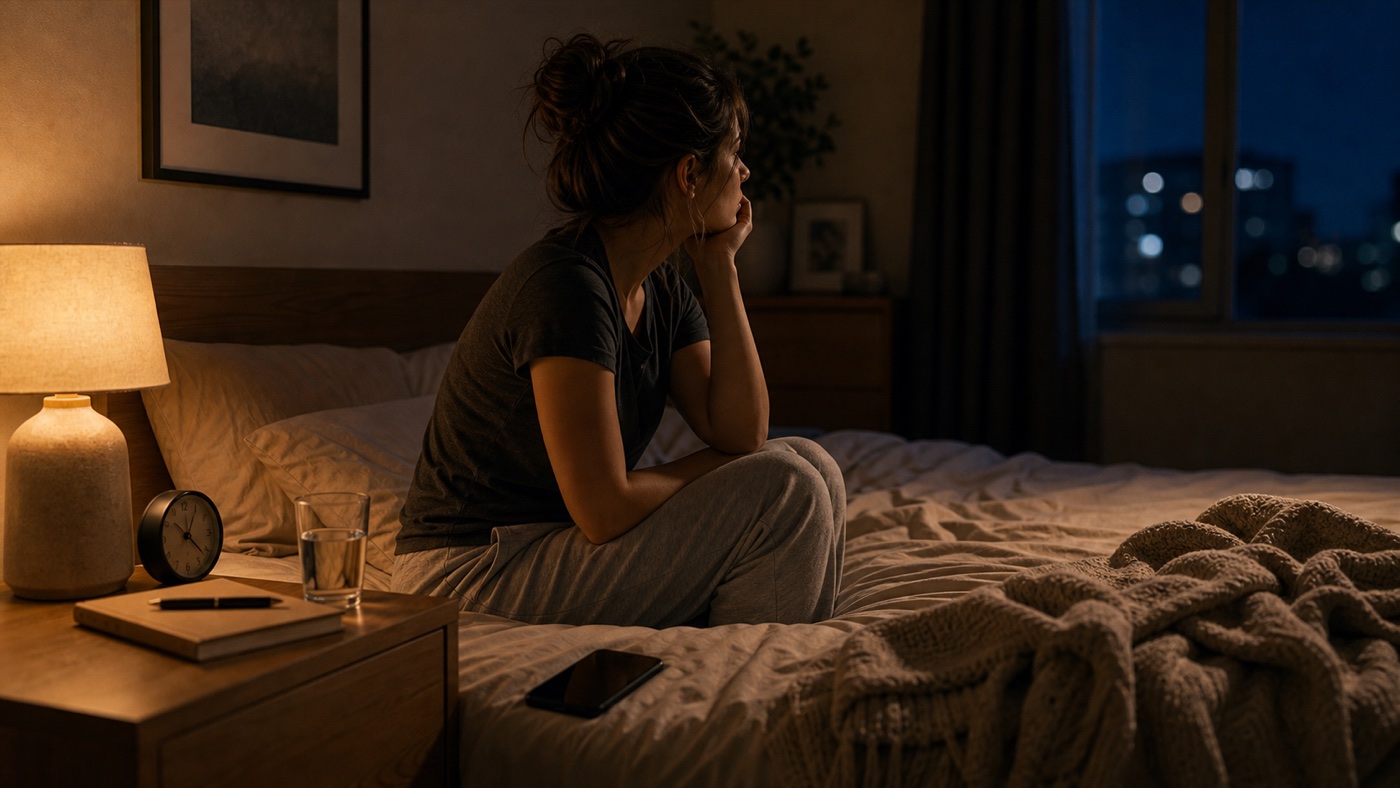
It’s 4:12 a.m. You’ve just escaped a dream involving your childhood kitchen, a delayed train, and a golden retriever apparently responsible for payroll. Your heart is awake before the rest of you. The details feel less like a dream and more like evidence entered into court.
If this started after an antidepressant, the timing is worth noticing. Antidepressants can affect sleep and dreaming. That doesn’t mean every vivid dream is a dangerous reaction, and it doesn’t mean the dream’s plot contains a coded verdict about your treatment.
Your dream didn’t necessarily get longer
Dreaming and remembering a dream aren’t the same event. You may dream without carrying much of it into the morning. You’re more likely to recall a dream when you wake during or near it, especially if the dream is emotionally intense. A medication that changes sleep continuity can therefore change what reaches breakfast.
Antidepressants also affect sleep architecture, including rapid eye movement sleep, in different ways. A systematic review found that antidepressants can alter dream recall and content. Many reduced dream recall overall, while some selective serotonin reuptake inhibitors and serotonin-norepinephrine reuptake inhibitors were associated with more intense dreaming, particularly around withdrawal.
That sounds contradictory only if dreaming is one dial. It isn’t. Frequency, recall, emotional tone, nightmares, awakenings, and morning distress are separate dials. One can move while another sits there pretending it has no idea what happened.
I’ll usually ask what changed, when it changed, and whether you’re losing sleep. “My dreams are strange” matters. “I wake six times, dread bedtime, and can’t function at work” tells us more about urgency and what the plan needs to protect.
The medicine may be involved without being the whole story
Depression itself can disrupt sleep and is associated with changes in dream content. Anxiety can make dreams feel more threatening and leave you scanning them the next morning. Trauma-related nightmares have their own assessment and treatment considerations. Alcohol and cannabis can alter sleep, as can stopping them. Fever, sleep deprivation, irregular schedules, and several nonpsychiatric medications may join the overnight writers’ room.
Timing helps. Did the dreams begin after starting the antidepressant, increasing the dose, changing when you take it, missing doses, or tapering? Did caffeine move later? Did a night shift begin? Are you waking because of snoring, reflux, pain, hot flashes, a baby, or a cat who rejects the concept of dawn?
None of this is a home detective contest. It’s a way to keep one plausible explanation from becoming the only explanation. If sleep changed sharply, the medication list and the rest of your health deserve the same table.
Vivid isn’t the same as dangerous
A dream can be bizarre, frightening, or embarrassingly specific without predicting what you’ll do. Dream content isn’t a diagnosis. It doesn’t prove a hidden wish, psychosis, or loss of control. The sleeping brain is an enthusiastic editor with limited supervision.
What matters clinically is the surrounding pattern. Are you acting out dreams by kicking, punching, leaping from bed, or injuring yourself or someone else? Are you barely sleeping, unusually energized, racing with ideas, more impulsive, or behaving unlike yourself? Are nightmares tied to trauma and repeatedly pulling you back into the event?
Those patterns deserve prompt professional assessment. New confusion, hallucinations while fully awake, severe agitation, suicidal thoughts, or an inability to stay safe need urgent help. Call or text 988 in the United States for a mental health crisis, or use emergency services when there is immediate danger.
Don’t run an abrupt experiment at breakfast
After a brutal night, skipping the next dose can feel wonderfully logical. It may also complicate the picture. Abruptly stopping some antidepressants can produce discontinuation symptoms, including sleep disturbance and vivid dreams or nightmares. Missing doses can be especially noticeable with medicines that leave the body more quickly.
Don’t double, skip, split, move, or stop doses based on a general article. The safest response depends on the exact medication, formulation, dose, other medicines, and your health history. Contact your prescriber or pharmacist and use the medication-specific instructions you were given.
A clinician may review timing, dose, interactions, how well the antidepressant is helping, and whether the dreams are settling or worsening. Sometimes a small plan adjustment helps. Sometimes protecting a medicine that is working while treating another sleep problem makes more sense. The right answer can’t be reverse-engineered from one spectacular dream about a municipal aquarium.
Give your prescriber a useful overnight report
For about a week, jot down four things each morning: medication and dose timing, bedtime and wake time, how often you remember waking, and how the next day functioned. Add alcohol, cannabis, late caffeine, and missed doses. You don’t need to transcribe the plot unless a recurring theme is clinically important.
Use plain impact language: “I’m startled but back asleep in 10 minutes,” or “I’m avoiding bed and missing morning classes.” That distinction helps your clinician weigh tolerability against benefit. It also keeps the conversation from getting trapped in whether the dream was technically “bad enough.”
If your sleep partner notices yelling, striking, choking, or long breathing pauses, include that. Their report isn’t a diagnosis, but it may point toward a sleep evaluation rather than a medication-only explanation.
You can lower the morning aftershock
When you wake from a vivid dream, start with orientation instead of interpretation. Name where you are, look at the clock once, feel the bed under you, and take a slow breath out. Remind yourself, “That was a dream. I’m awake now.” You’re helping the body update before asking the mind to write a review.
Keep lights low if you’re returning to sleep. Avoid opening a search engine to decode symbols at 4:17 a.m. The internet has never met a staircase it couldn’t turn into unresolved destiny. If you need to capture the dream, write one sentence, then return to your wind-down routine.
During the day, protect a consistent wake time, discuss insomnia if it persists, and make room for evidence-based treatment when nightmares are frequent or trauma-related. You shouldn’t have to choose between treating your mood and sleeping. The plan can consider both.
Try one week of facts, not folklore
Tonight, put a note by the bed with four labels: dose time, awakenings, dream distress, next-day impact. Fill it in briefly tomorrow. If the pattern is mild and fading, that’s useful. If it’s persistent, escalating, or impairing, you’ll have a cleaner story to bring to your prescriber.
Seek help sooner when you’re sleeping very little, acting out dreams, becoming unusually energized or agitated, or having thoughts of suicide or self-harm. A side effect doesn’t have to become a crisis before it deserves attention.
The bottom line: Antidepressants can change dream recall, intensity, and sleep, but vivid dreams aren’t one universal medication effect. Track timing and daytime impact, check the wider sleep picture, and bring the pattern to your prescriber instead of stopping abruptly. Your dream may be cinematic. Your response can still be pleasantly boring.
Sources: Tribl and colleagues, antidepressants and dreaming systematic review, Sleep Medicine Reviews (2013); Zhou and colleagues, sleep-related adverse effects of antidepressants systematic review and network meta-analysis, Sleep (2023); National Institute of Mental Health, Mental Health Medications; U.S. National Library of Medicine, MedlinePlus drug information for fluoxetine and venlafaxine.

Can antidepressants make you more anxious at first?
What early activation can feel like and when to call your prescriber.

What happens when you stop antidepressants?
Why tapering and medication-specific guidance matter.
Why can’t I sleep even when I’m exhausted?
What keeps a tired brain awake and what helps.
Are dreams making treatment harder to live with?
A free 15-minute intro call can help you decide whether a psychiatric medication review makes sense.