How do you ask for space without making your partner feel rejected?
How to ask a partner for healthy alone time with warmth, clarity, and a plan to reconnect, without turning space into rejection or punishment.

- Wanting time alone can be a healthy need for rest, focus, or emotional regulation, not a verdict on the relationship.
- A good request names what you need, reassures what it does not mean, gives a realistic time frame, and includes reconnection.
- Space becomes harmful when it is indefinite, punitive, controlling, or used to avoid every difficult conversation.
- You can respect one partner’s autonomy and the other partner’s need for steadiness at the same time.
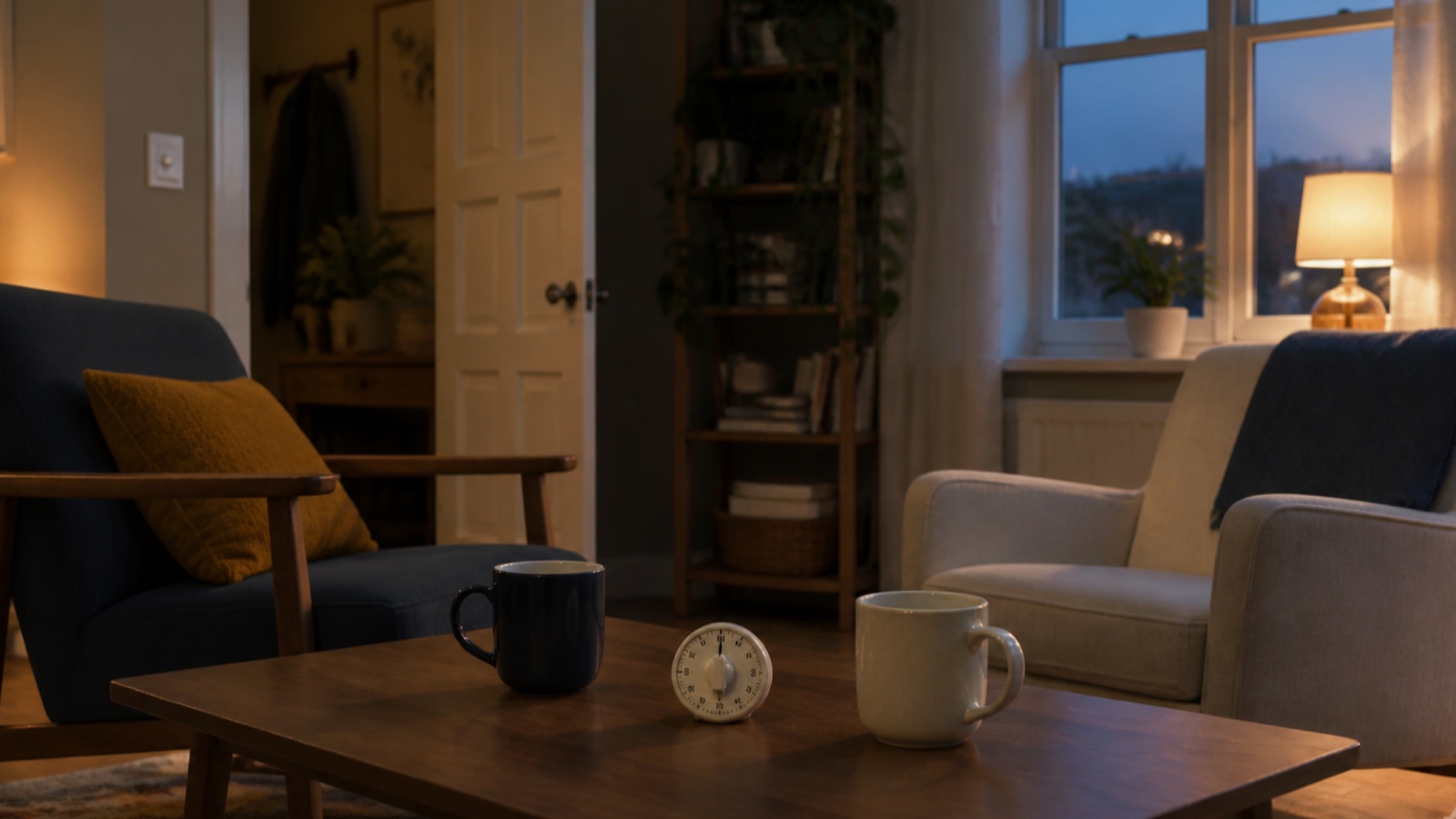
It’s Saturday morning. The coffee is still hot, the apartment is quiet, and your partner asks what you want to do together. You feel a strong, uncomplicated desire to sit alone near a window and hear nobody say your name for an hour.
You open your mouth. What comes out is something vague: “Nothing’s wrong. Just tired.”
Now they’re worried, you’re defensive, and the peaceful hour has applied for asylum.
Wanting space isn’t the same as wanting distance from the relationship. But if the request is vague, abrupt, or delivered during conflict, your partner may hear rejection where you meant regulation. The goal isn’t to eliminate every uncomfortable feeling. It’s to make the request clear enough that neither person has to invent the missing half.
Alone time and loneliness are not the same experience
Solitude can be restorative when it is chosen. In experimental research, time alone tended to lower high-arousal emotions, and chosen solitude could support relaxation and reduced stress. A later daily-diary study found a more complicated picture: more time alone sometimes tracked with loneliness, while chosen solitude also tracked with less stress and greater autonomy.
There isn’t one correct number of hours that makes a relationship healthy. One person may reset with a walk and a podcast. Another may feel restored by cooking beside their partner without talking. A third may need the kind of silence usually available only in libraries and grudges.
The distinction that matters is often choice. Time alone that you want can feel spacious. Isolation you didn’t choose can feel empty. A caring relationship makes room to discuss both.
Say what the space is for, not what your partner is doing wrong
“I need space” can sound like a trailer for a breakup because it contains no scale. Do you mean 20 minutes, the afternoon, or a separate apartment? Your partner’s imagination will happily provide the most alarming version.
Use a request with four parts: what is happening inside you, what you’re asking for, what it doesn’t mean, and when you’ll reconnect. Try, “My head is crowded after this week. I’d like an hour alone to read. I’m not pulling away from us. Can we make lunch together at noon?”
That isn’t a legal contract. It’s a handrail. Research on close relationships suggests that direct, positive support-seeking and perceived partner responsiveness are associated with better experiences of support. Clarity gives your partner something real to respond to.
I’ll be plain: reassurance works better when it’s specific. “We’re okay, and I’ll come find you after my walk” is easier to trust than “Stop worrying.”
Reconnection is part of the request
If your partner fears abandonment, the beginning of space may feel like the start of disappearance. You don’t have to erase that fear, but you can avoid feeding it with an open-ended exit.
Name a return point you can keep. It might be dinner, a check-in after class, or a message when you’re ready to talk. If you need more time, update the plan before the original window ends: “This still feels too activated to handle well. Can we talk at seven tonight?”
Then return. The repair is not the promise. It’s keeping the promise often enough that space stops meaning vanishing.
If you asked for quiet because you were flooded during an argument, use the return to address the original issue. A pause can protect a conversation. It can’t replace one forever.
Receiving the request takes its own kind of courage
If your partner asks for time alone, you may feel your body turn it into a verdict before the sentence is finished. You might chase reassurance, criticize the request, or go cold first so you can’t be left second.
Ask for information instead of mind-reading. “Are we okay?” may be too broad. Try, “About how much time do you need, and when should we reconnect?” You can also agree to the afternoon while asking to preserve your dinner plan.
Supporting autonomy doesn’t require pretending you have no feelings. In couple studies, more self-determined relationship motivation and autonomy support have been linked with more supportive behavior and better relationship experiences. That’s association, not a guarantee. It still points toward a useful stance: love can include room to be a separate person.
While you wait, choose something that settles you without turning the pause into surveillance. Call a friend, move your body, work on a task, or write what you want to say. Refreshing their location every 40 seconds is technically an activity, but it’s not rest.
Space should not become punishment with better branding
Healthy space is named, bounded, and connected to care. The silent treatment withholds contact to punish, control, or force pursuit. Disappearing for days after every disagreement, refusing necessary parenting or household responsibilities, and making your partner beg for basic information aren’t thoughtful regulation.
There is also a difference between needing time to calm down and refusing every difficult conversation. If every request for closeness produces a retreat, the pattern deserves attention. If every request for solitude produces protest, accusation, or intrusion, that pattern deserves attention too.
Don’t use attachment labels as courtroom evidence. “You’re avoidant” and “You’re anxiously attached” often end curiosity at the moment it is most needed. Describe behavior instead: leaving without a return time makes the pause feel unsteady, while sending 15 messages after a request for an hour makes the request feel ignored.
Safety changes the meaning of distance
A request for space does not excuse threats, intimidation, coercive control, property destruction, stalking, blocking a doorway, or abandoning someone who needs urgent medical help. If you’re afraid of your partner, prioritize safety and contact trusted support or emergency services rather than negotiating the perfect reconnection plan.
If either person is in a mental health or suicide crisis in the United States, call or text 988. In immediate danger, call 911. Relationship communication advice can’t substitute for a safety plan.
Couples therapy or individual therapy may help when this cycle keeps repeating, when old losses make brief separation feel unbearable, or when one person can’t get enough room to function. The point isn’t to declare a winner. It’s to make both connection and autonomy livable.
Try the one-hour experiment
Choose a calm time, not the loudest minute of an argument. Ask for one specific block of alone time this week. Say what you’ll do, what it means, and when you’ll reconnect. The receiving partner asks one practical question and names one reasonable reassurance that would help.
When the hour ends, come back without grading each other. Ask, “What made that easier?” You’re not testing whether either person can suppress every feeling. You’re building evidence that space can have a door on both sides.
The bottom line: Healthy space is not a disappearing act. Ask clearly, explain what the time is for, say what it does not mean, and make a realistic plan to reconnect. The other partner can respect the request while naming what would help it feel steady. A strong relationship doesn’t erase separateness. It makes returning trustworthy.
Sources: Nguyen, Ryan, and Deci, solitude and affective self-regulation, Personality and Social Psychology Bulletin (2018); Rodriguez and colleagues, daily solitude and wellbeing, Scientific Reports (2023); Don and Hammond, relationship autonomy and social support, Personality and Social Psychology Bulletin (2017); Murray, partner responsiveness as a relationship safety signal, Current Opinion in Psychology (2023).

How much alone time is healthy in a relationship?
How to make room for two nervous systems and one shared life.
Is it okay to take a break during an argument?
How to pause conflict without abandoning the conversation.

Relationship anxiety: why reassurance never feels like enough
How to understand the loop without shaming either partner.
Does space keep turning into a relationship emergency?
A free 15-minute intro call can help you decide whether individual or relationship-focused care belongs in your next step.