What if your child is afraid to disappoint you?
When a small mistake feels like a threat to your child, reassurance alone may not stick. Make room for honest feelings while keeping clear, kind expectations.

- A child may hear disappointment as a threat to connection, even when you mean to guide.
- Ask what your child thinks will happen before rushing to reassure.
- Keep standards clear while showing that mistakes do not change their place with you.
- Watch for a wider pattern that disrupts school, sleep, or daily life.
The spelling paper stays in the backpack
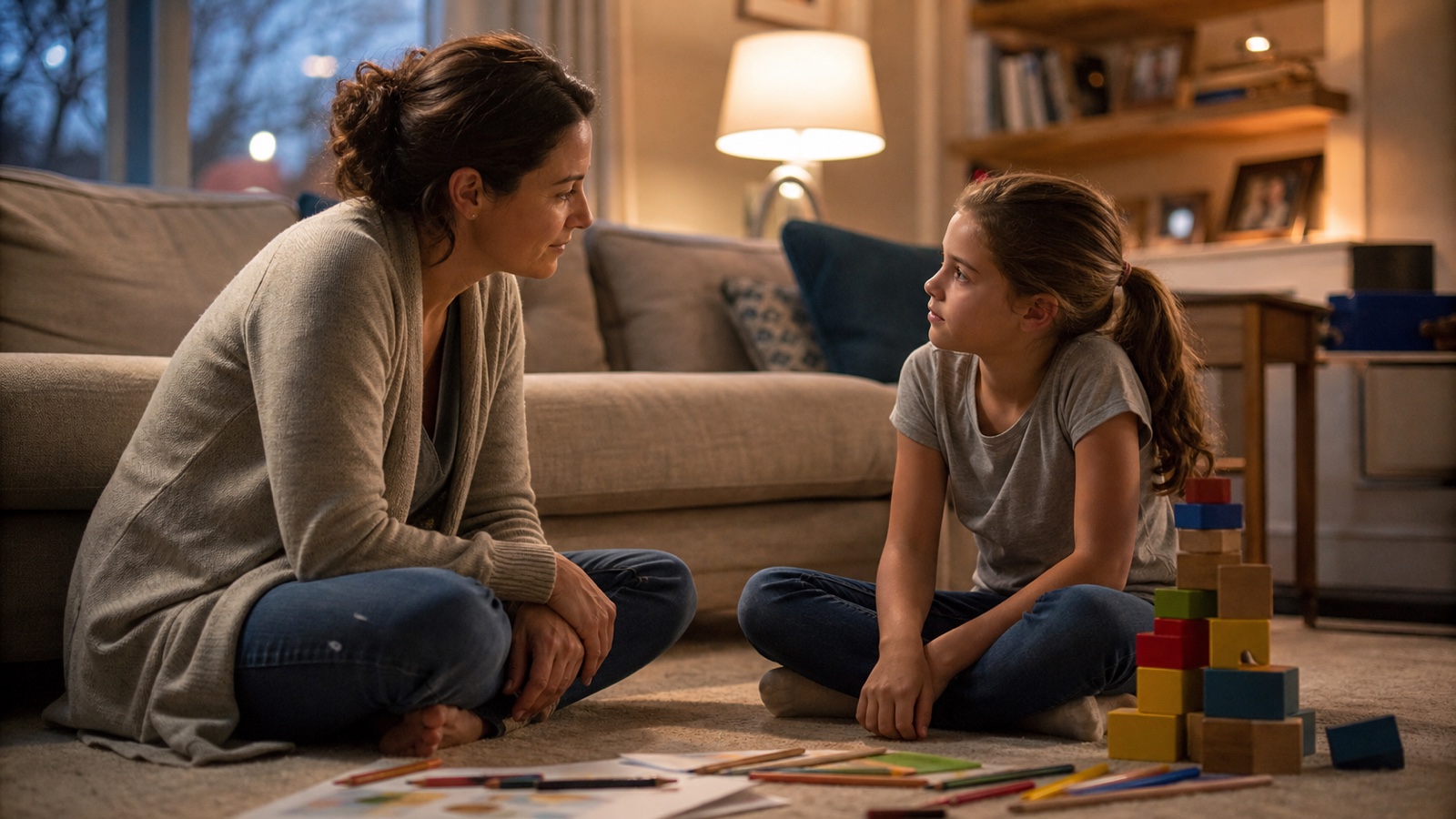
Your child gets home, puts a backpack by the door, and asks for a snack before you’ve taken off your shoes. The spelling paper stays zipped inside. Later you find a score that isn’t what they hoped for. They don’t ask how to practice. They ask, Are you mad? The question may sting because you thought you were encouraging them. Now the important conversation isn’t only about spelling.
Children can care fiercely about what parents think. That care helps them learn, but it can also make an ordinary mistake feel enormous. A child who fears disappointing you isn’t proof that you’ve been harsh, and it isn’t proof that everything is fine. It’s a cue to get curious about the meaning they’ve attached to the moment. What did they imagine you would say? What have they heard you say before?
Reassurance lands better after you listen
It’s natural to answer, Of course you’re safe with me, and move on. Sometimes that’s enough. Sometimes the child nods and hides the next paper too. Try slowing down: What made you expect anger? What were you worried would happen when the paper came out? Then let the answer surprise you. They may remember a rushed comment, compare themselves with a sibling, or be carrying pressure from somewhere else.
The American Academy of Pediatrics recommends active listening, respect for a child’s feelings, and avoiding put-downs when you talk. That doesn’t mean every feeling is a fact. It means the feeling is worth hearing before you correct the story. You can say, That sounds scary. Your worry matters, and we can look at this together. The paper can wait while the child feels safe enough to show it.
You can be honest about expectations without making love sound conditional. Your work needs to be turned in, and we’ll figure out what got hard together. That is different from This should have been easy for you. The first sentence names a task and offers support. The second can sound like the child’s value is on trial. Children don’t always hear the careful distinction you intended when you’re speaking while late for dinner.
Watch the tone of the whole week
One reassuring speech can’t carry a week of sharp sighs, comparisons, or praise reserved only for a perfect result. Notice what gets attention in your home. Do you talk about effort, questions, and recovery after mistakes, or mainly about the score? Can your child bring you unfinished work? Can they tell you they didn’t understand something before the deadline? Those moments say more than a poster about trying your best.
Specific praise can help. You kept working on that hard problem, or You told me the truth even though you were nervous. The AAP encourages parents to describe real effort and behavior rather than rely on broad approval alone. The goal isn’t to praise every breath. It’s to help a child see what they can do next, even when the outcome wasn’t the one they wanted.
If you’ve reacted sharply, repair it without making your child comfort you. That reaction sounded upset and may have scared you. You are loved, and we can make a plan for the assignment. You don’t have to claim you never feel disappointed. Adults have feelings. The useful message is that your feeling won’t make the child lose the relationship, and you will handle your part responsibly.
Make the next step small enough to begin
Ask what made the task hard. Was the instruction confusing? Did the child run out of time, feel embarrassed to ask, or have trouble concentrating? These aren’t excuses to ignore the work. They’re different problems with different solutions. A quick check with a teacher may help. So may a quieter homework spot, a short practice plan, or a way to ask for help before the next paper goes missing.
I often tell parents that a child’s question about disappointment is an opening, not a verdict. You can answer with both warmth and structure. We can be upset about a choice without making you the bad part of the story. When children know the conversation won’t become a trial, they have more room to tell you the truth. That’s useful for spelling now and much bigger things later.
If fear spreads across many parts of life, pay attention. A child who constantly seeks reassurance, avoids school or activities, has stomachaches around ordinary tasks, or loses sleep may need more support. Talk with a pediatrician or qualified mental health professional, especially when daily life is shrinking. You don’t need to diagnose the reason at the kitchen table. You do need to take persistent distress seriously.
Today, try one quiet question before discussing the next mistake: What did you expect to hear? Listen all the way through. Then name one clear expectation and one way you’ll help. You can keep the standard without turning the score into a referendum on the child. A small, repeatable response will matter more than a perfect speech delivered once.
You may need to have this conversation more than once. Children learn from the way ordinary days go, not only from the sentence you choose when a grade arrives. If you’re tired or worried yourself, take a breath before answering. A calm pause can keep the paper from becoming the whole story. Later, you can return to the task and ask what support would make the next attempt easier.
The bottom line: Your child can learn from a mistake while knowing they still belong with you. Ask about the fear, speak clearly about the task, and show through ordinary moments that affection isn’t something they earn with a grade.
If you’re in a mental health crisis in the United States, call or text 988; for immediate danger, call 911.
Sources: American Academy of Pediatrics, communication; American Academy of Pediatrics, specific praise; CDC, connecting conversations.

What if your child apologizes for everything?
Frequent apologies can mean kindness, worry, or a need for reassurance. Listen for what your child fears, model repair without shame, and seek help when the pattern narrows their life.
How do you repair after yelling at your child?
What to do after you yell at your child, how a full apology supports repair, and how to change the pattern without drowning in shame.

What if your child gets a stomachache before school?
A school-morning stomachache can be real and still have many possible causes. Start with medical care, curiosity, and a calm plan with your child and school.
Want help sorting through what you are noticing?
A free 15-minute intro call can help you decide whether psychiatric care fits the next step.