What if your child apologizes for everything?
Frequent apologies can mean kindness, worry, or a need for reassurance. Listen for what your child fears, model repair without shame, and seek help when the pattern narrows their life.
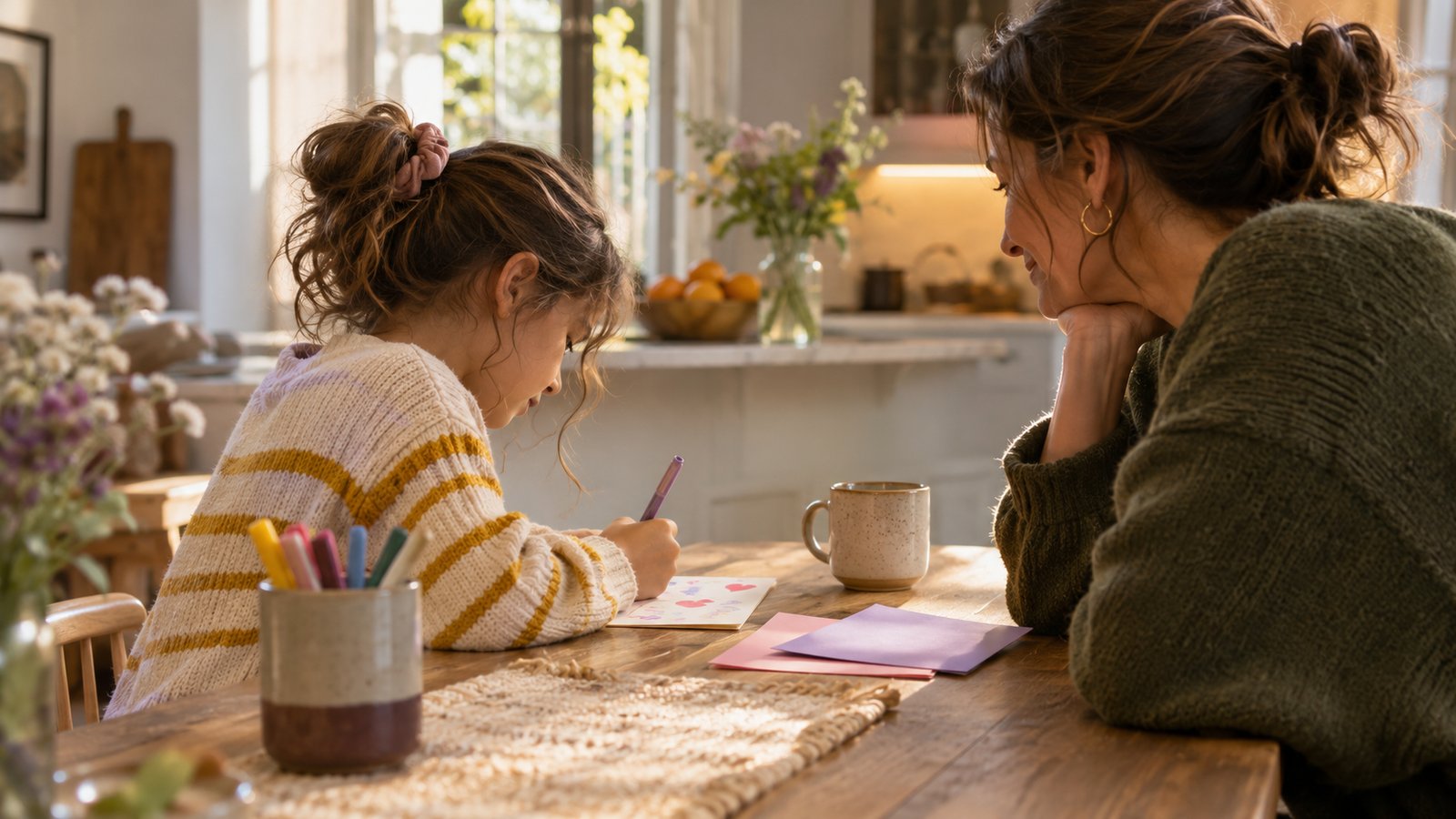
- An apology can be thoughtful or a sign your child feels responsible for everything.
- Ask what your child thinks will happen if they do not apologize.
- Teach repair for real mistakes without making ordinary needs seem wrong.
- Seek an evaluation when worry and reassurance interfere with daily life.
The apology arrives before the spill is cleaned up
Your child bumps a cup at breakfast. “Sorry, sorry, sorry,” they say while the water spreads across the table. Later they apologize for asking a question, for taking too long to put on shoes, and for choosing the movie everyone said they could choose. You don’t want to shame a considerate child. You also don’t want them to feel as if taking up space is a mistake.
Start with curiosity. Children apologize for many reasons. They may be practicing manners, trying to repair a real mistake, hoping to calm an upset adult, or asking for proof that the relationship is safe. One morning of extra apologies can’t tell you which story is true. The pattern, the child’s distress, and what happens after reassurance matter more than the word itself.
Listen for the fear behind the word
At a quiet time, try asking, “When you say sorry, what are you worried might happen?” You may hear, “You’ll be mad,” or “The teacher will think something bad.” You may hear, “Nothing, it’s just a habit.” Let the answer guide you. A lecture about confidence won’t help much if your child is actually afraid of an adult’s reaction.
Look at the settings. Does the apology show up with everyone, or mostly after a hard school day? Did it begin after conflict, bullying, a move, or a change at home? Is your child also avoiding activities, asking for the same reassurance repeatedly, or struggling to sleep? Children can have anxiety while looking quiet and cooperative. Still, frequent apologies don’t automatically mean anxiety or obsessive compulsive disorder. A clinician needs a fuller picture.
I’d avoid turning your child into a daily count of sorrys. If you start announcing every apology, the word becomes a test they can fail. Instead, notice the moments when they seem scared, frozen, or relieved only for a minute after you reassure them. That tells you more about what support they may need. You can write down examples privately if you plan to talk with a pediatrician.
Make real repair simple and safe
Children need to learn how to own a mistake. They also need to know that an accident is manageable. For a spilled cup, you might say, “The water spilled. Let’s get a towel.” If someone’s drawing was damaged, you can add, “You can say you’re sorry and ask how to help.” The lesson is about action, not about proving that your child is good enough to stay loved.
Model the difference yourself. When you snap after a long day, name it: “I spoke too sharply. I’m sorry. I’ll try again.” When you simply need someone to move so you can pass, you can say, “Excuse me,” without apologizing for existing. Children listen to these tiny examples. They also notice whether adults can admit mistakes without making the room feel unsafe.
If your child apologizes for a need, answer the need first. “You don’t need to be sorry for being hungry. Let’s find a snack.” If they apologize for a feeling, try, “You can be disappointed. We still have to leave now.” A feeling can be allowed while a boundary stays in place. That gives them a clearer map than either endless reassurance or “Stop saying sorry.”
Reassurance is kind, but it needs a plan
When a child asks, “Are you upset?” once, an honest answer can help. If the same question returns every few minutes, repeating the answer may ease the worry only briefly. You don’t need to refuse comfort. You can say, “You’ve heard the answer, and we’re here together. What could help you handle the unsure feeling?” Go slowly. A child who is very distressed may need a clinician to help the family plan this safely.
Be careful about the home climate as well. If apologies are followed by harsh punishment, unpredictable anger, or jokes about being too sensitive, changing the child’s words won’t solve the problem. Adults can make repair easier by responding predictably and respectfully. If a child says they’re apologizing because someone frightens them, listen and take that seriously rather than assuming this is only a worry habit.
School can offer clues too. A teacher may see your child erase work over and over, avoid raising a hand, or apologize after harmless mistakes. Ask for observations, not a label. You might say, “We’re noticing lots of apologies and worry at home. What do you see at school?” Share only what your child needs you to share, and keep them part of the conversation when it fits their age.
Know when to bring in support
If the apologies are persistent, painful, or tied to avoidance, sleep trouble, school problems, or repeated reassurance requests, speak with a pediatrician or child mental health professional. The American Academy of Pediatrics notes that constant apologies can appear among possible signs of obsessive compulsive disorder, but it’s one clue among many, not a diagnosis. Effective care depends on understanding the whole pattern. You don’t have to settle that question alone at the kitchen table.
Try a small experiment today. The next time your child apologizes for an ordinary need, respond warmly to the need and skip a speech about the apology. Later, ask what the word was trying to protect them from. You’re looking for a conversation, not a perfect new phrase by bedtime.
Try to notice your own urge to fix the feeling immediately. It’s hard to watch a child worry, especially when you know they have done nothing wrong. You can offer comfort and still help them practice uncertainty in a small, supported way. You might say, “This feels big. We can handle it together.” That doesn’t promise that no one will ever be annoyed with them. It promises something sturdier: a mistake or a misunderstanding can be discussed and repaired. Your child doesn’t need a perfect record to have a secure place in the family.
The bottom line: Treat frequent apologies as information. Teach repair for real mistakes, make ordinary needs safe, and get help if worry starts running the day.
Your child can learn responsibility without carrying the whole room. They’ll need your help, and you’ll have chances to practice together. It’s okay if progress isn’t smooth; you’re learning too. If your child is in a mental health crisis in the United States, call or text 988; for immediate danger, call 911.
Sources: AACAP, The Anxious Child; American Academy of Pediatrics, OCD in children and teens; CDC, Anxiety and Depression in Children.

What if your child gets left out by friends?
What to say when your child feels excluded, how to spot a repeated pattern, and ways to help them build safe connections.
What if your child keeps comparing themself to a sibling?
When children compare themselves with siblings, a parent can respond without starting a new contest or assigning a family role.
What if your child says the teacher hates them?
How to hear your child without jumping to a verdict, ask the school for specifics, and protect your child when a classroom problem is real.
Want help sorting through what you are noticing?
A free 15-minute intro call can help you decide whether psychiatric care fits the next step.