What if your child worries when you travel?
When a parent leaves for a trip, a child may need a clear plan more than endless reassurance. Make return cues concrete and watch for persistent distress.

- Explain the caregiver, departure, and return in words your child understands.
- Keep a brief goodbye and a dependable plan for contact and delays.
- One worried question is not a diagnosis; look at sleep, school, and daily life over time.
- Seek child mental health support when separation fears persist or interfere.
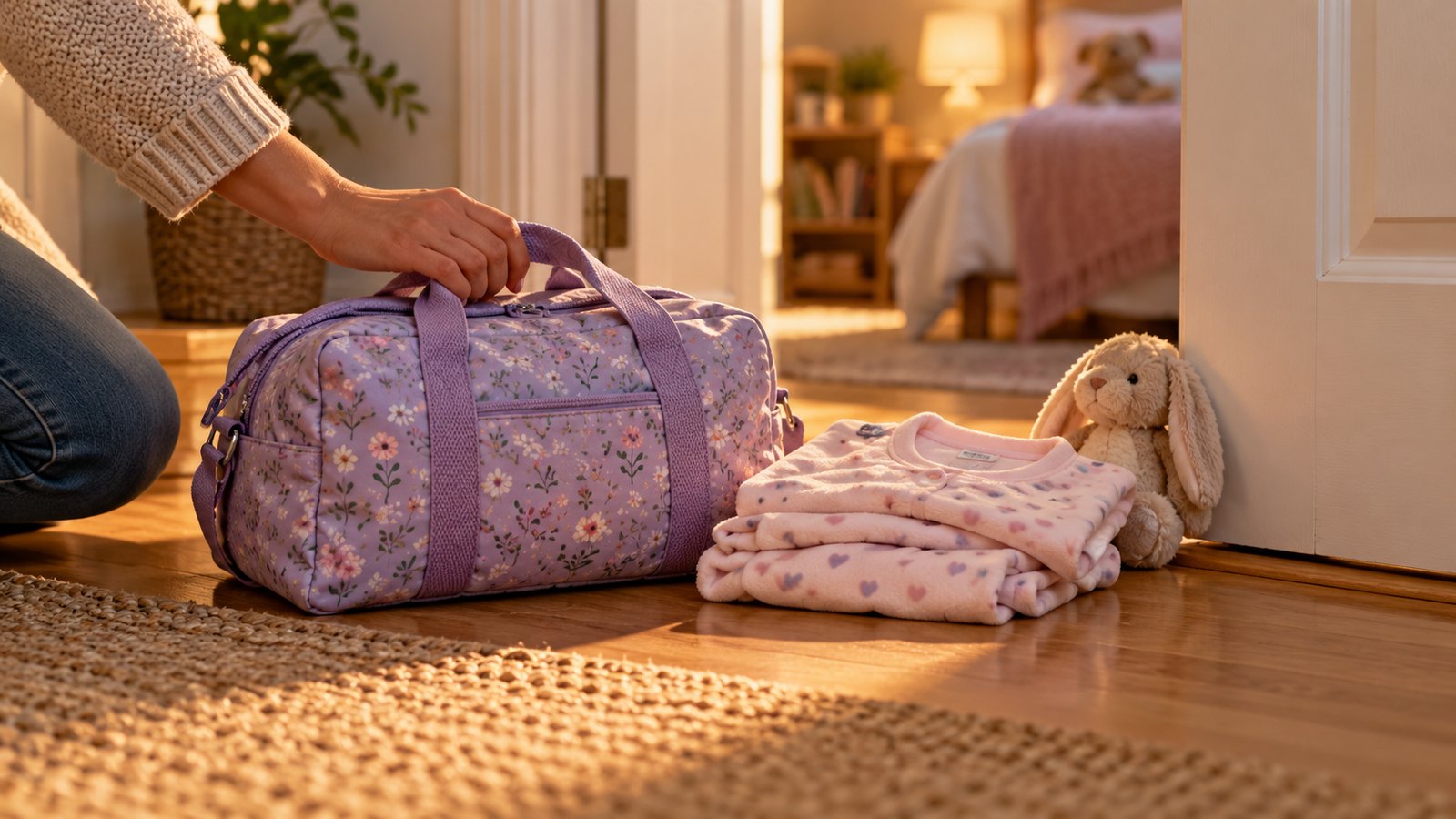
The suitcase is open on the bed. Your child drops a small toy into it, then asks whether the plane might not come back. You were planning to discuss socks and chargers, not the safety of aviation. You don’t want to brush off the question. You also don’t want to turn an ordinary work trip into a nightly disaster forecast.
A parent leaving for a few days can stir up real worry, especially when a child is young, has lived through a difficult separation, or is already under stress. One worried question doesn’t tell you they have an anxiety disorder. It tells you they need a clear picture of who will care for them and what happens next.
Name the trip in the child’s language
Tell your child where you’re going, who will be with them, and when you’ll return in terms they understand. For a younger child, “after three sleeps” may work better than “Thursday.” The American Academy of Pediatrics recommends concrete return cues and a consistent goodbye routine for young children. A simple calendar can make the plan visible. You don’t need a glossy itinerary with weather icons.
Keep promises within your control. You can promise to call at a planned time if you know you’ll be able to. You can’t promise that no flight will ever be delayed. If plans change, have the caregiver tell your child what changed and what stays the same. “Dad’s flight is later; Grandma is still doing dinner and bedtime” gives a child a foothold without pretending uncertainty doesn’t exist.
Ask what worries them most. “Will you miss me?” may need affection. “Who picks me up?” needs a name. “What if something happens to you?” deserves a calm answer and a reminder of the adults caring for them. Don’t rush to correct a fear before you’ve heard it. A child can ask the same question several times because they need the answer to settle, not because they weren’t listening.
I try to help parents trade a long reassurance speech for a short, repeatable plan. You might say, “I’ll leave after breakfast. Aunt Maya will take you to school. We’ll talk after dinner, and I’ll be home after three sleeps.” Then return to packing socks. Your steady tone matters, but you don’t need to perform perfect calm. You’re allowed to miss your child too.
Give the goodbye a shape, then let it end
A brief ritual can help: a hug, a familiar phrase, and a wave at the door. Dragging out the goodbye may make the transition harder for some children. You can acknowledge the feeling without making the goodbye a negotiation. “I know you wish I could stay. Aunt Maya is here, and we’ll talk tonight.” You don’t have to vanish while they’re distracted, and you don’t have to restart the departure each time they protest.
Consider a small object, photo, or note your child can keep. It’s a reminder of connection, not a magic cure. Let the caregiver know the usual bedtime routine and one or two things that comfort your child. Consistency matters more than recreating every detail perfectly. If a parent is away for work often, ask the child what part of the routine actually helps rather than assuming another video call is always the answer.
Calls can be lovely, but they don’t help every child in the same way. Some settle after a short check-in; others get upset when a call ends. Agree on a time and length with the caregiver, then adjust if the pattern isn’t helping. You might send a simple photo or voice note instead. Don’t interpret tears after a call as proof the trip was harmful. Look at the child’s overall functioning over time.
The adult staying home or another caregiver deserves a realistic plan too. Share school details, medication instructions if relevant, emergency contacts, and who makes decisions if travel is delayed. This practical preparation reduces confusion for adults, which can help them respond calmly to the child. It isn’t a sign that you expect disaster. It’s the same reason you label the lunch container.
Watch for a pattern that needs more help
AACAP notes that separation fears can be common in development, while severe, persistent anxiety that interferes with school, sleep, or friendships warrants an evaluation. Pay attention to repeated stomachaches, nightmares, school refusal, or distress that doesn’t ease after reunions. Don’t diagnose from one tearful airport goodbye. If you notice a pattern, speak with your child’s pediatrician or a qualified child mental health clinician.
The answer isn’t always to cancel every trip. Research finds an association between family accommodation of anxiety and greater symptom severity, but that doesn’t mean a parent should abruptly withdraw support. A clinician can help tailor gradual practice and support when fears are intense. Your job isn’t to force bravery on a schedule. It’s to notice what helps your child feel safe enough to keep living their ordinary life.
A child with a history of trauma, a recent loss, family conflict, or a real safety concern may need a different approach. Be curious about the context. If your child is scared because the caregiving arrangement itself isn’t safe, solve that problem first. No amount of calendar coloring makes an unsafe plan okay. Reassurance works best when the practical plan is trustworthy.
When you get home, don’t grade how your child handled the trip. Ask what was hard and what helped. You may learn that bedtime was fine but the school pickup was confusing, or that the first night was hard and the next two were easier. Use that information for the next separation. A short reunion ritual, even a snack together, can be more meaningful than a big speech.
Try one step today: write a three-line plan with departure, caregiver, and return, then tell your child in words they use. Invite one question and answer it plainly. If worry becomes overwhelming or affects daily life, seek professional help. If someone is in a mental health crisis in the United States, call or text 988; call 911 for immediate danger. Your child needs a dependable plan, not a promise that nobody will ever feel worried.
The bottom line: Your child needs a dependable plan, not a guarantee that nobody will feel worried. Name the caregiver, mark your return clearly, and get help if fear keeps disrupting daily life.
Sources: AAP, easing separation anxiety; AACAP, anxiety and children; Family accommodation meta-analysis.
What if your child wants a sleepover but gets scared?
A child can want the sleepover and fear the goodbye. Make a gradual plan, agree on a pickup option, and watch the wider pattern.

How do you help a child who worries you will die?
How to answer a child's fear that a parent will die with honesty, steadiness, and less reassurance looping while keeping ordinary life moving.

What should you say when your child sees you cry?
A child who sees you cry may have questions, not a verdict. Learn how to explain the moment simply, offer reassurance, and keep adult burdens with adults.
Want help sorting through what you are noticing?
A free 15-minute intro call can help you decide whether psychiatric care fits the next step.