What if your child wants a sleepover but gets scared?
A child can want the sleepover and fear the goodbye. Make a gradual plan, agree on a pickup option, and watch the wider pattern.
- Wanting to go and feeling scared can happen at the same time.
- Plan small practice steps and a clear check-in before the night.
- A pickup plan is a safety net, not a verdict on your child.
- Seek help if separation fears regularly limit school, sleep, or daily life.
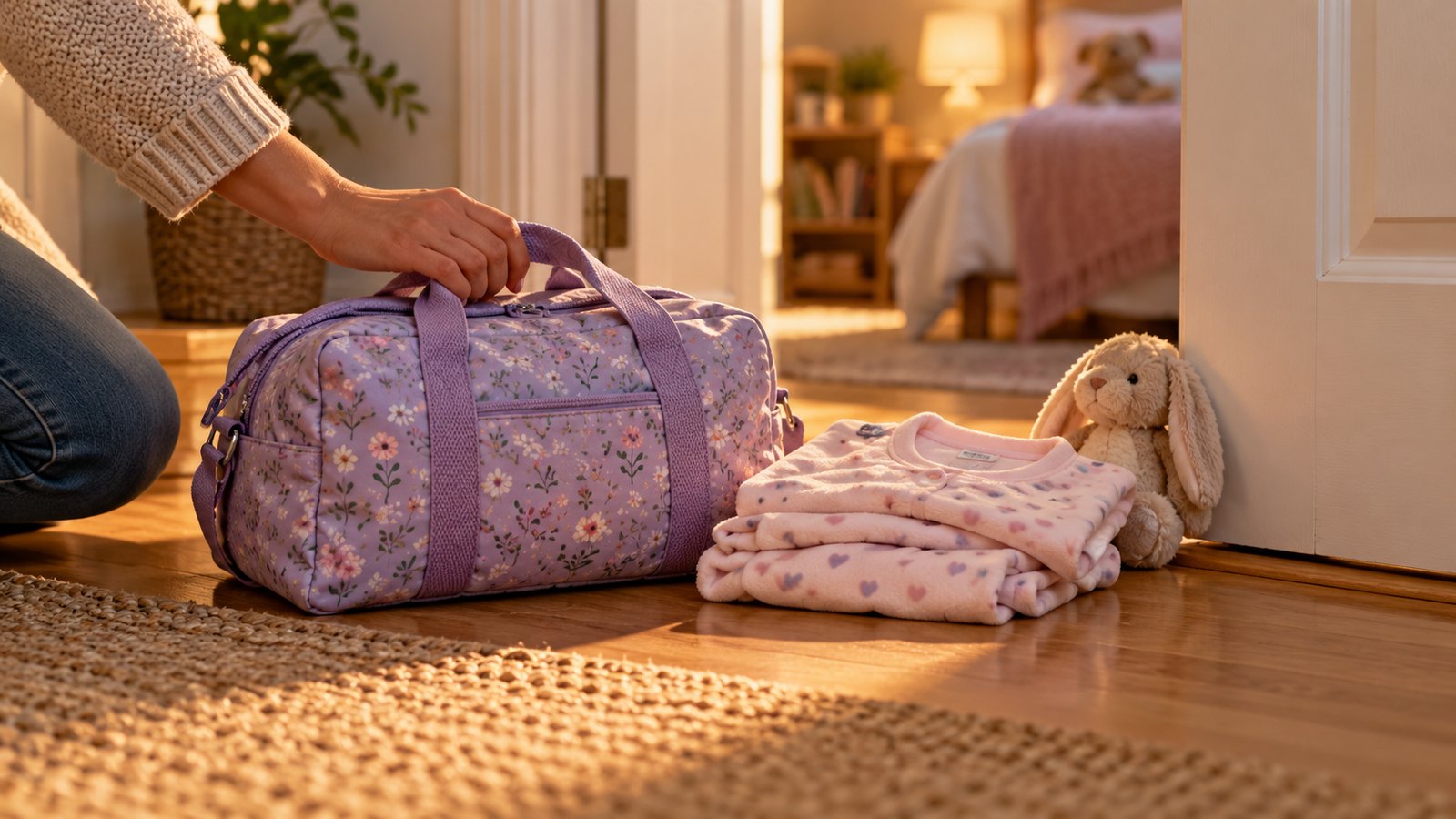
The overnight bag is zipped, the toothbrush is inside, and your child has changed their mind for the fourth time since dinner. They want to go. They also want you to promise you’ll pick them up the second the hallway light goes out. You’re trying to decide whether to cheer, cancel, or carry the bag back to the closet.
A first sleepover can be exciting and uncomfortable at once. The goal isn’t to prove your child is brave by staying until breakfast. It’s to help them learn what the evening involves, what they can do when they feel worried, and what support is available. A child who chooses not to go this time hasn’t failed a test of independence. You haven’t failed as a parent either.
Find out which part feels hard
Ask a calm question before giving reassurance: “What part are you wondering about?” The answer might be bedtime away from you, a pet in the house, an unfamiliar bathroom, a scary movie, or not knowing the adults well. Those concerns call for different plans. “You’ll be fine” skips the information your child is trying to give you.
Sometimes the problem is practical. Ask the host about bedtime, where children sleep, allergies, medications, adult supervision, and how you can be reached. If you don’t know the family well, it’s reasonable to talk with the adults first. Your child’s comfort matters, and so do ordinary safety checks. Anxiety is not a reason to ignore a real concern.
If your child’s worry is about separation, you can acknowledge it without making a promise you can’t keep: “It makes sense to miss home. Let’s plan what you’ll do if that happens.” Ask how they’ve handled other nights away, even a short stay with a relative. Notice what worked. You’re building from experience, not delivering a speech about courage. You’ll learn more if you listen than if you argue with the fear.
Practice the small step before the big night
If the full overnight feels too large, arrange an evening visit that ends before bedtime. Next time, perhaps try pajamas and a late pickup. A gradual plan lets your child learn that discomfort can rise and fall while they still have choices. Don’t frame the practice as a trick to make them stay longer than agreed. Children notice when the deal changes.
Research on childhood anxiety supports approaches that help children face feared situations with support instead of letting avoidance decide every step. A randomized study found a parent-focused approach that reduced family accommodation was as effective as child cognitive behavioral therapy for children in that study. That doesn’t mean a parent should push a frightened child into a sleepover. It means supportive, planned steps can be more useful than endless reassurance or automatic cancellation when anxiety is the main obstacle.
Keep the plan concrete. Your child might bring a familiar blanket, know where the bathroom is, and agree to try one calming routine before calling home. The routine could be a quiet book, a few slow breaths, or asking the host adult for help. Let the host know the plan in advance, without telling a dramatic story about your child’s fears. You’re preparing adults to be helpful.
A pickup plan can lower the stakes
Agree on when and how your child can contact you. You might say, “If you’re still very upset after you’ve tried the plan and spoken to the host, call me. I’ll answer.” A clear exit can make trying feel safer, and it won’t erase the effort of going. It doesn’t need to become a midnight negotiation where your child must prove they are distressed enough to leave.
If they come home, respond with warmth: “You tried a new place and learned more about what’s hard. We can plan differently next time.” Don’t turn pickup into a lecture in the car. The next day, ask which part was okay and which part was difficult. That information can shape a smaller next step. A child may also decide sleepovers simply aren’t their thing, and that’s allowed.
I’d pay more attention to the wider pattern than to one night. Is your child also unable to attend school, sleep alone when they used to, visit familiar relatives, or separate for routine activities? Are worries causing frequent stomachaches or major distress? The National Institute of Mental Health notes that anxiety becomes a concern when it is persistent and interferes with daily life. A pediatrician or child mental health professional can help sort what’s going on.
Keep connection bigger than the event
Other children may talk as though every sleepover is a milestone. Your child doesn’t need that scoreboard, and you don’t need to keep score either. Friendships can grow during daytime visits, shared hobbies, and dinners that end at home. The invitation is a chance to practice choice and communication, not the only path to belonging.
If your child’s fear comes with panic, serious sleep loss, or a sudden change after a frightening event, don’t treat the overnight bag as the main problem. A pediatrician or child mental health professional can help you decide what to assess and how to support your child. If there’s an immediate safety concern, stay with your child and seek urgent help. In the United States, call or text 988 for a mental health crisis; call 911 for immediate danger.
You can also leave room for your child’s voice after the event. Ask what surprised them, who helped, and what they’d change. You don’t need to call the night a success only if they stayed. What they learned may be the part that makes the next invitation easier. That’s more useful than a trophy for making it to breakfast.
Today, ask your child one question about the hardest part and write a simple plan together: a practice step, one comfort item, a check-in time, and how pickup works. If the answers reveal a safety concern, address that first. If the worry is about leaving home, offer a manageable experiment. Your child can be curious and scared. You can be steady without pretending either feeling is silly.
The bottom line: A sleepover is one chance to practice independence, not a pass-or-fail test. Learn what worries your child, check the setting, and make a plan small enough to try.
Sources: NIMH, anxiety disorders; Lebowitz et al., parent-based anxiety treatment trial; AACAP, anxiety disorders resource center.
What helps when your child is afraid to sleep alone?
How to respond to bedtime fear without shaming your child, build gradual confidence sleeping alone, and know when the pattern needs more help.
What if your child refuses a birthday party invitation?
A missed party is not a personality verdict. Learn what feels hard, plan a manageable first step when fear is involved, and know when to seek help.
How do you help an anxious child without helping anxiety take over?
How parents can validate an anxious child, reduce unhelpful accommodation gradually, and support brave steps without becoming harsh or dismissive.
Want help sorting through what you are noticing?
A free 15-minute intro call can help you decide whether psychiatric care fits the next step.