Doomscrolling isn’t rest. Here’s how to stop.
Why doomscrolling leaves you more tired, how the vigilance and reward loop keeps you there, and what real recovery can look like tonight.

- Rest is a physiological state, not an activity. You can be perfectly still and never get there.
- A feed keeps your brain in “gather and appraise” mode: always one more item, never a conclusion.
- The test isn’t how relaxing something looks. It’s how you feel in the thirty seconds after you stop.
- When the pull to scroll is really about dread, loneliness, or low mood, the fix isn’t a better app timer. It’s addressing what’s underneath.
You get home wrung out. You drop onto the couch and promise yourself ten honest minutes to decompress. Somewhere in there you watch a man restore a rusted pan, absorb that a country you will never visit is having a genuinely terrible week, and read four strangers arguing about a movie you haven’t seen. An hour later you stand up feeling exactly as tired as before, plus a faint new layer of dread.
That wasn’t rest. It was your nervous system doing overtime with the lights off.
Doomscrolling isn’t a diagnosis. It’s a handy name for what happens when you keep taking in alarming or unresolved content well past the point where it’s telling you anything useful. And the research is not on the couch’s side: heavier doomscrolling tends to track with more psychological distress and lower well-being. That doesn’t prove the feed caused the feeling. It does mean the pattern deserves more than a shrug and a note to “have more willpower.”
Rest is a state, not an activity
We talk about rest like it’s a to-do item. Sit here. Watch this. Technically resting.
Your body has a more specific definition. Recovery is a shift out of stress mode: breathing slows, heart rate eases down, the muscles you’ve been unconsciously bracing let go. The National Center for Complementary and Integrative Health describes this relaxation response in plain terms, and you don’t need a wearable to notice it. You can feel the difference between braced and unbraced.
Here’s the catch. That shift only happens when your attention has less to track, not more. Stillness is not the same as safety, and your brain knows the difference even when you’ve forgotten it.
Why a feed can’t take you there
A feed is engineered to be the opposite of restful, and not because anyone’s twirling a mustache. It just has one job: keep you here.
So it removes every natural stopping cue. A book ends. An episode rolls credits. A feed quietly lays down more floor as fast as you can walk on it, so “done” always feels one thumb-flick away. On top of that, each item makes a tiny promise: maybe the next one is the useful one, the funny one, the one that finally makes the situation make sense. You can’t predict which, so you keep checking. And when the content is frightening, that pull gets sharper, because a possible threat feels expensive to miss.
Being informed has an ending. You learn what happened, decide whether there’s anything you can actually do tonight, and step away. Staying activated has no such rule. It just keeps asking for one more update in exchange for a certainty it can’t hand over.
If you can’t answer “what am I looking for right now?” in a sentence, you probably stopped gathering information a while ago and started standing watch.
The tell is in your body, not the screen
Next time, put the phone face-down for thirty seconds and take inventory. Jaw tight? Shoulders somewhere near your ears? Breathing shallow and high in your chest? That’s not a mood. That’s data.
It also explains why some low-effort things restore you and others don’t. A warm shower, a familiar album, a slow walk around the block, stretching on the floor, or a real conversation all ask your mind to keep less in the air. A feed manufactures novelty and small emotional decisions every few seconds. One is downtime. The other is a shift you didn’t get paid for.
And rest doesn’t have to be impressive. You don’t need a candlelit routine timed to your circadian rhythm. You need a few minutes where nothing new is demanding a verdict.
Build the off-ramp before you’re on the road
At night, good intentions are outmatched by fatigue and a product that never runs out of material. So decide the terms before you unlock the phone, not during.
- Give the phone a job. Say it out loud in one sentence: “checking tomorrow’s weather,” or “reading the top three headlines.” A phone with an assignment is a tool. A phone with no assignment is a hole in the evening.
- Pick a real finish line. A ten-minute timer, one article, one trusted source. Never “until I feel done,” because the feed is very good at keeping “done” just out of reach.
- Add one point of friction. Slide the stickiest app off your home screen, sign out, or leave the phone charging across the room. You’re making autopilot stop and knock.
- Replace the need, not just the app. If you scroll for numbness, company, or a bridge out of work mode, taking the phone away leaves the need sitting right where it was. Match the swap to the job: a rerun you’ve seen nine times for easy comfort, a voice note to a friend for connection, music and a shower to close out the workday.
- Guard the last thirty minutes before bed. Late-night screen time is linked with later bedtimes, shorter sleep, and worse sleep quality. Park the phone half an hour before bed for one week and watch what changes.
If thirty minutes sounds absurd, start with ten. A plan you’ll actually run beats a perfect one you’ll only feel guilty about.
Sometimes it isn’t really about the phone
Notice the five seconds before your hand moves. Often there’s something sitting just underneath: dread about tomorrow, the particular loneliness of everyone else being asleep, or the flat heaviness of not wanting to do the next thing.
Anxiety sends you hunting for a certainty that doesn’t exist yet. Depression can make an easy hit of stimulation feel like the only thing you’re capable of. ADHD makes fast novelty especially hard to leave. None of that makes you weak or broken. It means a real need is getting met in a way that doesn’t actually meet it.
So ask, gently: what is the phone helping me not feel for the next ten minutes? You don’t need a deep answer. “I don’t want to think about tomorrow” is plenty to point you toward a different kind of help than another screen-time setting. And if the pattern travels with persistent worry, low mood, panic, real sleep trouble, or a slide in how you’re doing at work, school, or with the people you love, that’s a reason to talk to someone, not a reason for shame.
The bottom line: Doomscrolling isn’t rest and it isn’t a character flaw. It keeps your attention scanning for threat, novelty, and closure that a feed is built never to deliver. Give the phone a job, set the finish line before you start, and keep one lower-input thing ready to reach for instead. Tonight, try ten phone-free minutes before bed. Small enough to actually do, and telling enough to be worth it.
Sources: Satici et al., “Doomscrolling, psychological distress, and well-being,” Applied Research in Quality of Life (2023); Brautsch et al., “Digital media use and sleep in adolescence and young adulthood,” Sleep Medicine Reviews (2023); National Center for Complementary and Integrative Health, “Relaxation Techniques: What You Need to Know”; National Institute of Mental Health, anxiety and depression information; U.S. Surgeon General, “Social Media and Youth Mental Health” advisory (2023).
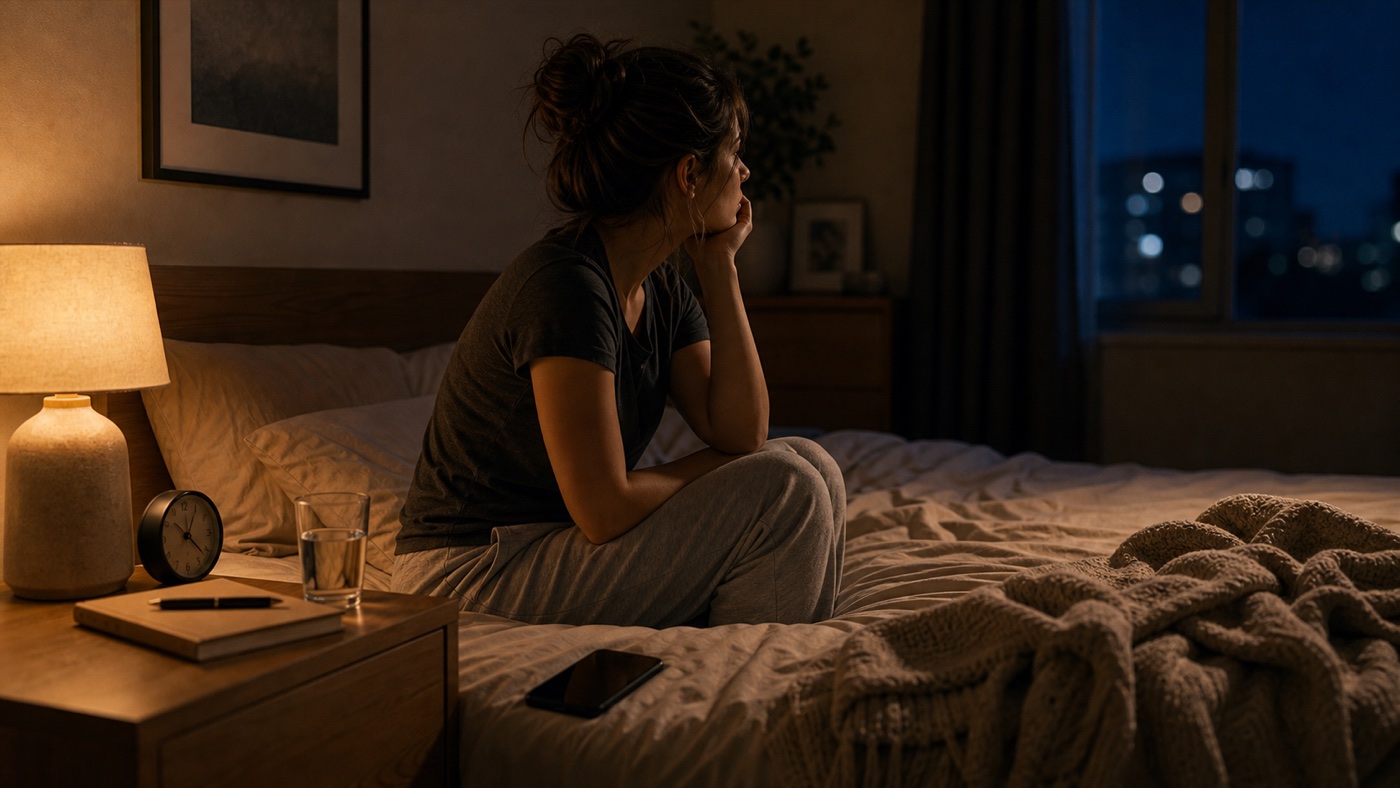
Why can’t I sleep? Your brain at 3 a.m.
The anxiety-sleep loop, the advice that works, and when sleeplessness is treatable.
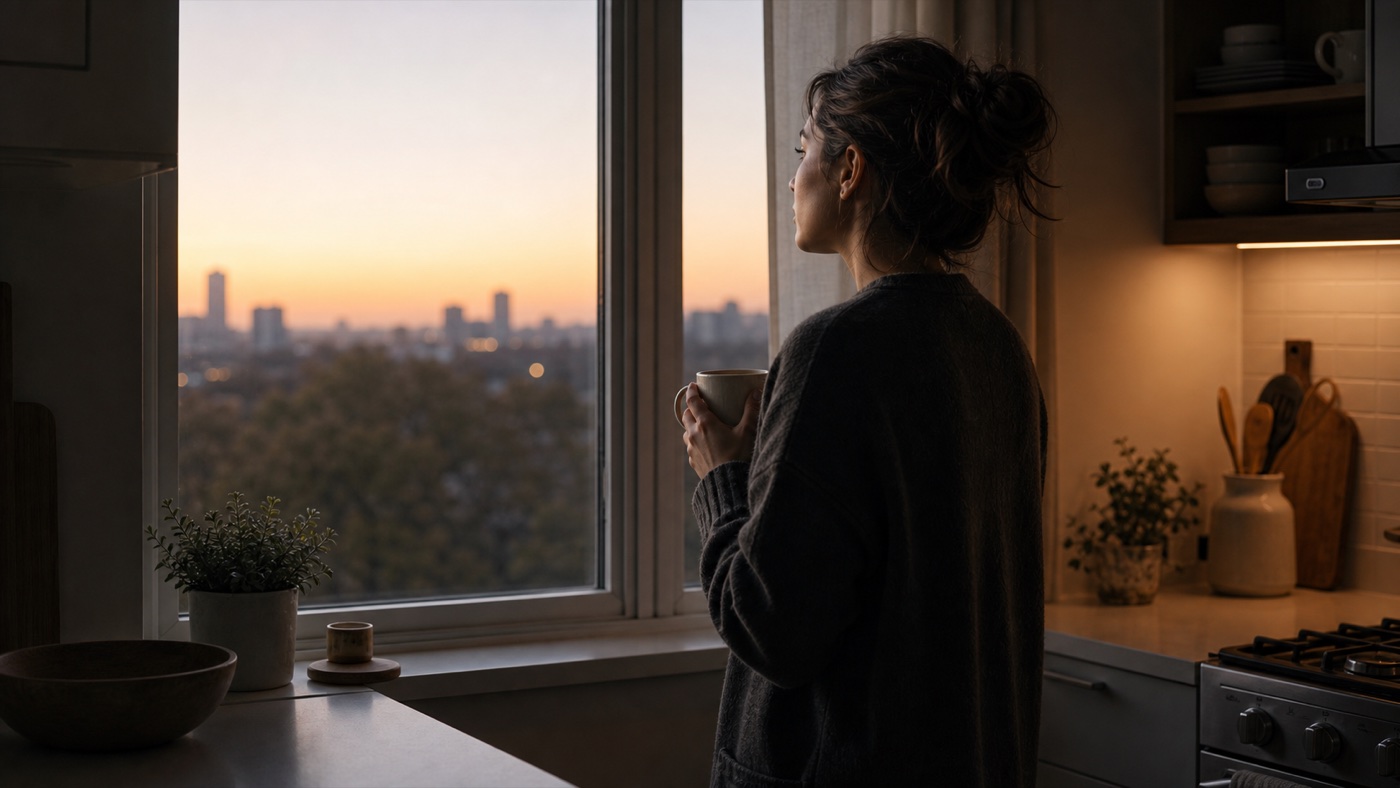
Why do I feel anxious all the time?
What generalized anxiety is, why your body stays on alert, and what helps.

Behavioral activation: do first, feel later
Why waiting for motivation keeps you stuck, and the evidence-based alternative.
When the scroll isn’t the whole story.
If anxiety, low mood, ADHD, or poor sleep is driving the loop, we can help you understand what’s underneath it. Ask us anything on a free 15-minute intro call.