Can you have a panic attack in your sleep?
What nighttime panic can feel like, how it differs from nightmares and sleep disorders, and when a sudden awakening deserves medical attention.
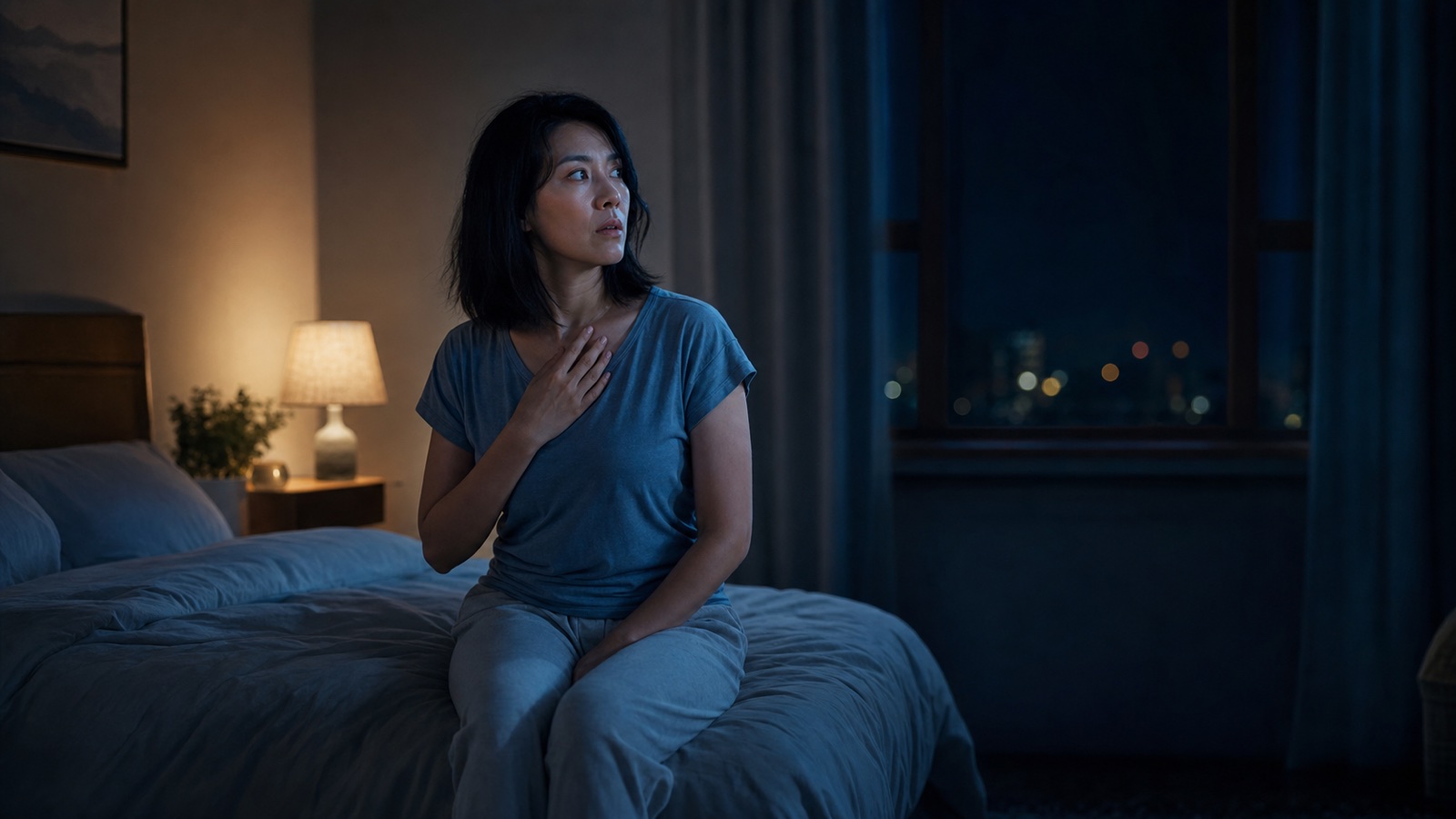
- A panic attack can wake you from sleep even when you weren’t having a frightening dream.
- The symptoms are real, but they don’t prove panic is the cause. Sleep and medical conditions can look similar.
- New chest pain, fainting, severe breathing trouble, or another unfamiliar emergency symptom needs urgent medical attention.
- Fear of another episode can keep the cycle going, and effective treatment is available.
You wake with your heart sprinting. The room is dark, your shirt feels damp, and you’re taking inventory at remarkable speed: chest, breath, hands, door, phone. Nothing was chasing you in a dream. One second you were asleep, and the next your body was conducting a fire drill without consulting you.
By the time the clock says 2:14 a.m., the sensations may already be easing. Your mind isn’t impressed. It would like a diagnosis, a guarantee, and preferably somebody awake enough to provide both.
Yes, panic attacks can occur during sleep. They’re often called nocturnal panic attacks. The experience can be terrifying, but the name shouldn’t become a shortcut around a proper evaluation, especially when the episode is new, unusual, or medically concerning.
You can wake in panic without waking from a nightmare
A nocturnal panic attack is an abrupt awakening with the same sort of surge that can happen during the day: racing heart, sweating, trembling, shortness of breath, chest discomfort, nausea, tingling, chills, dizziness, or a fear that you’re dying or losing control. The National Institute of Mental Health notes that panic attacks can happen at any time, including during sleep.
You may remember no frightening dream because a nocturnal panic attack isn’t necessarily a reaction to dream content. Small clinical studies suggest these episodes often occur during non-REM sleep and can happen earlier in the night, although sleep timing alone can’t identify the cause.
Not everyone who has a panic attack has panic disorder. A diagnosis involves a broader pattern, including recurrent unexpected attacks and persistent worry or behavior change. One awful night doesn’t hand you a permanent label before breakfast.
Your alarm system is real. Its explanation is still open.
During panic, the body’s threat response rises sharply even though there may be no external danger. The sensations aren’t imaginary. Adrenaline, faster breathing, muscle tension, and narrowed attention can all be part of the experience. Once you notice a pounding heart or a strange breath, the thought “Something is terribly wrong” can add another turn to the volume knob.
I’ll be direct: feeling convinced that you’re dying doesn’t mean you are, but an article can’t safely decide that you aren’t. Panic and medical problems can share symptoms. The useful goal isn’t to win an argument with your body at two in the morning. It’s to respond calmly enough to notice what requires care.
If you’ve had an appropriate medical assessment and recognize the pattern, the sensations can become less mysterious. If you haven’t, uncertainty deserves an evaluation rather than a self-diagnosis assembled under a blanket.
Several nighttime events can wear the same costume
Nightmares usually involve a remembered frightening dream. Sleep terrors more often include confusion, incomplete awakening, and little memory afterward. Sleep paralysis can leave you briefly unable to move while falling asleep or waking. None is interchangeable with panic, even if all can make nighttime feel suddenly unsafe.
Sleep apnea can cause repeated breathing pauses, gasping, loud snoring, morning headaches, and daytime sleepiness. Reflux, asthma, thyroid problems, low blood sugar, medication effects, stimulant use, alcohol withdrawal, heart rhythm problems, and seizures can also produce nighttime symptoms. That list isn’t a home quiz. It’s the reason context matters.
Tell a clinician what happened, how long it lasted, what you remember, and whether anyone observed snoring, unusual movement, confusion, or a breathing pause. Mention medicines, supplements, caffeine, nicotine, alcohol, cannabis, and other substances honestly. Your nervous system doesn’t award points for an incomplete ingredient list.
Some symptoms shouldn’t wait for a routine appointment
Call emergency services for severe or persistent chest pain, fainting, major trouble breathing, new weakness, a new irregular heartbeat with concerning symptoms, a seizure, blue or gray lips, or anything that feels like an immediate medical emergency. If you’re uncertain and the symptoms are new or intense, it’s reasonable to seek urgent medical help.
Arrange a clinical evaluation when episodes recur, sleep is becoming difficult, you’re avoiding bed, daytime panic is appearing, or you’re exhausted from monitoring your body all night. Bring information instead of conclusions: approximate time, symptoms, duration, dream recall, snoring, recent stress, substances, and what helped.
If you might act on suicidal thoughts or can’t stay safe, call or text 988 or use emergency services. Panic itself can feel catastrophic, and repeated sleep disruption can wear you down. You don’t have to wait until you’re completely depleted to ask for help.
The second attack often starts before you fall asleep
After one episode, bedtime can turn into a watchtower. You check your pulse, scan your breathing, delay sleep, and search the internet for one more reassuring sentence. Those moves make sense. They can also teach your brain that sleep is a test and every sensation needs surveillance.
Fear of bodily sensations is a common part of the panic cycle. A normal shift in breathing becomes evidence; the evidence produces more arousal; the arousal creates more sensations. Soon your pillow has become a badly staffed urgent-care waiting room.
Try not to make permanent sleep rules after one frightening night. Sleeping upright without a medical reason, keeping every light on, or requiring someone to stay awake beside you may reduce fear briefly while strengthening the idea that ordinary sleep is dangerous. If you need accommodation for a diagnosed condition, follow the plan from your clinician.
In the moment, trade detective work for orientation
Sit somewhere safe and put both feet on the floor. Name five neutral facts: where you are, the date, what you can see, what you can hear, and that you’ve awakened. Loosen anything restrictive. Let your exhale become a little longer without forcing huge breaths, which can make lightheadedness worse.
Use one sentence rather than 20: “This may be panic, and I’m checking for emergency signs.” If the familiar episode is easing and no urgent sign is present, give it time. Repeated pulse checks and frantic symptom searches can keep attention welded to the alarm.
For the next week, keep a tiny sleep note with four items: bedtime, approximate episode time, what you felt, and what was different that day. Don’t build a forensic laboratory. You’re creating enough information for a useful conversation.
Treatment aims at the cycle, not just the clock
When panic disorder is present, cognitive behavioral therapy can help you understand the cycle, reconsider catastrophic interpretations, reduce avoidance, and respond differently to bodily sensations. NICE includes CBT among evidence-based treatments for panic disorder. Medication may also be considered with a prescriber, depending on your symptoms, health, preferences, and other treatment.
Don’t start, stop, or change a psychiatric medication on the strength of a nighttime article. If a medicine, dose change, missed dose, or substance could be involved, contact the clinician managing it. Sleep treatment also depends on what the evaluation finds. Panic treatment won’t fix untreated sleep apnea, and a new pillow won’t negotiate with panic disorder.
The small experiment tonight is simple: write down your emergency threshold and one grounding sentence before bed. If you awaken frightened, you won’t need to invent the plan while your heart is auditioning for percussion.
The bottom line: A panic attack can wake you from sleep, but nighttime fear isn’t a diagnosis by itself. Check urgent symptoms, get recurrent or unfamiliar episodes evaluated, and address the fear-and-avoidance cycle instead of turning every bedtime into a stakeout.
Sources: National Institute of Mental Health, Panic Disorder: What You Need to Know; Craske and Tsao, “Assessment and treatment of nocturnal panic attacks,” Sleep Medicine Reviews (2005); Nakamura and colleagues, “Is nocturnal panic a distinct disease category?” Journal of Clinical Sleep Medicine (2013); National Institute for Health and Care Excellence, Generalised anxiety disorder and panic disorder in adults: management (CG113).

Panic attacks: what’s happening and what helps
What panic can feel like, why the alarm grows, and which treatments can help.
Why can’t I sleep? Your brain at 3 a.m.
Why effort can make sleep harder and how to stop turning bedtime into a test.

Anxiety and chest tightness: when to pause and when to get help
How anxiety can affect breathing and which warning signs deserve urgent care.
Would a clearer plan help?
A free 15-minute intro call can help you decide whether a psychiatric evaluation makes sense.