Can perimenopause make anxiety feel different?
Why anxiety can shift during perimenopause, how sleep and hot flashes may contribute, and when a new pattern deserves medical or psychiatric care.

- Some people notice new or stronger anxiety during perimenopause, but the transition doesn’t affect everyone the same way.
- Hormone variability, hot flashes, poor sleep, health changes, and ordinary midlife stress can overlap.
- A new symptom still deserves a real assessment instead of being automatically filed under hormones.
- Treatment should target the actual pattern, not a one-size-fits-all menopause story.
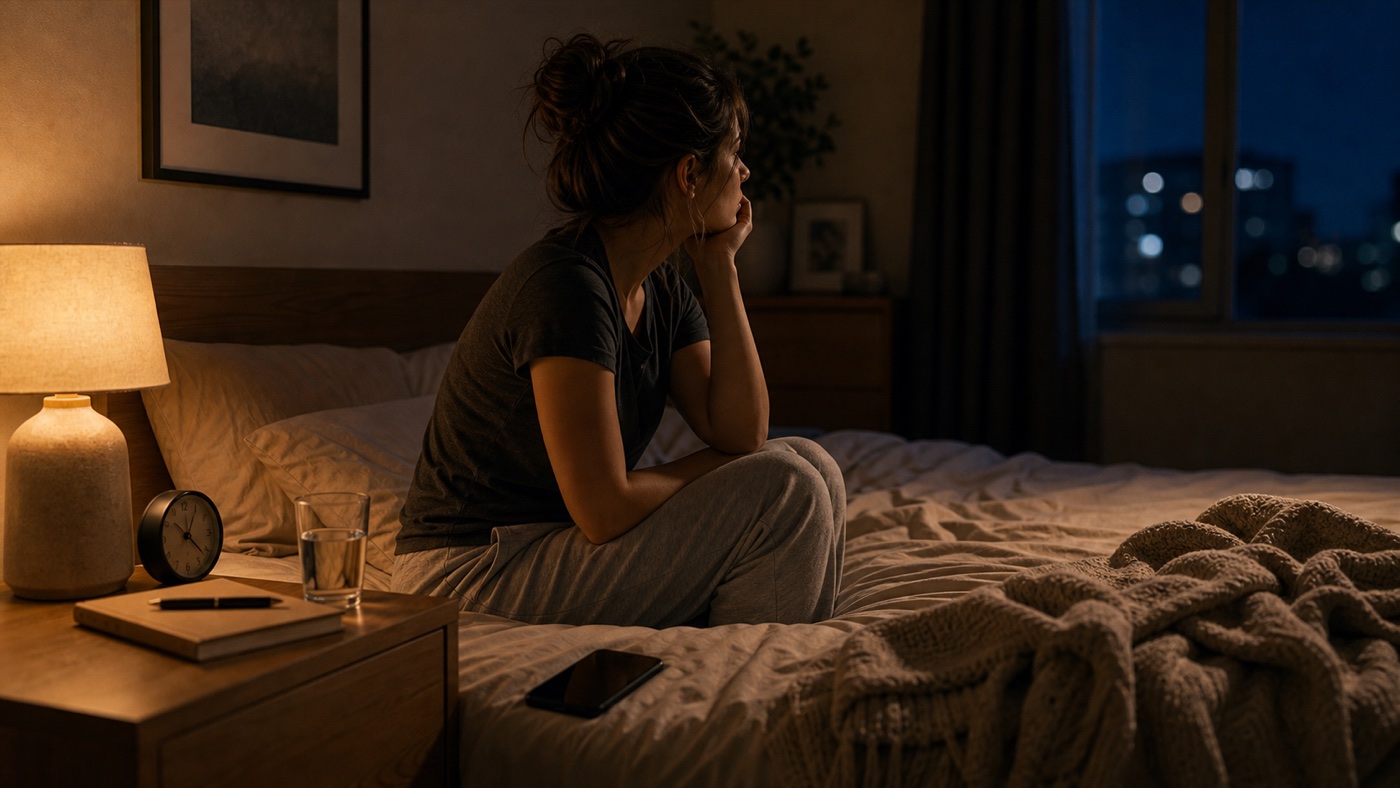
It’s 4:11 a.m. The room is cool, but you’re suddenly hot, wide awake, and mentally reviewing a work conversation from six years ago. Your heart feels quicker. Your period has become an unreliable correspondent. By breakfast, you’re wondering whether this is anxiety, hormones, sleep loss, or an especially rude group project involving all three.
Perimenopause can change the way anxiety feels for some people. That doesn’t mean every worry after age 40 comes from estrogen, and it doesn’t mean you’re imagining a real shift. The useful approach is neither “it’s just hormones” nor “hormones can’t affect the mind.” It’s to look at timing, symptoms, health, sleep, and the rest of your life together.
Perimenopause is a transition, not a personality transplant
Perimenopause is the stretch before menopause when menstrual cycles and ovarian hormone patterns begin changing. It can last for years. Menopause is reached after 12 consecutive months without a menstrual period, assuming another cause isn’t responsible.
During the transition, some people notice hot flashes, night sweats, disrupted sleep, concentration trouble, irritability, low mood, or anxiety. Others have few symptoms. A 2023 systematic review found evidence that risk for depressive symptoms rises during the transition, while the anxiety literature was smaller and less consistent.
The long-running Study of Women’s Health Across the Nation adds useful nuance. Women who started with low anxiety were more likely to report high anxiety symptoms during parts of the transition than before it. Women who already had high anxiety tended to have high rates across stages rather than a neat menopause-specific spike.
That’s why “perimenopause causes anxiety” is too tidy. The research describes changing odds in groups, not a hormone receipt for one person’s Tuesday. Your symptoms can be related to the transition without being reducible to it.
Sleep can turn a whisper into a smoke alarm
Night sweats and hot flashes can interrupt sleep. So can insomnia, restless legs, sleep apnea, alcohol, pain, caregiving, a partner’s snoring, or lying awake wondering why you’re awake. After several broken nights, concentration gets thinner, patience gets shorter, and ordinary uncertainty can feel much louder.
Anxiety can also make sleep harder, which creates a loop. You wake hot, interpret the surge as danger, monitor your pulse, and become fully alert. The next night, you start watching for the same event. Soon bedtime has acquired performance metrics nobody requested.
Hot flashes can include warmth, sweating, flushing, and a racing sensation. Panic can include a racing heart, sweating, shortness of breath, fear, and a sense that something awful is happening. The overlap can be confusing. Timing, triggers, duration, menstrual changes, daytime symptoms, and what happens before and after the episode all help.
I’ll often want the unglamorous details: when the last several periods occurred, whether sleep changed first, what caffeine or alcohol is doing, which medications shifted, and whether the anxiety arrives with heat or on its own. A pattern is more useful than forcing every symptom to wear the same little hormone hat.
Midlife has plenty of nonhormonal plot
Perimenopause often arrives while work pressure, parenting, caregiving, relationship changes, health concerns, and grief are already taking attendance. Those stresses aren’t a footnote. They may interact with sleep and body changes, and they deserve attention even if a laboratory result looks ordinary.
New anxiety can also come from thyroid disease, anemia, medication effects, substance use, heart rhythm problems, other sleep disorders, depression, trauma, or an anxiety disorder. Perimenopause doesn’t grant immunity from the rest of medicine, and you aren’t wasting anyone’s time by checking.
Track the pattern for several weeks without turning yourself into a 24-hour research laboratory. Note menstrual bleeding, hot flashes, sleep, anxiety intensity, caffeine, alcohol, medication changes, and major stress. One brief entry a day can reveal whether symptoms cluster. Hourly pulse checks usually reveal only that you’ve become excellent at checking your pulse.
Try this today: write down the next episode’s start time, what your body did, what your mind predicted, and what was happening in the prior hour. Then stop recording. You’re collecting a clue for care, not applying for permanent residency inside the symptom.
Treatment should match the problem in front of you
If anxiety is persistent, worsening, or interfering with work, sleep, relationships, driving, or daily care, talk with a primary-care clinician, ob-gyn, or mental health professional. Bring the timeline. An evaluation may include medical history, menstrual and sleep patterns, medications, substance use, mood, panic symptoms, trauma, and safety.
Psychotherapy can help with worry, panic, sleep-related fear, and the stress of a changing body. Antidepressant medication may help a diagnosed anxiety or depressive disorder, depending on the person. Treatment for hot flashes or insomnia can matter too when repeated waking is feeding the daytime alarm.
Menopausal hormone therapy can be appropriate for some bothersome menopause symptoms after an individualized discussion of benefits, risks, age, timing, health history, and preferences. It isn’t a universal anxiety treatment, and it shouldn’t be started or changed from an article. The target matters: hot flashes, sleep, depression, and an anxiety disorder aren’t interchangeable labels.
Ask the clinician to make the plan visible. Which symptoms are we treating? What improvement would count? When will we review it? What would make us change direction? “Let’s see” is reasonable when it has a date attached. Without one, it can become a long-running series with no season finale.
Some changes need prompt attention
Seek medical care for a new racing or irregular heartbeat, chest pain, fainting, severe shortness of breath, heavy or unusual bleeding, or another concerning physical change. Don’t assume a new symptom is anxiety because it arrived during perimenopause.
Get prompt mental health help when anxiety is making it hard to function, panic is recurring, sleep is severely disrupted, depression is deepening, or you’re using alcohol or medication to get through the day. New periods of very little need for sleep, unusually high energy, impulsive behavior, or feeling unlike yourself also deserve assessment.
If you’re thinking about suicide, you can’t stay safe, or someone is in immediate danger, call or text 988 in the United States; call 911 for immediate danger. You don’t have to prove that hormones, stress, or a diagnosis is responsible before getting help.
Your body can be changing and your life can be stressful and your anxiety can still deserve its own careful treatment. Those truths don’t compete. You’re allowed to ask for more than a shrug. Start with the timeline, protect sleep where you can, and ask for an assessment that sees a whole person rather than a floating hormone level.
The bottom line: Anxiety can feel new or louder during perimenopause, especially when hot flashes, poor sleep, health changes, and midlife stress overlap. Track the pattern, rule out other causes, and choose treatment based on the symptoms and goals that are actually present.
Sources: American College of Obstetricians and Gynecologists, perimenopausal mood and anxiety guidance (reviewed 2025); The Menopause Society, mental health during menopause guidance (accessed August 2026); Alblooshi and colleagues, menopause, depression, and anxiety systematic review, Australasian Psychiatry (2023); Bromberger and colleagues, Study of Women’s Health Across the Nation anxiety analysis, Menopause (2013).

Why do I feel like a different person before my period?
What a severe premenstrual pattern can look like.

Why is anxiety worse in the morning?
Why your alarm system may wake before your perspective does.
Why can’t I sleep?
What your brain is doing at 3 a.m., and what helps.
Would a clearer plan help?
A free 15-minute intro call can help you decide whether psychiatric care could support what you’re noticing.