Why does your teen talk more in the car?
A car ride can make talking feel easier for a teen. Learn how to listen, protect safety, and keep the conversation open after you park.
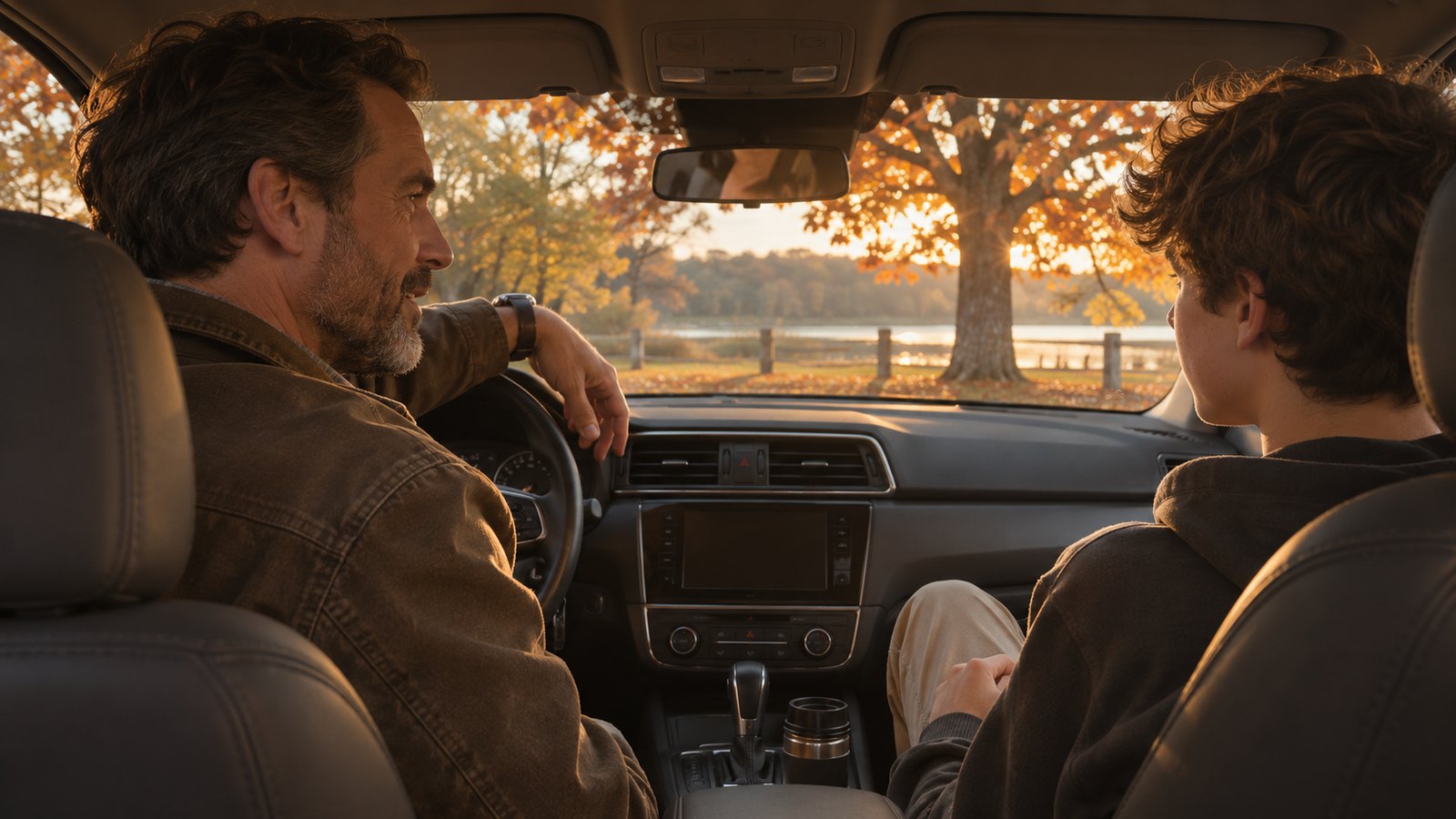
- Side-by-side moments can feel less demanding than a formal talk.
- Listen before solving, and ask whether your teen wants advice.
- Keep driving safety ahead of a difficult conversation.
- Follow up later without turning every ride into an interview.
The best conversation begins at a red light
The turn signal clicks. You are 10 minutes from home when your teen, who answered “fine” at dinner, suddenly says a friend has been leaving them out. You want to turn toward them, ask 12 questions, and perhaps call the other parent before the next light. Keep your eyes on the road. Your teen has opened a door, and a calm “That sounds rough” may keep it open longer than your best opening argument.
Some young people find side-by-side talk easier than a face-to-face meeting at the kitchen table. The car has a shared destination and an end point. Neither person has to hold eye contact. That is a plausible explanation, not a scientific law about teenagers or cars. Your teen may also talk because there is finally a quiet stretch without siblings, chores, or a phone buzzing. Ask what works for this particular kid.
The American Academy of Pediatrics urges parents to listen without jumping to judgment, disaster, or a lecture. That advice sounds simple until you hear something frightening. Your alarm is trying to protect your child. Still, an immediate cross-examination can teach them that a small disclosure triggers a large reaction. You can be serious without becoming a siren. Start by reflecting what you heard and asking one open question.
Listening is an action, not a delay
Try, “Do you want me to listen, help you think, or do something right now?” They may say they don’t know. You can say, “Okay. Go on.” That doesn’t give up your role as a parent. It helps you learn whether this is a passing frustration, a repeated pattern, or a safety issue. You can always ask another question after they finish a thought.
Don’t use every quiet ride as an interview. If the only reason you offer a lift is to extract a report, the car may stop feeling easy. Music, silence, a shared snack, and a conversation about an absurd road sign count as connection too. A teen doesn’t owe a disclosure because you drove them to practice. You are building access over time, not collecting a daily transcript.
I’d take a teen’s offhand comment seriously without treating every sentence as a final statement. “I hate school” might mean today was awful, or it might point to something persistent. I’d ask, “What was the hardest part today?” Then I’d check what happens next. A useful parent response leaves room for the story to get clearer. It doesn’t need to become a verdict before the driveway.
If your teen shares suicidal thoughts, self-harm, abuse, threats, or another immediate safety concern, the ordinary listening rule changes. Find a safe place to stop driving, stay with them, and seek prompt professional or emergency help. In the United States, call or text 988 for a mental health crisis; call 911 for immediate danger. Don’t promise secrecy you cannot keep. Explain that you are acting to help them stay safe.
Keep the door open when you park
The engine turns off, but the subject may not be finished. Ask, “Would you like to talk more now, or should we come back to this tonight?” Then honor the answer unless safety requires action. If you need time to think, say so plainly: “Could we talk after dinner so we can give this time?” This is better than pretending you have a complete plan while searching for your keys.
If you made a sharp comment, repair it. “That response was too fast. Sorry. Let’s try again.” You don’t have to deliver a speech about your intentions. A short apology shows that talking with you doesn’t require your teen to manage your feelings. It also gives them a way back into the conversation if they shut down.
For a recurring problem, ask your teen who else feels safe to talk with. A school counselor, pediatrician, therapist, relative, or other trusted adult may be part of the team. Your child having more than one trusted person isn’t a defeat. It is useful support. If they resist one option, find out what feels uncomfortable about it rather than turning help into a loyalty test.
Try one small change this week. On the next ordinary drive, put your phone away, leave some quiet space, and ask one question that does not demand a report: “What has been on your mind lately?” If nothing comes, let the ride be a ride. The car is an opening, not the only room. What matters is that your teen learns they can bring a hard thing to you and still be met with care.
Sometimes a teen will say something important and then retreat into a joke. You don’t have to chase them through every change of subject. You can say you heard them and you’re available later. If you’re not sure whether they want privacy or help, ask. You can’t guarantee a perfect response, but you can make your next response predictable: calm, specific, and honest about what you’ll do.
Be careful with the story you tell yourself afterward. “They only talk in the car” can become a rule that makes you miss the quiet moments elsewhere. They might talk while cooking, walking the dog, or doing laundry. You don’t need to manufacture a special setting. You need to notice when conversation starts and leave enough room for it. If you’re always rushing to a lesson, they’ll learn to keep the story short.
If your teen seems persistently withdrawn, isn’t sleeping, stops doing things they usually enjoy, or talks about hopelessness, don’t wait for the next drive to raise it. Check in directly and contact their pediatrician or a mental health professional. A child can have a hard day without a disorder; a repeated change still deserves attention. You can stay curious and act on safety at the same time. Neither requires turning the ride into a clinic. You don’t have to guess what every silence means. You can’t make disclosure happen on schedule. You’ll be more useful if you’re steady when it does happen. They’re watching how you respond, even when they’re looking out the window.
The bottom line: A side-by-side ride may give a teen room to speak. Keep the road safe, listen first, and leave a door open for the next conversation.
You don’t have to make the next ride a formal appointment.
Sources: AAP, How to Communicate With and Listen to Your Teen; AAP, Teen Mental Health: When to Seek Help; AAP, Kids and Screen Time: Older Teens.

What if your teen wants to quit therapy?
When your teen says therapy is not helping, listen for what is wrong, involve the therapist, and make a safety-aware plan together.

Why does your teenager apologize for everything?
How to tell repair from reassurance seeking when a teen says sorry often, respond without shame, and notice when more support may help.

Should your teenager take a mental health day from school?
How to decide about a teen mental health day, check safety, and make a return plan that addresses what made school hard.
Want help sorting through what you are noticing?
A free 15-minute intro call can help you decide whether psychiatric care fits the next step.