Should your teenager take a mental health day from school?
How to decide about a teen mental health day, check safety, and make a return plan that addresses what made school hard.

- Take your teen seriously and ask what makes this school day hard.
- Check illness, bullying, and immediate safety before deciding.
- A day at home works best with a purpose and a return plan.
- Repeated absences call for school and clinical support.
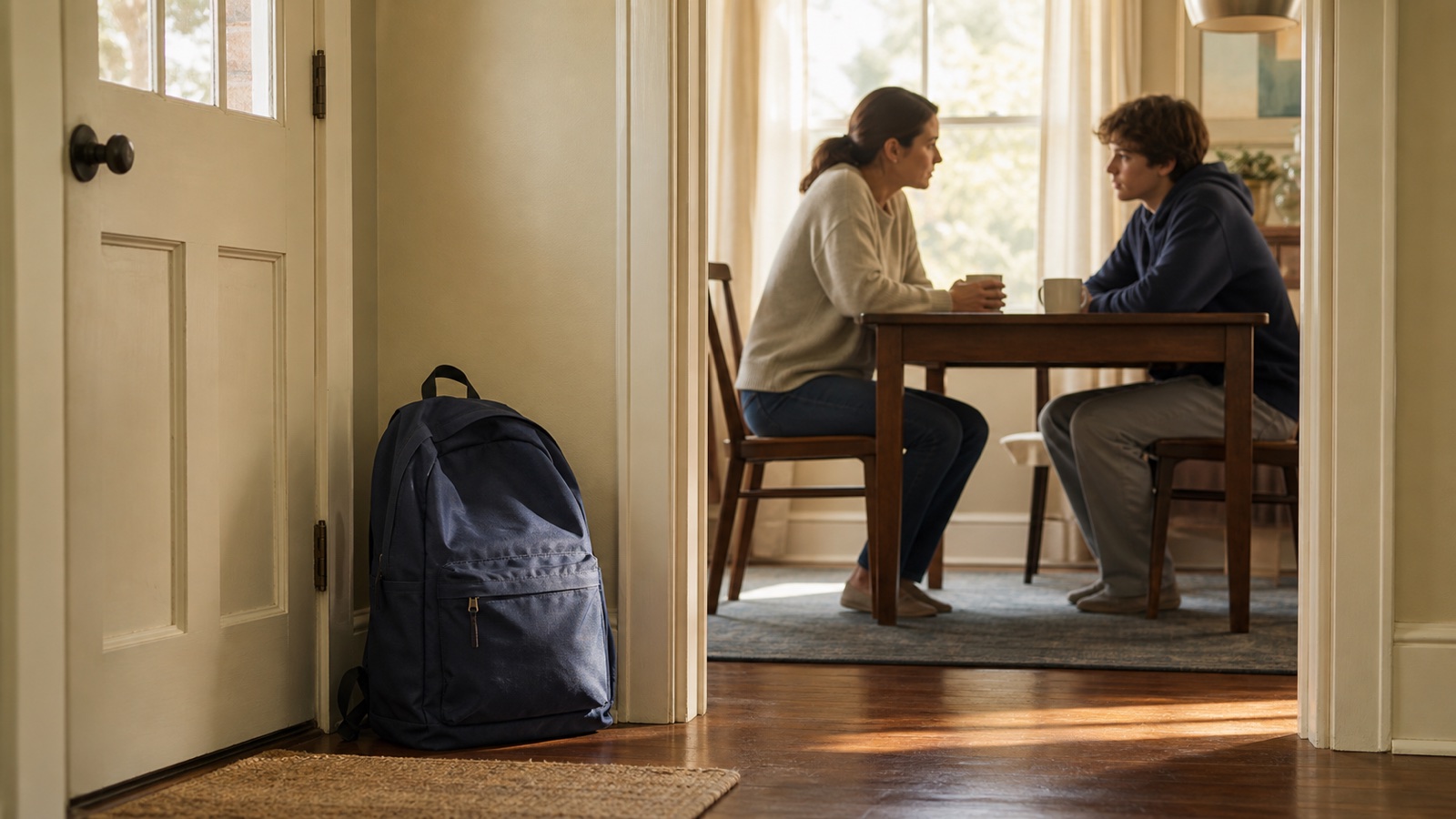
Your teenager is dressed for school, but the backpack stays on the floor. They say they can’t do today. There isn’t a fever, and the bus is nine minutes away. You can hear the question hiding under the clock: would a day at home help, or would it make tomorrow even harder?
A mental health day can be a reasonable pause. It can also become a way to avoid a problem that needs support at school. You don’t have to decide which story is true in one rushed morning. Start by taking the distress seriously, checking safety, and making a plan that reaches beyond today.
Ask what today feels like before you argue about attendance
Try a calm question: What feels hardest about going in today? Leave space for an answer that isn’t neat. A teen might be exhausted, worried about a test, hurt by a friend, afraid of bullying, or unable to name the feeling. An ordinary reluctance to face a busy day and a genuine safety concern can sound similar at first. Listening gives you a better starting point than a lecture in the doorway.
Ask about sleep, physical symptoms, and what happened at school recently. Don’t assume a stomachache is pretend because it arrives on a school morning. The American Academy of Pediatrics notes that school-related anxiety can show up as headaches, nausea, or dizziness. A doctor can help rule out illness when symptoms are new, intense, or recurring. Your teen shouldn’t have to prove emotional distress by looking sick enough.
If they mention bullying, threats, harassment, or feeling unsafe, take that report seriously and contact the school. Don’t send them into a situation you haven’t assessed just to protect an attendance streak. If they say they might hurt themselves or can’t stay safe, stay with them and seek immediate help. In the United States, call or text 988; call 911 for immediate danger.
I would rather hear a parent’s imperfect question than a perfect theory delivered over a backpack. You can say, I believe that today feels hard. Help me understand what changed. That doesn’t promise an automatic day off. It tells your teen that asking for help won’t start a courtroom cross-examination.
One day at home needs a purpose
If you decide they need a day, name what the day is for. Perhaps it’s sleep after an unusually rough night, an appointment, or a chance to settle before returning. Agree on a modest routine: food, some daylight, a check-in, and a plan to handle missed work. A mental health day doesn’t need to be a punishment, and it doesn’t need to become an all-day scroll that leaves them more disconnected.
Ask what would make tomorrow more possible. Could they email a teacher, meet a counselor before first period, enter through a quieter door, or start with a partial day? A small adjustment can be more useful than a broad promise that everything will be fine. If school itself is the source of harm, involve the adults responsible for fixing it. The solution shouldn’t rest entirely on the teen’s ability to tolerate it.
Check school attendance rules and tell the school what it needs to know. You don’t owe every adult a full account of your child’s private life, but a counselor or appropriate staff member may need enough information to arrange support. Keep your teen in the conversation about what will be shared when it’s safe to do so. Being heard matters even when you make the final parent decision.
CDC research finds that students who feel connected to adults and peers at school report better mental health and attendance. That is an association, not proof that forcing attendance fixes distress. It is a reason to ask which relationship or school support might help your teen feel less alone when they return.
Repeated absences are a signal to make a bigger plan
If the request keeps returning, don’t keep making the same morning decision from scratch. Notice patterns: particular classes, days, peers, tests, or symptoms. The AAP recommends seeking professional help when school avoidance persists or physical symptoms interfere with functioning. A pediatrician or mental health professional can assess what is driving the pattern and help plan a return.
Talk with the school about practical supports. That might mean a trusted adult to check in with, a plan for missed work, or a safer route through the day. If your teen has a disability or a diagnosed condition, ask what formal supports may apply. Don’t assume a single plan fits everyone. The point is to reduce the barrier without making absence the only way to get relief.
A parent may worry that any day off will teach avoidance. Another may fear that requiring school ignores pain. Both concerns make sense. What matters is the pattern and the follow-through. A day that includes care, information, and a return plan is different from silently hoping the problem disappears by the next bell. Your teen can feel supported while you still take attendance seriously.
Notice changes beyond school: sleep, eating, friendships, mood, activities, and safety. If distress is lasting or spilling into several parts of life, arrange an evaluation. Don’t wait for grades to collapse before treating the struggle as real. Likewise, a single hard Tuesday doesn’t define your child or predict a disorder.
If your teen says they can’t explain it yet, don’t demand a polished account before offering support. You can check in after breakfast, after a walk, or when the school-day rush has passed. They may tell you more when they aren’t trying to defend every word. You can still be clear that you’ll revisit school, safety, and the return plan. Listening and setting expectations can happen in the same conversation. Neither needs to be delivered like a verdict from the kitchen doorway.
Make tomorrow easier before tonight
Before the day ends, ask your teen to choose one small step for tomorrow. It might be putting the backpack by the door, sending one message to a counselor, or naming the class that feels hardest. Offer help with the part they can’t do alone. Keep the conversation short enough that they can still breathe. A late-night interrogation won’t improve the morning. If they’re worried you’ll be angry, say you’re ready to listen. You can’t promise every answer will be easy, but you’ll face it together.
Today, try this sentence: We can decide about today, and we also need a plan for what made it hard. It leaves room for rest, school support, and professional care when needed. A mental health day isn’t a moral verdict on your teen or your parenting. It’s one decision in a longer conversation about safety, connection, and getting back to life.
The bottom line: A day away from school can be a useful pause when it includes care and a plan. Listen, check safety, and address the reason school feels hard. If the pattern repeats, bring in the school and a healthcare professional. If you are in a mental health crisis in the United States, call or text 988 for immediate support.
Sources: AAP, School Avoidance; AAP, Teen Mental Health; CDC, School Connectedness.
When your child refuses school: what the morning fight is telling you
Why school refusal can show up as stomachaches or panic, what parents and young people should assess, and how a supported return works.

Why is your teenager tired all the time?
Why teenagers can feel tired despite sleeping late, how to separate sleepiness from fatigue, and which changes deserve medical or mental health care.
How much privacy should a teenager have?
How parents can balance teen privacy with safety, what deserves monitoring, and how young people can ask for trust without going silent.
Want help sorting through what you are noticing?
A free 15-minute intro call can help you decide whether psychiatric care fits the next step.