How do you help a teenager who is anxious about driving?
How to help a teenager build driving confidence through safe, gradual practice without shaming fear, rushing readiness, or avoiding the road forever.
- Driving anxiety can reflect realistic respect for risk, lack of practice, panic, trauma, perfectionism, or another concern; listen before choosing a plan.
- Confidence usually follows safe experience rather than arriving before it, so build a ladder from easier driving tasks to harder ones.
- A calm supervisor, short practices, specific feedback, and legal safety limits matter more than forcing a teen onto a frightening road.
- Seek professional help when fear is severe, follows a crash, causes panic, or keeps blocking age-appropriate goals despite gradual support.
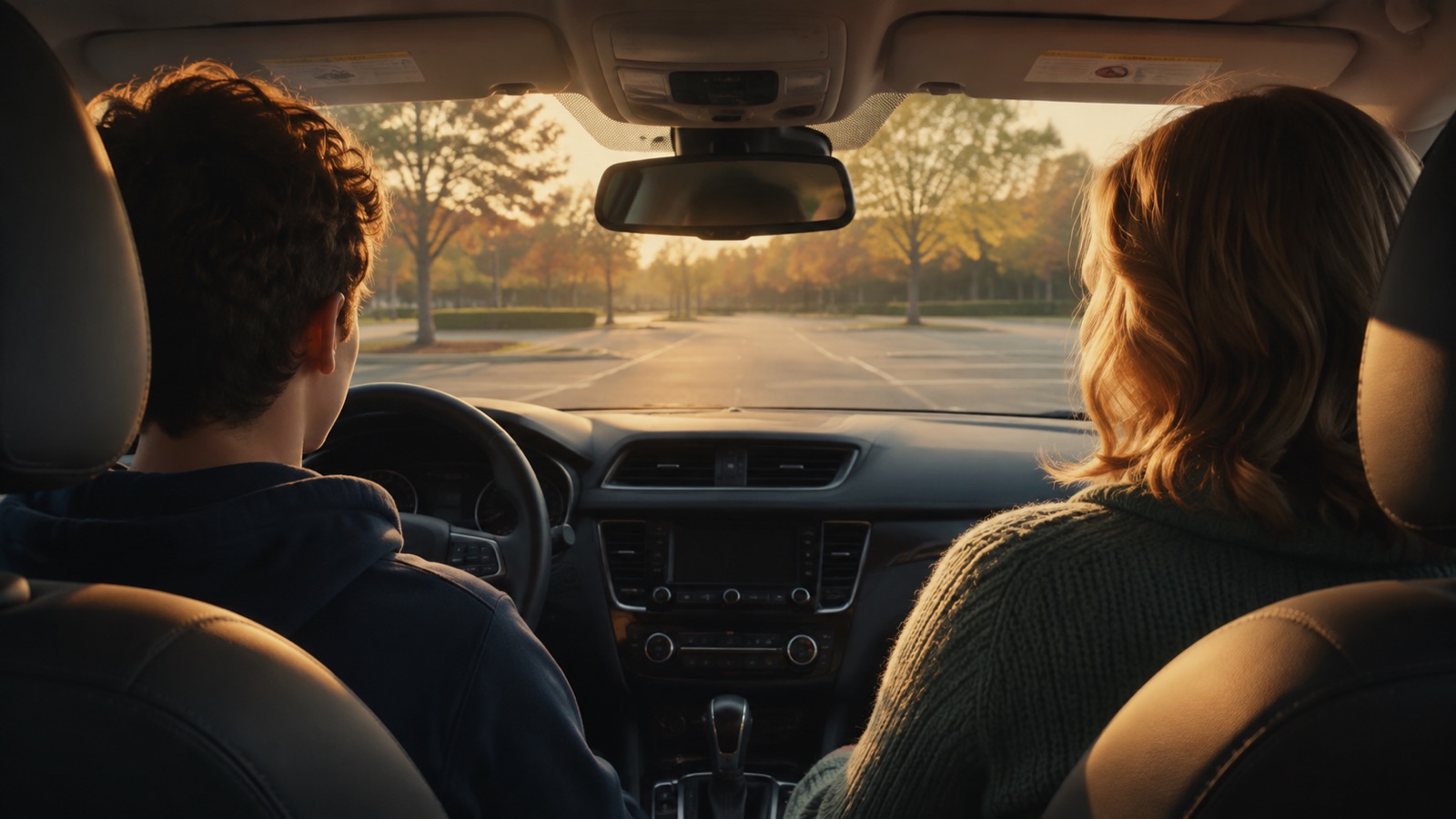
The permit is folded into your teenager’s wallet, looking remarkably confident for a piece of plastic. The car is in an empty parking lot. You say, “Whenever you’re ready.” They grip the wheel, stare at a shopping-cart corral 50 yards away, and announce that public transportation is actually the future.
You can see freedom on the other side of this. They can see a two-ton final exam.
Driving anxiety isn’t something to mock, and it isn’t always something to obey. Driving’s a complex skill with real risk. The helpful question isn’t “How do you make a teen stop being scared?” It’s “How do you build skill and confidence without getting ahead of safety?”
First learn what the fear is protecting
Ask what feels hardest before offering a pep talk. Your teen may fear causing a crash, being judged by an impatient parent, merging, getting lost, freezing at an intersection, or having a panic attack where they can’t leave. They may have seen a serious collision or been in one. They may simply feel less ready than their friends appear.
Try: “Which part feels most dangerous or embarrassing?” Then listen long enough to hear the answer. “Everyone gets nervous” may be true, but it can close the conversation before you discover that your teen can’t read distant signs, keeps losing focus, or has flashbacks from a crash.
I’ll also ask whether the fear belongs only to driving. Panic symptoms, broader anxiety, attention problems, sleep deprivation, substance use, or medication effects can matter behind the wheel. An article can’t decide readiness. A clinician, driving instructor, and your licensing authority each answer different parts of that question.
Respecting risk isn’t the same as surrendering to fear
Teen drivers are novices. The National Highway Traffic Safety Administration emphasizes graduated driver licensing, adult supervision, seat belts, passenger limits, nighttime restrictions, and substantial practice under less risky conditions. Those are safety rules, not exposure exercises wearing reflective vests.
At the same time, complete avoidance can keep fear intact. Exposure therapy works by helping a person approach feared situations in a planned, safe way rather than escaping whenever anxiety rises. The direct research on driving-fear treatment is mostly in adults, and a 2023 systematic review found the virtual-reality evidence promising but methodologically limited. We shouldn’t pretend there is a perfect teen-driving-anxiety recipe.
We can still use a sound principle: practice needs to be gradual enough for learning and safe enough for the road. Bravery doesn’t require the freeway on Tuesday.
Build a driving ladder, not a surprise party
Sit down outside the car and list driving tasks from least to most difficult. A first ladder might begin with adjusting the seat and mirrors in a parked car, then starting the engine, moving and stopping in an empty lot, making quiet neighborhood turns, driving a familiar route, handling moderate traffic, and eventually practicing highways or night driving.
Your teen should help order the steps. Their ladder won’t look exactly like someone else’s. Parking could feel easy while left turns feel impossible. One person’s second rung is another person’s small mountain with lane markings.
Choose a step that creates manageable anxiety, not panic so intense that attention and safe control collapse. Repeat it on more than one day. Move up when the teen can perform the skill safely, not only when they report zero fear. Waiting for complete calm can turn confidence into an entrance fee that never arrives.
Follow your state’s permit rules and use a qualified instructor when you can’t provide calm, accurate supervision. If weather, traffic, fatigue, visibility, or the teen’s state makes practice unsafe, stop. Exposure isn’t permission to ignore road safety, and practice doesn’t outrank judgment.
The passenger seat has a nervous system too
Parents often enter the car carrying their own fear. Then every correction arrives at fire-alarm volume: “Brake! Brake! BRAKE!” Sometimes an urgent command is necessary. If every mailbox receives the same alarm, your teen can’t tell danger from commentary.
Agree on a few short cues before moving: “ease off,” “more space,” “check left,” and “pull over when safe.” Give one instruction at a time. Save the long explanation for when the car is parked. A moving vehicle is a poor venue for a family podcast.
After practice, name one thing that was safe and specific: “You slowed before that blind corner.” Then choose one skill for next time. Don’t use labels such as careless, dramatic, or natural driver. Labels turn a learnable behavior into a verdict about who your teenager is.
If you and your teen reliably escalate each other, hiring a patient driving instructor isn’t parental failure. Sometimes the most loving driving lesson is the one another adult teaches.
Do not let reassurance become the only fuel
It’s fine to say, “I know this is hard, and we’ll take it one step at a time.” It’s less useful to promise, “Nothing bad will happen.” You can’t guarantee that, and your teen knows it.
Try confidence based on process: “This is a low-traffic setting. An adult is supervising. You know how to stop. If it becomes unsafe, the car can pull over.” This doesn’t erase uncertainty. It makes uncertainty containable.
Watch for safety behaviors that prevent learning. If your teen can drive only while you narrate every move, chooses routes that avoid every left turn, or asks for repeated promises after each block, help reduce one support at a time. Don’t remove everything at once. The aim is increasing independence, not a cinematic reveal.
Know when the problem needs more than practice
Consider professional help when driving fear triggers panic, follows a crash, causes nightmares or intrusive memories, produces broad avoidance, or remains intense despite patient, gradual practice. A therapist can assess whether panic, a specific phobia, trauma symptoms, or another difficulty is involved and tailor treatment.
Pause driving and seek evaluation if your teen has fainting episodes, uncontrolled seizures, severe sleepiness, vision problems, intoxication, medication effects that impair alertness, or attention so unreliable that driving isn’t safe. Follow state medical and licensing requirements. Independence matters, but it doesn’t outrank safety.
Also leave room for timing. Not every teenager needs to pursue a license at the earliest legal moment. A thoughtful delay with a plan is different from fear quietly making the decision forever.
If your teenager is talking about suicide, self-harm, or not wanting to be alive, treat that as a separate urgent concern. Call or text 988 in the United States for crisis support, and call 911 or go to an emergency department when danger is immediate.
Try a 20-minute practice contract
Before the next session, agree on the location, skill, length, and stop rule. For example: “Practice starts, stops, and wide turns in the empty lot for 20 minutes. Use short cues. The driver can ask to park, and practice stops immediately if driving becomes unsafe.”
End while there is still enough bandwidth to review what happened. Ask, “What got easier after the first five minutes? What should stay the same next time?” Record the skill practiced, not a grade for courage.
Your teenager doesn’t need to love driving. Confidence doesn’t have to arrive before practice can begin. They need a safe chance to learn whether they can do it, with fear in the car but not at the wheel.
The bottom line: Help a driving-anxious teenager by understanding the specific fear, following every legal and road-safety rule, and practicing in small steps with a calm supervisor. Confidence often grows after repeated safe experience, not before it. Don’t shame, surprise, or force. Build the next rung together, and get professional help when panic, trauma, impairment, or persistent avoidance is steering the process.
Sources: National Highway Traffic Safety Administration, Teen Safe Driving and graduated driver licensing guidance (accessed 2026); American Psychological Association, What Is Exposure Therapy?; Elphinston and colleagues, virtual-reality treatment for driving phobia systematic review, Disability and Rehabilitation (2023); Mirman and colleagues, TeenDrivingPlan randomized trial, JAMA Pediatrics (2014).

How do you help an anxious child without helping anxiety take over?
Validate the fear while supporting gradual brave steps.

What can you do when your teenager refuses therapy?
How to reduce the power struggle without ignoring real concerns.

How do you help a child who is afraid of making mistakes?
Why reassurance alone may not build confidence.
Is anxiety blocking an important step toward independence?
A free 15-minute intro call can help you think through whether psychiatric support could help your teenager move forward safely.