Why does relaxing make me anxious?
Why quiet can make anxiety feel louder, why forcing yourself to calm down can backfire, and how to help your body ease into rest.

- Feeling anxious when you stop doesn’t mean you’re bad at resting. Your body may simply be arriving later than your calendar.
- Quiet removes distractions, which can give unfinished worries the microphone.
- For some chronic worriers, staying a little tense can feel safer than being caught off guard.
- The goal isn’t instant calm. It’s helping your system learn, gradually, that lower alert is safe enough.
It’s Saturday at 3:06 p.m. Nothing is due for several hours. Nobody needs an answer. You sit down with a drink, put on music, and attempt the advanced wellness practice known as doing absolutely nothing.
Four minutes later, you remember an email you didn’t answer, a form you might have filled out wrong, something odd you said in 2019, and the fact that your kitchen cabinets have apparently been filthy this entire time. You get up to clean one.
Apparently relaxation has become an escape room.
If slowing down makes you feel restless, guilty, exposed, or suddenly full of thoughts, you’re not failing at rest. Your schedule may have stopped before your threat-detection system got the memo. And for some people, especially those who worry chronically, being a little tense can start to feel more familiar than letting the guard down.
That doesn’t mean rest is dangerous. It means the route there may need a ramp instead of a command.
The room gets quiet before your mind does
You can close the laptop in one second. Your mind is under no obligation to close all 37 of its tabs with it.
During a busy day, the next demand keeps choosing your focus for you. Class starts. A patient arrives. Your manager messages. Someone needs a ride. Then the demands stop, and all the thoughts that were waiting politely in the lobby rush the desk at once.
Quiet didn’t create those worries. It removed the competition.
That distinction matters because people often interpret the first uncomfortable minutes of rest as evidence that resting is making them worse. More often, you’re noticing what activity had been covering. Your body may still be carrying muscle tension, quicker breathing, and the general posture of someone who has been metaphorically holding a clipboard all day.
The National Center for Complementary and Integrative Health describes the relaxation response as a shift toward slower breathing, a lower heart rate, and lower blood pressure. That shift is real, but it isn’t a light switch. Sometimes the first thing you feel when the noise drops is how loud your system already was.
Worry can feel safer than being surprised
Imagine that your brain offers you a strange deal: stay mildly worried now, and maybe nothing will catch you emotionally unprepared later.
Most people don’t make that deal consciously. Still, research on generalized anxiety disorder suggests that some chronic worriers may use sustained worry to avoid a sharp jump from feeling calm to feeling bad. Psychologists call this contrast avoidance. In plain English, if you stay braced, bad news has less distance to travel.
That can make relaxation feel oddly vulnerable. A calmer moment may prompt thoughts like, What am I forgetting? or If I stop thinking about this, I’ll miss something important. Worry starts posing as preparation. It promises that vigilance is the responsible choice, even when the 19th mental rehearsal has not added anything useful.
This does not mean everyone who feels restless on vacation has an anxiety disorder. The studies in this area are relatively small, and a mechanism found in people with generalized anxiety or depression should not become an internet diagnosis. But the pattern gives us a useful question: are you solving a problem, or maintaining the feeling of being ready for one?
Forcing calm gives anxiety a performance review
You lie down, take a deep breath, and check: Am I relaxed yet?
No.
You take another breath and check harder.
Still no. Now you’re anxious about anxiety and somehow losing at a couch.
Calm becomes much harder when you turn it into a test. The moment your goal is “I must feel relaxed,” your attention starts monitoring every heartbeat, thought, and twitch for evidence of failure. You have given anxiety a clipboard.
Relaxation techniques can help many people, but no single technique is mandatory. Slow breathing is one option. So are progressive muscle relaxation, guided imagery, stretching, or an externally focused activity such as listening to a familiar album. If focusing on your breath makes you more self-conscious or lightheaded, you haven’t failed mindfulness. Choose an anchor outside your body and keep the exhale comfortable rather than heroic.
The first goal is not bliss. It is reducing the struggle with what you notice.
Build a ramp, not a trapdoor
If you go straight from six hours of deadlines to “be serene now,” your nervous system may reasonably request a transition plan.
- Mark the handoff. Change clothes, wash your face, step outside, or play the same song after work or class. A small repeated cue tells your body that one mode is ending.
- Start with anchored rest. Choose something low-demand with a little structure: a familiar show, a simple puzzle, folding laundry with music, sketching, or walking a known route. You’re lowering the load without dropping your attention through a trapdoor.
- Use a 10-minute dose. Don’t promise yourself an entire restful evening. Try 10 minutes and notice whether the discomfort rises, falls, or changes shape. You’re gathering data, not auditioning for inner peace.
- Give useful worry somewhere to go. Write the concern down with one next action and when you’ll take it. If there is no action available tonight, write that too. Your mind may repeat itself less when it trusts that the issue has an appointment.
- Stop grading the session. Rest can count even if part of it felt restless. The practice is staying without immediately escaping into work, scrolling, or cabinet renovation.
You are teaching your system a new association: quiet can contain discomfort without becoming an emergency. Repetition matters more than performing the technique beautifully.
Sometimes quiet is uncovering something that needs care
Maybe every attempt to slow down brings a rush of panic. Maybe intrusive memories arrive when the day goes quiet. Maybe you cannot stop worrying long enough to sleep, study, work, or be present with people you care about.
That is not a cue to force longer meditation sessions. It is a reason to understand the pattern with someone trained to help.
Generalized anxiety disorder involves excessive, hard-to-control worry that persists and interferes with daily life. Trouble relaxing can be one part of it, along with feeling on edge, fatigue, concentration problems, irritability, muscle tension, and sleep trouble. Panic, trauma-related symptoms, depression, ADHD, medication effects, caffeine, and medical conditions can also change what rest feels like. An article cannot sort those apart for you.
A clinician can help you identify whether the problem is chronic worry, fear of bodily sensations, a backlog of stress, or something else, then choose treatment that fits. The point is not to become impressively calm. It is to make rest available again.
The bottom line: Feeling anxious when you relax does not mean rest is wrong for you. Quiet may be revealing the activation that busyness was hiding, and worry may have learned to feel like protection. Skip the demand for instant calm. Use a short transition, choose anchored rest, and stay for 10 minutes without grading yourself. Tonight, make the goal “safe enough to pause,” not “perfectly relaxed.”
Sources: Kim and Newman, “The paradox of relaxation training,” Journal of Affective Disorders (2019); Llera and Newman, “Rethinking the role of worry in generalized anxiety disorder,” Behavior Therapy (2014); National Center for Complementary and Integrative Health, “Relaxation Techniques: What You Need to Know”; National Institute of Mental Health, “Generalized Anxiety Disorder: What You Need to Know.”

Doomscrolling isn’t rest. Here’s how to stop.
Why the scroll leaves you more tired, and what real recovery can look like tonight.
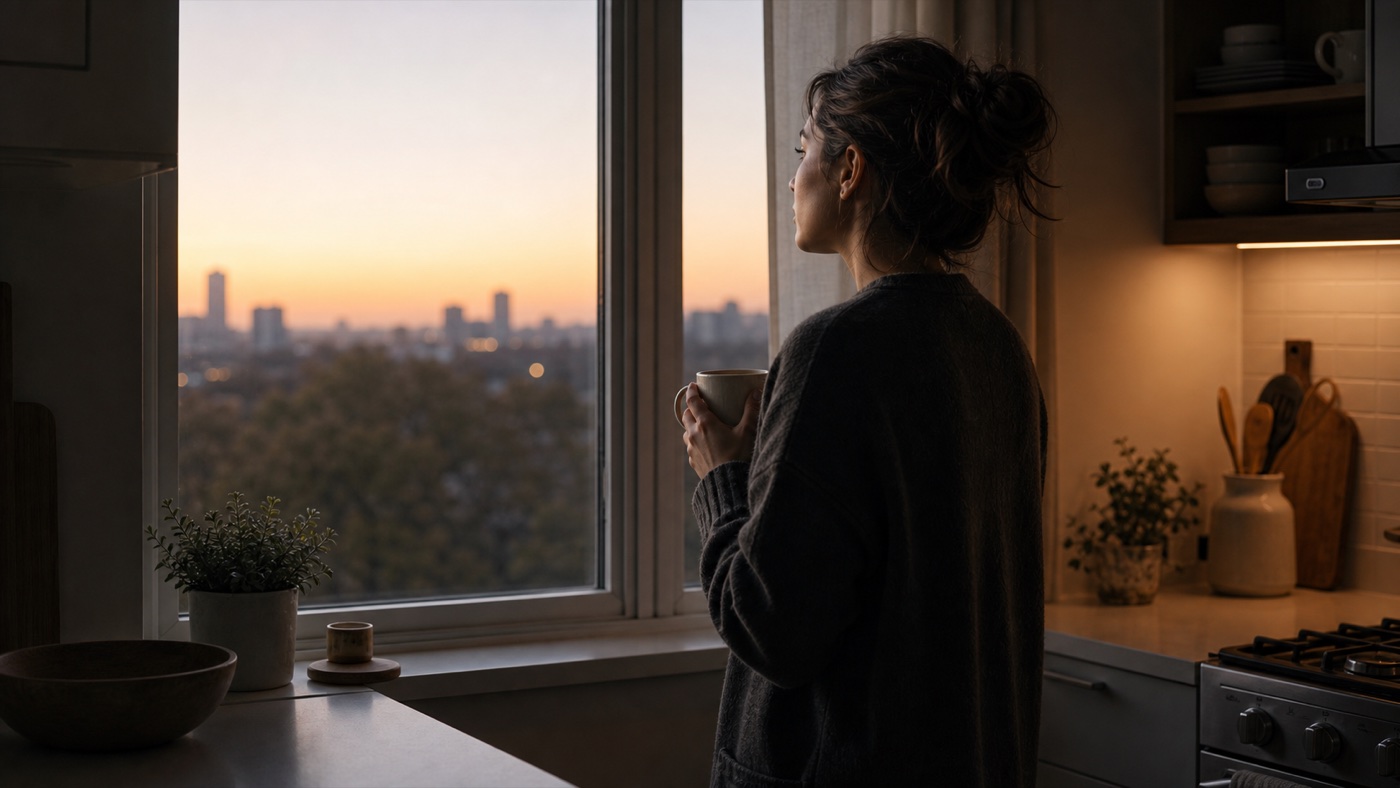
Why do I feel anxious all the time?
What generalized anxiety is, why your body stays on alert, and what helps.
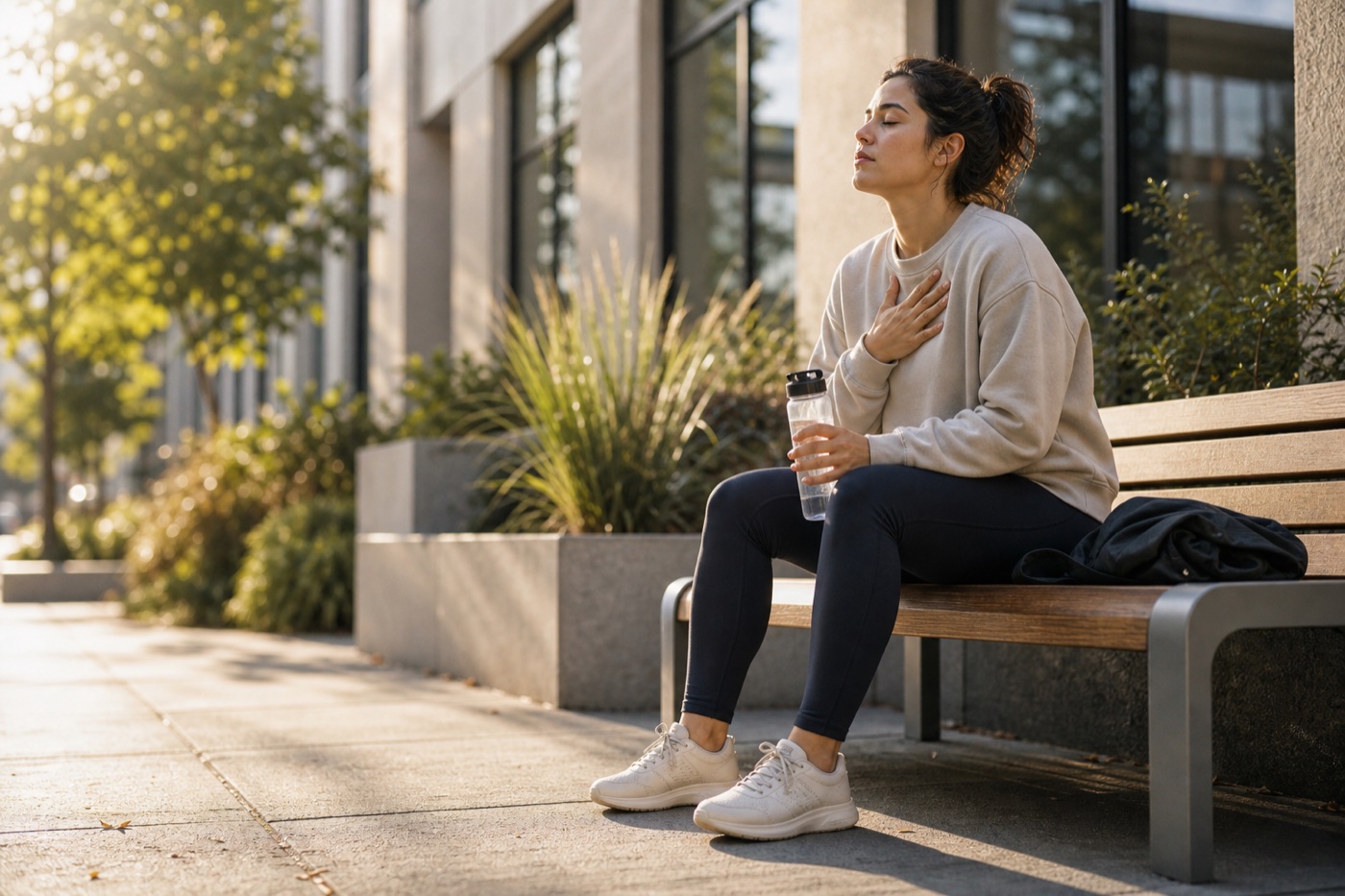
Panic attacks: what’s happening and what helps
What your body is doing, why it feels dangerous, and how panic is treated.
When rest keeps turning into more work.
If worry, panic, poor sleep, or constant tension makes it hard to switch off, we can help you understand what’s keeping your system on duty. Ask us anything on a free 15-minute intro call.