What do you say when your child sees frightening news?
How to ask what a child saw, give honest answers without graphic detail, restore a sense of safety, and know when they need more support.
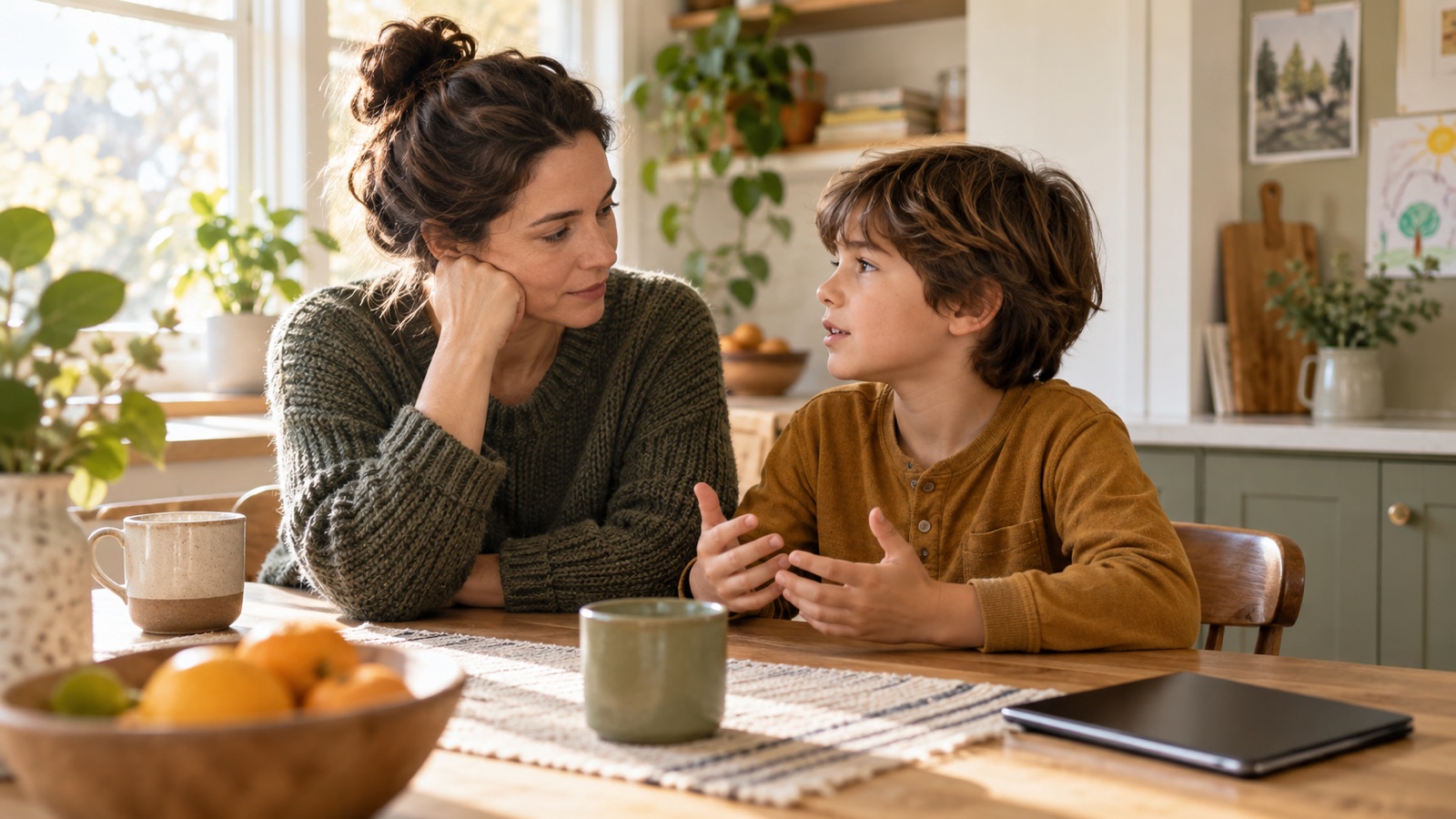
- Ask what your child saw and what they think happened before offering an explanation.
- Give a truthful, age-appropriate answer without replaying graphic images or details.
- Describe the real safety steps adults are taking, and leave room for more questions later.
- Persistent sleep, mood, school, or behavior changes deserve a check with a pediatrician or mental health professional.
The tablet is face down on the kitchen table. Your child says a video showed people running, then asks whether the same thing could happen here. You haven’t seen the clip. You can hear how hard they’re working to sound casual. The dishes are still in the sink, and suddenly the evening has a different job.
You don’t need a perfect speech. Your first task is to find out what they actually saw and what story they’ve built around it. A child may have watched a few seconds, overheard a friend, or filled the gaps with a frightening guess. Those are different starting points.
Start with their version, not the headline
Ask, “What did you see?” and “What do you think happened?” Then wait. The American Academy of Pediatrics recommends asking what children have heard and what questions they have before giving more information. You may discover that they’re worried about a detail the news report barely mentioned. Answering the report instead of your child can leave the real fear untouched.
Try to keep your face and voice steady, even if the story scares you too. You can say, “That sounds upsetting. I’m glad you told me.” You don’t have to hide every feeling. You’re showing that this is something adults can talk about and help with, not a secret too frightening to name.
I’d avoid beginning with “Don’t worry.” Your child may already be worried, and that sentence doesn’t give them anything to hold. Ask one more question: “What part keeps coming back to you?” The answer might be an image, a sound, or the fear that someone they love isn’t safe. Now you know where to begin.
Tell the truth in a size they can carry
Give a short, plain answer that fits their age. “Something dangerous happened in another place. People were hurt. Helpers are caring for them, and adults are working to keep people safe.” If the event is local, say that honestly and explain the safety steps you actually know. Don’t promise that nothing bad can ever happen. Reassurance works better when it rests on real people and real plans.
Skip graphic detail. The AAP advises sharing basic information while avoiding unnecessary images and repeated coverage, especially for younger children. A child doesn’t need to watch the footage again to understand that adults take it seriously. If they’ve already seen the clip, you can close it together and talk about what they noticed.
Older children and teenagers may want more facts or challenge the first answer. Let them ask. If you don’t know, say, “I don’t know yet. We can check a reliable source together later.” That’s more honest than filling the silence with a guess. It also models a useful habit when a fast-moving story changes by the hour.
Make the screen smaller and the conversation bigger
Replaying the same frightening video can keep the scene in view long after the useful facts are clear. The AAP recommends limiting repeated graphic media exposure and helping older children assess what they’re seeing. You can put the device away for the evening without making it a punishment. Tell your child when you’ll check for updates and where they can come with another question.
For a younger child, return to ordinary anchors: dinner, a familiar bedtime step, the person picking them up tomorrow. For a teen, ask whether the news is circulating in a group chat and whether they want help muting or leaving that thread. You can offer choices without demanding that they stop caring. Concern for others is a strength; a nonstop stream of frightening clips isn’t required to prove it.
If your child wants to do something, choose a small action that fits the event and their age: write a kind note, check on a neighbor, or learn how a local helper group works. Don’t make action a cure for fear. It can simply remind them that people respond to hard events with care, not only with screens and silence.
Watch what happens after the conversation
Some children ask a few questions and return to play. Others revisit the topic at bedtime or seem clingier for a while. The AAP notes that trouble sleeping, physical complaints, changes in behavior, sadness, and anxiety can signal that a child is struggling. One difficult night doesn’t tell you everything. A pattern that persists or interferes with school, sleep, friendships, or daily life deserves a conversation with their pediatrician or a mental health professional.
If the event affected your family directly, your child may need more than a general news conversation. Safety, grief, and trauma support depend on what happened and what they experienced. Tell a professional the specifics rather than treating this like ordinary media exposure. If your child talks about wanting to die or being unable to stay safe, seek immediate help. In the United States, call or text 988 for a mental health crisis, and call 911 for immediate danger.
Tonight, your small experiment is two questions and one honest answer. Ask what they saw, ask what worries them most, then answer only that question in words they can carry. You can return to the story tomorrow if they need to. Parenting in a breaking-news world doesn’t require you to become a newsroom.
If they ask the same question again tomorrow, don’t assume you failed tonight. Children sometimes revisit a worry as they understand a little more. It’s okay if they’re not ready to drop it after one talk. You can answer again in the same calm words and ask what feels different now. They’ll often need a steady listener more than a new explanation. If you’re unsure how much detail to add, let their next question guide you. You can also tell a teacher or caregiver what your child has heard so the adults around them can respond consistently without repeating the clip.
You might need your own pause after the talk. Children can sense when adults are frightened, and you’re allowed to be affected. Ask another adult for support or take a quiet moment after bedtime. You’ll be better able to answer tomorrow’s questions if you’re not trying to carry the whole story alone.
The tablet can stay face down. The conversation can stay open. Your child doesn’t need you to erase the news; they need to know they can bring it to you, and that adults will keep doing the practical work of care and safety.
The bottom line: Ask what your child saw, answer the question they actually have, and keep graphic coverage from doing the talking. Stay available afterward, and seek help if distress persists or safety is in doubt.
Sources: American Academy of Pediatrics, How to Talk With Kids About Tragedies & Other Traumatic News Events; American Academy of Pediatrics, Taking Care of Your Children and Yourself During Crisis.
How do you help a child who worries you will die?
How to answer a child’s fear that a parent will die with honesty, steadiness, and less reassurance looping while keeping ordinary life moving.
How do you help an anxious child without helping anxiety take over?
How parents can validate an anxious child, reduce unhelpful accommodation gradually, and support brave steps without becoming harsh or dismissive.
When your child refuses school: what the morning fight is telling you
Why school refusal can show up as stomachaches or panic, what parents and young people should assess, and how a supported return works.
Want support with a child who seems unsettled?
A free 15-minute intro call can help you decide whether psychiatric care fits the next step.