What if your college roommate keeps you awake?
A shared room can strain your sleep. Make a specific quiet-hours agreement, try fair fixes, and ask campus housing for help when needed.
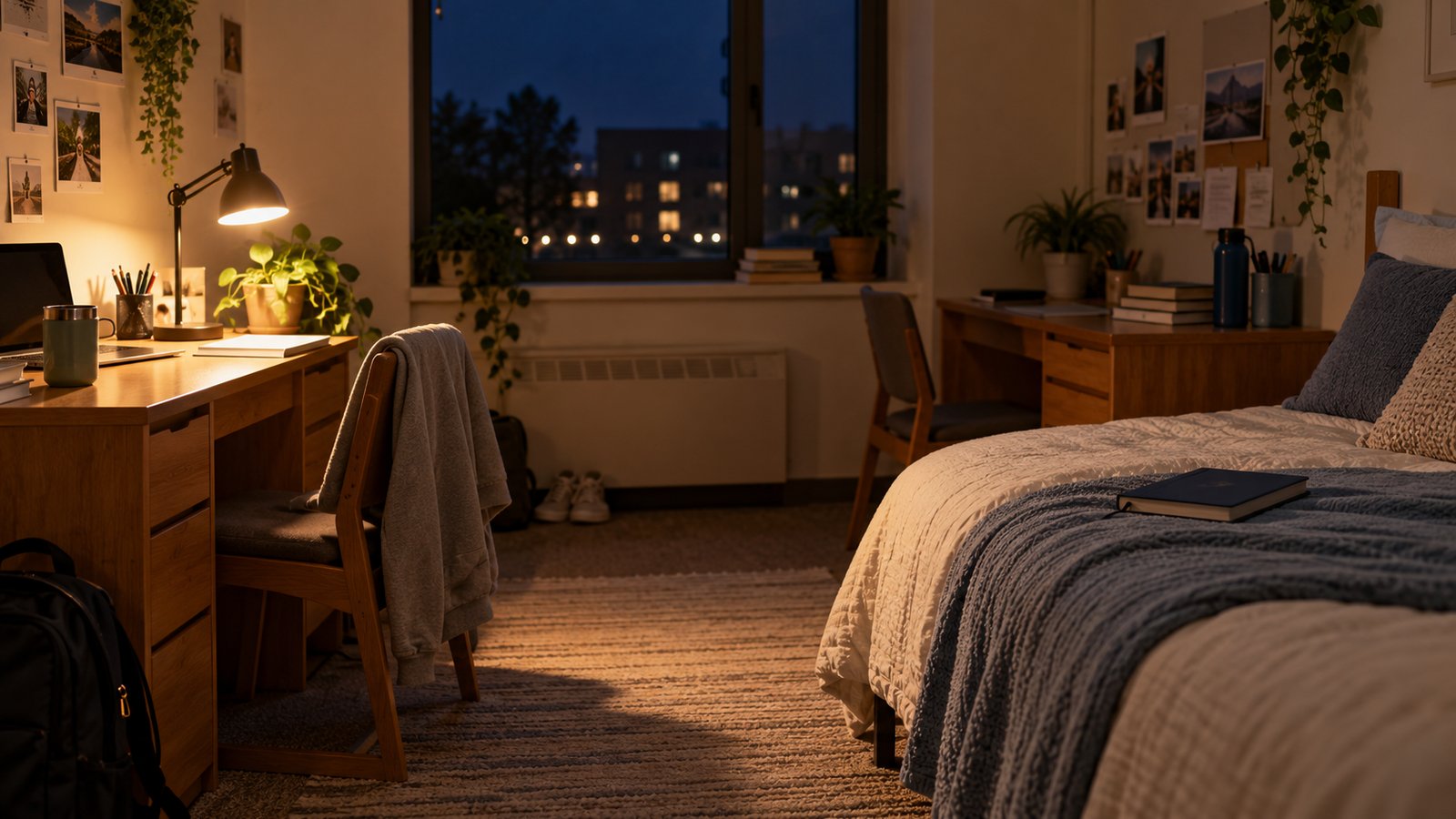
- Sleep is a basic need, even when roommates keep different schedules.
- Describe the specific light or noise that wakes you, then make a fair room agreement.
- Ask housing staff to mediate if a workable plan does not hold.
- Persistent sleep trouble deserves a health check, even in a quiet room.
Your roommate’s desk lamp clicks on just as you’re pulling the blanket over your shoulders. A video plays quietly, then another. It’s only 11 p.m., but you’ve got a morning lab, and the light feels as bright as a stadium. You don’t want to be the person who polices somebody else’s bedtime. You also can’t keep taking quizzes after four hours of sleep.
A shared room asks two people to do something surprisingly hard: make sleep possible without making every evening a referendum on friendship. Your roommate may work late, call family in another time zone, or simply unwind differently. You may need an earlier night. Neither person has to be the villain for a real problem to exist.
Sleep is a need, not a personality preference
Adults ages 18 to 60 generally need at least seven hours of sleep, according to the CDC. Sleep supports attention and emotional well-being. That doesn’t mean every student needs the same bedtime. It means a room that’s routinely bright or noisy while you’re trying to sleep deserves a practical conversation. Earplugs may help, but they aren’t a complete housing policy.
Try noticing what actually wakes you: overhead light, keyboard taps, a speaker, visitors, or a phone call. “Everything you do is annoying” won’t give either of you a fix. “The ceiling light after 11 wakes me even when I’m wearing an eye mask” gives you a starting point. Keep the description about the room, not your roommate’s character.
I hear students worry that asking for sleep makes them seem boring. It doesn’t. You can respect someone else’s evening and still say that you’re struggling the next day. A short, direct conversation during daylight usually goes better than a whispered argument when you’re both tired and one of you is holding a charger like evidence at a trial.
Make a room agreement you can both live with
Pick a calm time and ask, “Could we figure out what quiet hours mean for us?” Say when you normally need the room dark, then ask what your roommate needs. You might agree on headphones after a certain hour, a desk lamp instead of the ceiling light, calls in a lounge, and a heads-up before visitors. Write down the agreement if that’s useful. You’re making it easy to remember, not drafting a treaty.
Be specific about exceptions. A late assignment or family emergency may happen. Your agreement can include a quick text and a plan for the next night. If one person works nights, rigid clock rules may not fit. Look for changes each of you can control, such as using another study space or keeping a lamp angled away from the bed. The goal isn’t identical schedules; it’s a workable shared room.
An eye mask, soft earplugs, or steady background sound can be helpful if they’re comfortable and safe for you. Yet you shouldn’t have to buy gadgets to make up for a repeated broken agreement. Likewise, your roommate shouldn’t have to sit in darkness at seven in the evening because you prefer an early night. Useful compromises protect both people from being treated as a nuisance.
NHLBI recommends keeping a sleep space quiet, cool, and dark when possible. Dorms don’t always offer much control over temperature or hallway noise, but small changes can still matter. If you use caffeine to survive a rough night, remember it may interfere with the next one, especially later in the day. That isn’t a moral warning about coffee; it’s a clue when you’re caught in a cycle.
If the first talk fails, get help with the room
Give the agreement a few nights, then check in. “The headphones helped, but I’m still waking when friends come in after midnight” is more useful than silently keeping score. If you’ve tried a fair conversation and the pattern continues, ask a resident adviser or housing staff to help mediate. You don’t have to wait until the friendship is beyond repair. A mediator can help turn vague frustration into clear, reasonable room rules.
Housing options differ by campus. A room change may be possible, or it may not be. Ask what the process is instead of assuming the only choices are suffering or moving tomorrow. Keep brief notes about the specific disruption and what you’ve already tried. That’s useful for problem solving; it isn’t a case file against your roommate.
If you’re awake despite a quiet room, look beyond the roommate issue. Stress, schedule changes, health problems, and sleep disorders can also affect sleep. The CDC recommends talking with a healthcare provider when sleep problems persist. Campus health or counseling may help you sort out what’s happening without blaming every bad night on the person across the room.
Sleep loss can make a normal conversation feel like a courtroom. If you’re furious at 1 a.m., delay the big talk until morning. You can say, “Could we turn off the light tonight and work out a plan tomorrow?” That small request is clearer than a speech delivered from under a pillow. It also gives both of you a chance to be decent humans after breakfast.
If poor sleep is worsening your mood, concentration, or safety, reach out for help. A campus clinician can assess the full picture. If you or a friend is in a mental health crisis in the United States, call or text 988; call 911 for immediate danger. You don’t need to wait for a crisis to ask housing staff for a workable place to sleep.
Try one step today: write down the one change that would make tonight easier, then invite your roommate to talk when you’re both awake. You can start with respect and still be clear. A shared room doesn’t require a shared bedtime, but it does require some care for the person trying to sleep three feet away.
The bottom line: A shared room does not require a shared bedtime. Name the disruption, agree on a fair quiet-hours plan, and ask for help before lost sleep becomes your normal.
Sources: CDC, About Sleep; NHLBI, healthy sleep habits; CDC, college insomnia study.
Why can't I sleep? Your brain at 3 a.m.
The anxiety-sleep loop, the sleep hygiene that actually matters versus the myths, why CBT-I is first-line treatment, and when sleeplessness signals something treatable.

What can you do when your college roommate is struggling?
How to check in when a college roommate seems to be struggling, connect them with campus help, respect privacy, and respond to safety concerns.
Why does my teenager sleep so late?
Why puberty shifts sleep later, why early mornings can become a family fight, and how to help your teenager get more rest without calling them lazy.
Want help sorting through what you are noticing?
A free 15-minute intro call can help you decide whether psychiatric care fits the next step.