How do you help a child adjust to a new school?
How parents can make a new school less overwhelming, build connection with one adult and one peer, and recognize when adjustment needs more support.
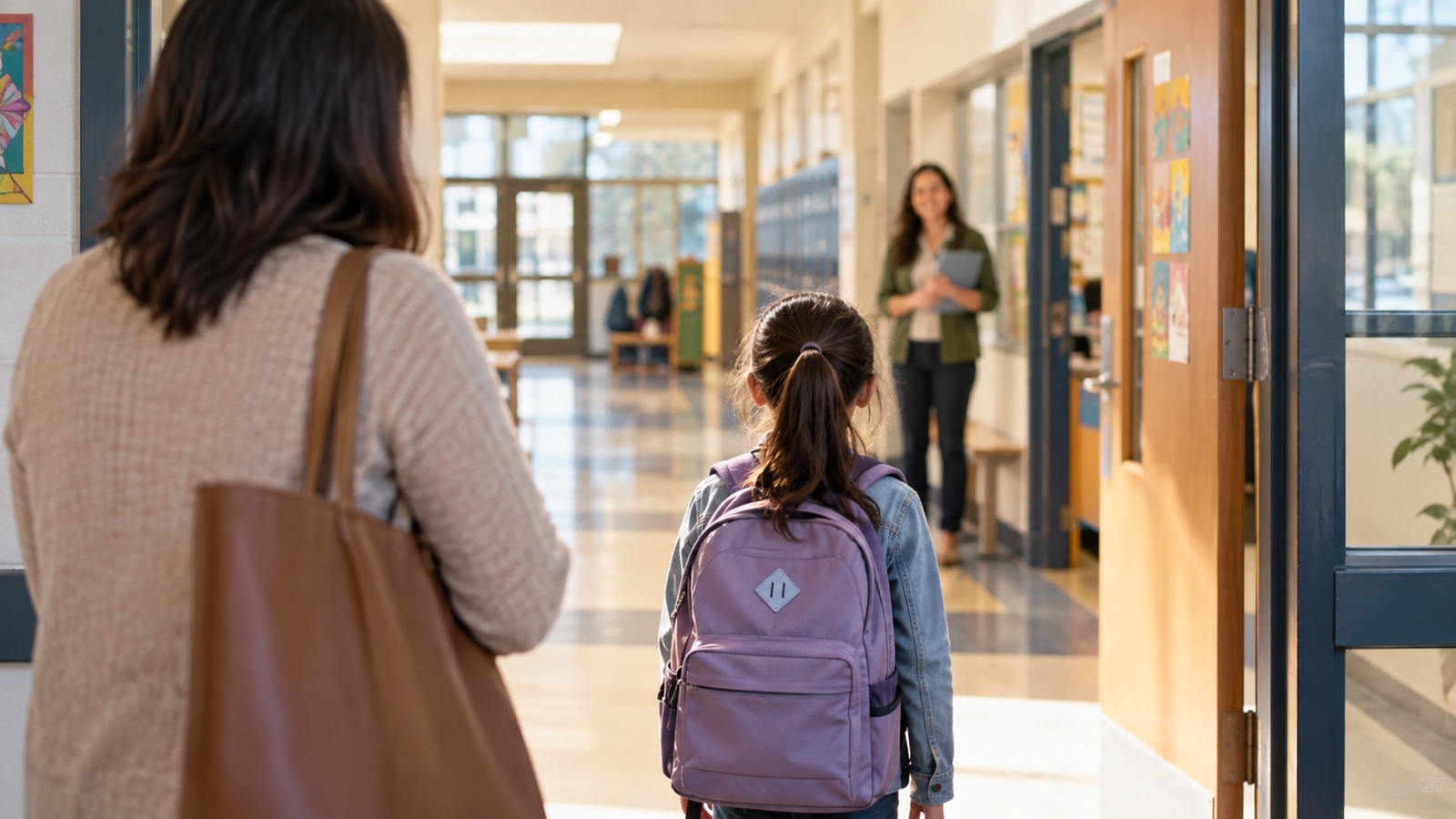
- A new school asks a child to learn a social map, physical map, and daily routine at the same time.
- Connection with one reliable adult and one possible peer can matter more than instant popularity.
- Practice the unknown parts, keep home predictable, and involve the child in the transition plan.
- Persistent distress, avoidance, bullying, safety concerns, or declining function deserves timely support.
It’s 7:18 a.m. The backpack is zipped, the shoes are on, and your child is standing by the door with the stillness of someone awaiting a weather event. Yesterday they said the new school was “fine.” This morning their stomach hurts, they can’t find the permission slip, and apparently every shirt is wrong.
A new school isn’t just a new building. It’s a new map of bathrooms, lunch tables, jokes, rules, names, noise, and tiny social decisions. Your child may be excited and scared at the same time. That’s adjustment, not hypocrisy.
The hard part may not be the part you can see
Adults often focus on academics because grades are measurable. A child may be focused on where to sit, whether the teacher will pronounce their name correctly, how to enter a group, what happens if they get lost, or whether anyone will notice they’re alone. The math worksheet may be the least mysterious object in the building.
Ask specific, low-pressure questions. “Which part of the day feels most confusing?” works better than “Do you like it?” Try choices: lunch, passing periods, the bus, classwork, or meeting people. A child who says “I don’t know” may genuinely need help sorting several kinds of discomfort.
Don’t demand gratitude because the new school has good programs, a nicer campus, or involved teachers. Those things matter, and loss still matters. Your child may miss friends, competence, familiar routines, or the version of themselves who knew where everything was.
Aim for connection before confidence
School connectedness means feeling that adults and peers at school care about you and your learning. Research links stronger connectedness with better mental health and school outcomes, although it isn’t a magic shield and the evidence doesn’t prove that one strategy works for every child.
Confidence often arrives after repeated contact, not before it. Help your child identify one adult they can approach: a teacher, counselor, coach, nurse, office staff member, or administrator. Make the first introduction concrete. “If lunch feels impossible, Ms. Rivera is the person you can find” is more useful than “Ask someone for help.”
Then look for one possible peer connection rather than a complete friend group. A shared class, club, bus stop, interest, or lunch period is enough to begin. Your child doesn’t need to win the social lottery by Friday. They need one place where their name starts becoming familiar.
Practice the map that anxiety keeps enlarging
If possible, walk the route before a busy school day. Find the entrance, classroom, bathroom, cafeteria, nurse, pickup point, and help desk. For an older child, rehearse the bell schedule and where they’ll go during an unstructured period. Familiarity won’t remove every fear, but it can stop the building from behaving like an escape room.
Role-play one or two sentences, not an entire social life. “Is this seat taken?” “What page are we on?” “Do you know where the science wing is?” These are small bridges. They’re easier to use than “Go make friends,” which is a lovely ambition and a terrible instruction.
If your child has a disability, learning difference, health condition, or established school support plan, contact the appropriate school team early. Ask how accommodations, medication, sensory needs, transportation, and communication will work in the new setting. Personalization matters. A transition strategy that reassures one child may overwhelm another.
Keep home boring in the most useful way
New environments consume attention. Let home carry fewer surprises for a while. Keep wake time, meals, pickup, homework expectations, and bedtime reasonably predictable. Prepare clothes and materials the night before if mornings are becoming a scavenger hunt with legal consequences.
Protect decompression after school. Some children will talk immediately. Others need food, movement, quiet, music, or a shower before language returns. You can say, “I’m glad you’re home. We can talk now or after you’ve had a break.” That’s availability without an interview lamp.
Try not to solve every discomfort on contact. If your child says lunch was awkward, start with “That sounds lonely” rather than emailing three administrators before dessert. Then ask whether they want listening, ideas, or adult help. You’re teaching that distress can be noticed without immediately becoming an emergency.
Partner with the school around observable facts
If the adjustment is rough, contact the teacher or counselor with specifics: when distress happens, what your child reports, what attendance or schoolwork has changed, and what has helped. “They cry Sunday night and have visited the nurse four mornings this week with stomach pain” is more actionable than “They hate school.”
Ask what the school sees. A child may look settled in class and unravel at home because they’ve used all their regulation. Or staff may notice isolation, confusion, teasing, missed assignments, or sensory overload that your child hasn’t described. Neither view automatically cancels the other.
Choose one short plan and a review date. Perhaps a counselor checks in at arrival, a teacher pairs the child for lunch, the child uses a quieter route between classes, or the family receives a brief weekly update. Support works better when everyone knows who is doing what and when you’ll decide whether it helped.
Adjustment deserves time, not an endless deadline
Some worry, tiredness, irritability, clinginess, headaches, or stomachaches can appear during a transition. Look for trend and function. Is your child gradually learning the building and recovering after school, or is their world getting smaller? Are they attending, sleeping, eating, learning, and doing at least some things they usually enjoy?
Seek help sooner for bullying, discrimination, threats, self-harm, suicidal thoughts, panic that blocks attendance, persistent physical symptoms, major sleep or appetite changes, substance use, or a sharp decline in schoolwork and daily care. A pediatrician or mental health clinician can help assess medical, developmental, learning, anxiety, mood, trauma, and school factors.
If your child can’t stay safe or may act on suicidal thoughts, call or text 988 in the United States or seek emergency help. Don’t wait for the school transition to become a cleaner explanation. Safety doesn’t need a perfectly labeled cause.
Try a one-adult, one-peer, one-routine plan
For the next week, ask your child to choose one adult at school, one peer they might greet or sit near, and one routine that would make the day easier. Write those three anchors down. Keep the goals small enough to repeat.
At the end of each day, ask, “What felt a tiny bit more familiar?” You’re training attention to notice learning, not demanding a positive review. If nothing felt easier, believe the data and adjust the plan.
Your child doesn’t have to love the new school quickly. They don’t have to become a new person to belong there. They’ll need fewer unknowns, a reliable path to help, and enough connection that tomorrow feels like a place they’ve been before.
The bottom line: A new school asks a child to rebuild familiarity, competence, and belonging at once. Make the environment more predictable, connect them with one adult and one peer, keep home steady, and review observable changes. If distress persists or safety and function decline, bring in the school and a health professional early.
Sources: Centers for Disease Control and Prevention, Promoting Mental Health and Well-Being in Schools: An Action Guide (2024); Raniti and colleagues, systematic review of school connectedness in youth depression and anxiety, BMC Public Health (2022); Neal and Frederickson, longitudinal study of transition strategies and child anxiety, School Psychology International (2016); American Academy of Pediatrics, HealthyChildren guidance on school avoidance, updated 2024.
How do you help a teenager who feels left out?
How to listen, notice exclusion, and help them find safer belonging.
When your child refuses school
What the morning fight may be telling you and what helps.
How do you help an anxious child without helping anxiety take over?
How to support brave steps without becoming harsh or dismissive.
Is school adjustment shrinking your child’s life?
A free 15-minute intro call can help you decide whether psychiatric care fits the next step.