What if your child says the teacher hates them?
How to hear your child without jumping to a verdict, ask the school for specifics, and protect your child when a classroom problem is real.
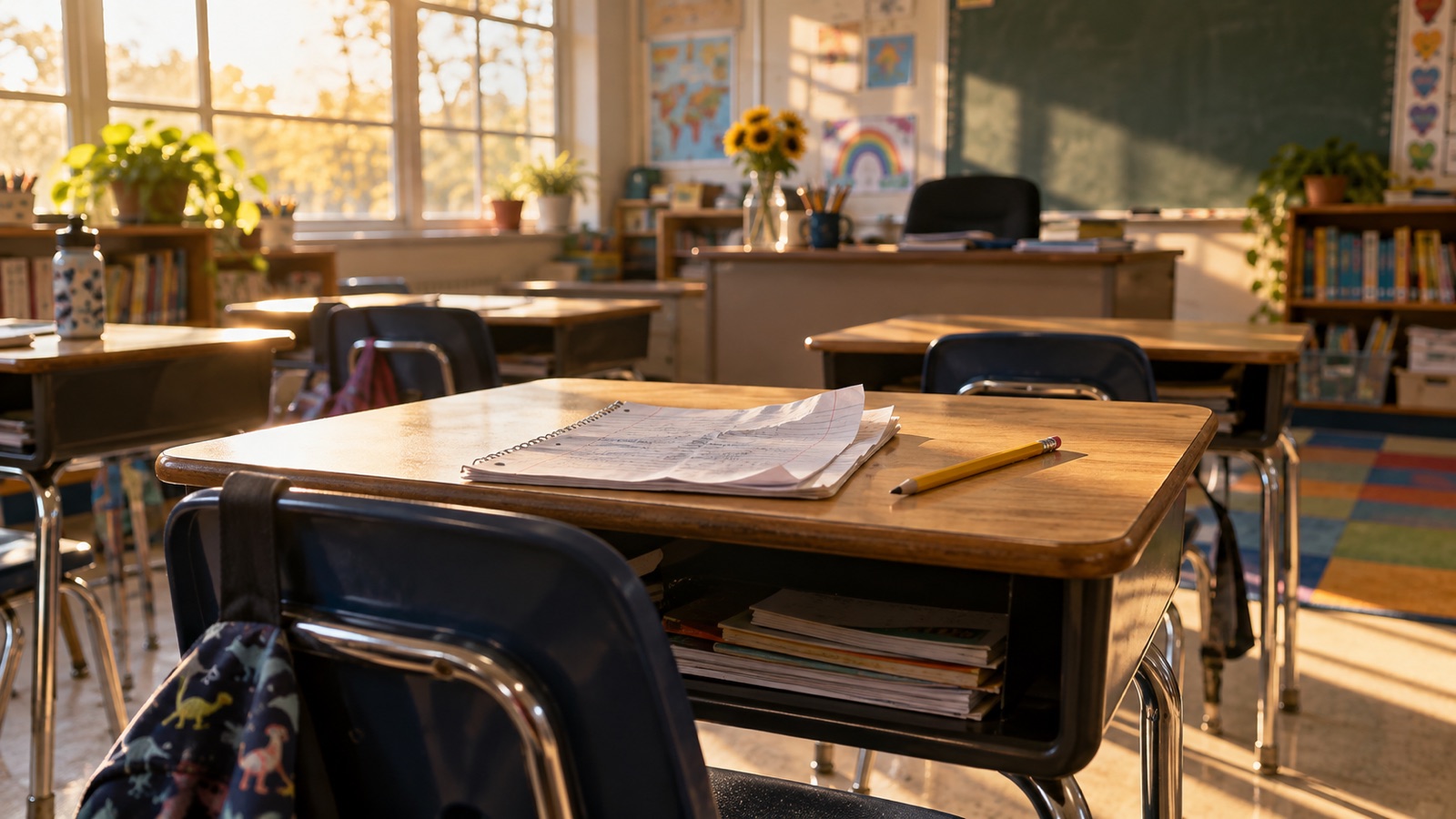
- Take the feeling seriously without deciding what happened before you have details.
- Ask your child for a recent example, then ask the teacher what they have noticed.
- Look for patterns, school avoidance, bullying, or a problem that needs prompt action.
- Tell your child what you will do next and when you will check back.
The backpack drops by the door. Your child stares at the zipper and says, “My teacher hates me.” You want to march into the school before the lunchbox hits the counter. You also know that a hard day can sound like a permanent verdict when you’re small and tired. Both thoughts belong in the room, but neither should make the decision for you yet.
Start with the part you know: your child feels hurt or unsafe with an adult who matters in their day. You don’t have to agree that the teacher hates them to take that seriously. “That sounds awful. What happened today?” gives your child a place to begin. “That can’t be true” may sound reassuring to you, but to a child it can sound like you already chose the other side.
Find the moment behind the big sentence
Ask for the last time the feeling showed up. What did the teacher say? Who else was there? What happened before and after? Would your child like to draw the classroom or act out where everyone was standing? Young children often tell a story in pieces. You’re looking for a clearer picture, not cross-examining a witness over crackers.
Listen for what “hates you” might mean. Perhaps the teacher corrected a mistake in front of peers. Perhaps your child was not chosen to help. Perhaps they’re struggling with work and every reminder now feels personal. Or perhaps the teacher has repeatedly singled them out or said something cruel. The words alone can’t tell you which story is true. The details, the pattern, and your child’s reaction over time matter.
If your child is quiet, don’t force the full account at once. You can say, “You don’t have to explain everything now. Let’s check in after dinner.” Then do it. An open door helps more than a twenty-question ride home. If another caregiver heard a similar concern, compare notes without turning the child into a messenger between adults.
Speak with the teacher about observable things
The American Academy of Pediatrics advises parents to ask a teacher for concrete examples when a school concern comes up, and to agree on how they’ll follow up. That’s a useful model here. A short message can say, “Our child came home feeling singled out after reading time. Could we talk about what happened and what you’re seeing in class?” It invites facts without surrendering your child’s concern. A calm first note makes it easier to hear a useful answer, even when you’re worried.
In the conversation, ask what the teacher noticed, whether the moment is isolated or recurring, and what happens when your child needs help. Ask what you can each try and how you’ll know if it worked. You can share your child’s exact words without presenting them as a settled finding. Sometimes you’ll learn about a misunderstanding. Sometimes you’ll hear information that makes the concern more urgent. Stay curious enough to learn either way.
Don’t make your child responsible for fixing an adult relationship. You can help them practice a simple request, such as “Can you explain what needs to change?” But it’s the adults’ job to make school a place where asking for help is safe. If you suspect a teacher’s behavior is harmful, don’t ask your child to earn kinder treatment by becoming easier to manage.
Watch the pattern, not only the single day
The CDC describes school connectedness as feeling that adults and peers care about students and their learning. That connection is associated with better health and school outcomes. One rough exchange doesn’t mean the connection is gone. Repeated dread, hiding work, stomachaches before class, a sudden drop in participation, or not wanting to go to school deserve a closer look. Those signs can have several causes, so ask rather than assume.
Check whether peers are part of the story too. A child may blame the most visible adult when classmates are teasing them or when a classroom feels unsafe. CDC bullying guidance lists changes such as school avoidance, sleep trouble, lost belongings, and unexplained injuries as reasons to pay attention. If your child describes threats, humiliation, discrimination, or physical harm, document the specifics and contact the school promptly. Safety comes before a perfectly diplomatic email.
I wouldn’t promise, “I’ll make the teacher like you.” You can’t control that, and your child may hear the promise as proof that they caused the problem. Promise what you can do: listen, ask questions, speak with the school, and come back with a plan. Let them know the next check-in time. A child shouldn’t have to wonder whether telling you was the end of the story.
Keep your child in the loop without making them the referee
After you talk with the school, explain the next step in language your child can use. “We’re going to ask for a private way to get help during reading, and we’ll see how this week feels.” If the teacher offers an apology or a classroom change, tell your child what that means. If the teacher disagrees with their account, you can still say, “We heard different descriptions. We’ll keep paying attention.” You don’t have to declare a winner to remain on your child’s side.
If the first conversation doesn’t improve things, involve a counselor or school leader and keep a dated record of concrete events. If the concern involves a disability support plan or discrimination, use the school’s formal process and ask for the appropriate specialist. If your child is afraid to attend, seems persistently distressed, or talks about self-harm, seek prompt professional help. In immediate danger, call emergency services; in a mental health crisis in the United States, call or text 988.
Try one small step tonight: ask your child to show you the most recent moment that felt bad, then write down their words without editing them into an accusation or an excuse. Tomorrow, ask the school for its view and a follow-up point. You’re not trying to win a courtroom case at the kitchen counter. You’re trying to learn what your child needs to feel safe enough to learn.
Children notice whether adults return to a promise. Check in on the day you said you would, even if the news is simply that the school has not replied yet. “We haven’t forgotten” is a small sentence with a lot of weight. If the problem improves, ask your child what changed. If it doesn’t, that’s information for your next conversation with the school, not evidence that your child failed to explain it well enough.
The bottom line: Believe that the feeling is real, gather the details, and ask the school for its view and a concrete follow-up. Your child needs an adult who stays with the question until the classroom feels safer, not a rushed verdict.
Sources: AAP, Dealing With Problems at School; CDC, School Connectedness; CDC, Bullying Warning Signs.

What if your child gets left out by friends?
What to say when your child feels excluded, how to spot a repeated pattern, and ways to help them build safe connections.
When your child refuses school: what the morning fight is telling you
Why school refusal can show up as stomachaches or panic, what parents and young people should assess, and how a supported return works.

Should your teenager take a mental health day from school?
How to decide about a teen mental health day, check safety, and make a return plan that addresses what made school hard.
Want help sorting through what you are noticing?
A free 15-minute intro call can help you decide whether psychiatric care fits the next step.